Start with the garment, not the stain
Spot-treating can help keep an otherwise clean garment in rotation, but the safest method depends on its fabric, color and finish. Before reaching for water or detergent, read the care label. A washable cotton shirt may tolerate treatment that would leave a mark on silk, wool or a structured jacket. If the label calls for professional cleaning, or the item has delicate trim or a lining that could be affected, consider leaving the stain to a cleaner.
Look closely at the mark before acting. Is it fresh and sitting on the surface, or has it dried into the fibers? Is it a liquid spill, a greasy smear or a solid residue? Remove loose material gently with the edge of a spoon or a clean cloth. Blot liquids with an absorbent cloth or plain paper towel; rubbing can spread the stain or work it deeper into the fabric.
Before applying any product, test it on a hidden area such as an inside seam. Wait until the test spot is dry, then check for color transfer, fading, a change in texture or a water ring. A successful test does not guarantee a perfect result on the stain, but it can reveal an obvious problem before you treat a visible area.
Use a gentle spot-treatment routine
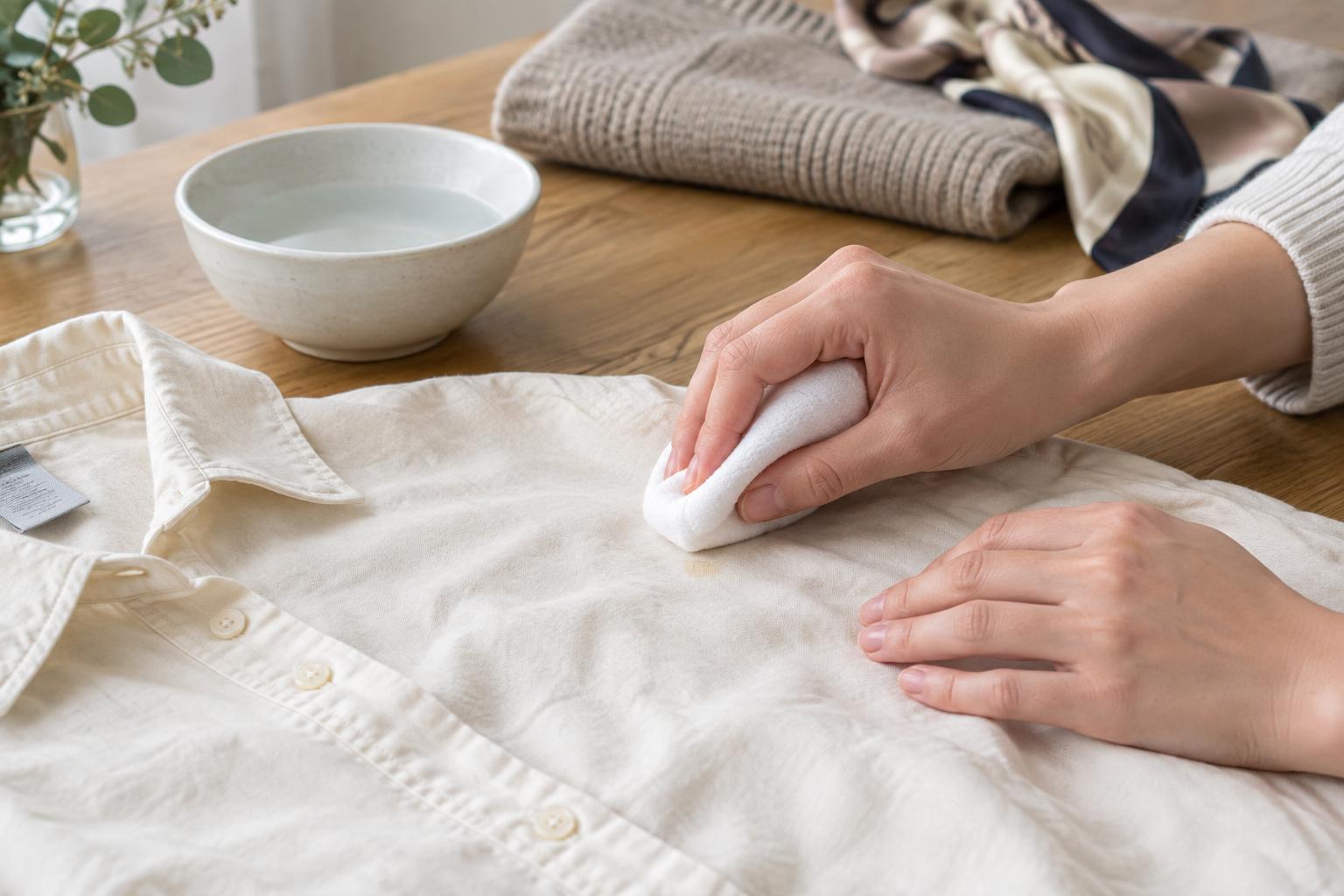
For many washable garments, a simple starting point is a little cool water and a small amount of mild liquid laundry detergent. Put a clean cloth or towel behind the stain so it does not transfer to another layer. Working from the outer edge toward the center, dab the area with a damp cloth. Apply a small amount of diluted detergent with your fingertip or a clean cloth, without scrubbing. Let it sit briefly, then rinse or blot it away as the care label allows.
Use less liquid than you think you need. Saturating one area can spread a mark, leave a detergent residue or create a visible ring, especially on fabrics that show water spots. If the stain begins to lift, repeat the gentle treatment rather than increasing pressure. Do not combine stain-removal products: their ingredients may be incompatible, and more product is not necessarily more effective.
After treatment, inspect the area in good light. If the garment is machine-washable, launder it according to its label. Check again before using a tumble dryer or iron; heat can make some remaining stains harder to remove. When the mark is gone, dry the garment in the manner recommended on its care label.
Adjust your approach to the stain
For a fresh food or drink spill on a washable fabric, blot first, then try cool water from the back of the stain if the garment’s construction allows it. This helps move the spill out through the surface it entered. Avoid hot water as an automatic first step: it can make some stains, including those from egg or dairy, more difficult to shift. Follow with a small amount of detergent if needed.
Oil-based marks from salad dressing, skin products or makeup often need detergent to loosen the grease. Lift off any excess without smearing it, then dab a little liquid laundry detergent onto the spot and rinse as directed by the label. Foundation and lipstick may contain both oils and pigments, so a faint trace can remain after the greasy part lifts. Reassess once the fabric is dry rather than scrubbing repeatedly at a damp patch.
Mud is often easier to handle once it has dried. Brush away loose dirt gently, then treat what remains on a washable garment. Whatever the stain, patience is useful: several light passes are generally a more cautious choice than aggressive rubbing.
Take extra care with silk, wool and tailored pieces
A silk scarf or fine wool knit deserves a different approach from an everyday cotton tee. Both color and texture can change with moisture, friction or an unsuitable cleaner. Check the label before attempting any home treatment. If water is permitted, test a hidden area and use only gentle blotting with a barely damp cloth. Stop if color appears on the cloth or the fabric begins to change texture.
Avoid soaking one small area of a silk accessory while leaving the rest dry, as a water mark may remain. Do not twist or wring delicate fabric. Tailored jackets also need caution: even when the outer fabric seems sturdy, linings, interfacings and seams can respond differently to moisture. For a valuable item, a large stain or a mark you cannot identify, professional cleaning may be the more careful choice.
Know when to stop
Not every stain will disappear with home treatment. If a mark spreads, dye transfers, or the fabric develops a ring or rough patch, stop and let the area dry. More rubbing or stronger products may make the problem less reversible. Make a note of what caused the stain, if you know, and which products you have already used; that information can be useful if you take the garment to a cleaner.
A calm routine is easier to remember than a collection of stain-removal tricks: check the label, remove excess, test discreetly, blot gently and inspect before applying heat. Treating a spot with care can help preserve the fabric as well as the outfit you planned to wear.