Start with the job you want the blazer to do
Before comparing cuts, picture two or three outfits you would actually wear. A blazer for work over a shirt may need different room through the arms than one worn over a fine T-shirt. If it will often sit on top of a sweater, bring a sweater of similar thickness when you try it on. The most versatile choice is not necessarily the plainest one; it is the one that fits the layers, trousers and shoes you already reach for.
Decide, too, whether you want a crisp outline or an easy layer. A structured blazer can give simple pieces a sharper finish, while a softer one may feel more natural with jeans or relaxed trousers. Both can work in a French-inspired wardrobe built around repeatable combinations. The point is to choose deliberately rather than treating every blazer as interchangeable.
Check the fit where adjustments are hardest
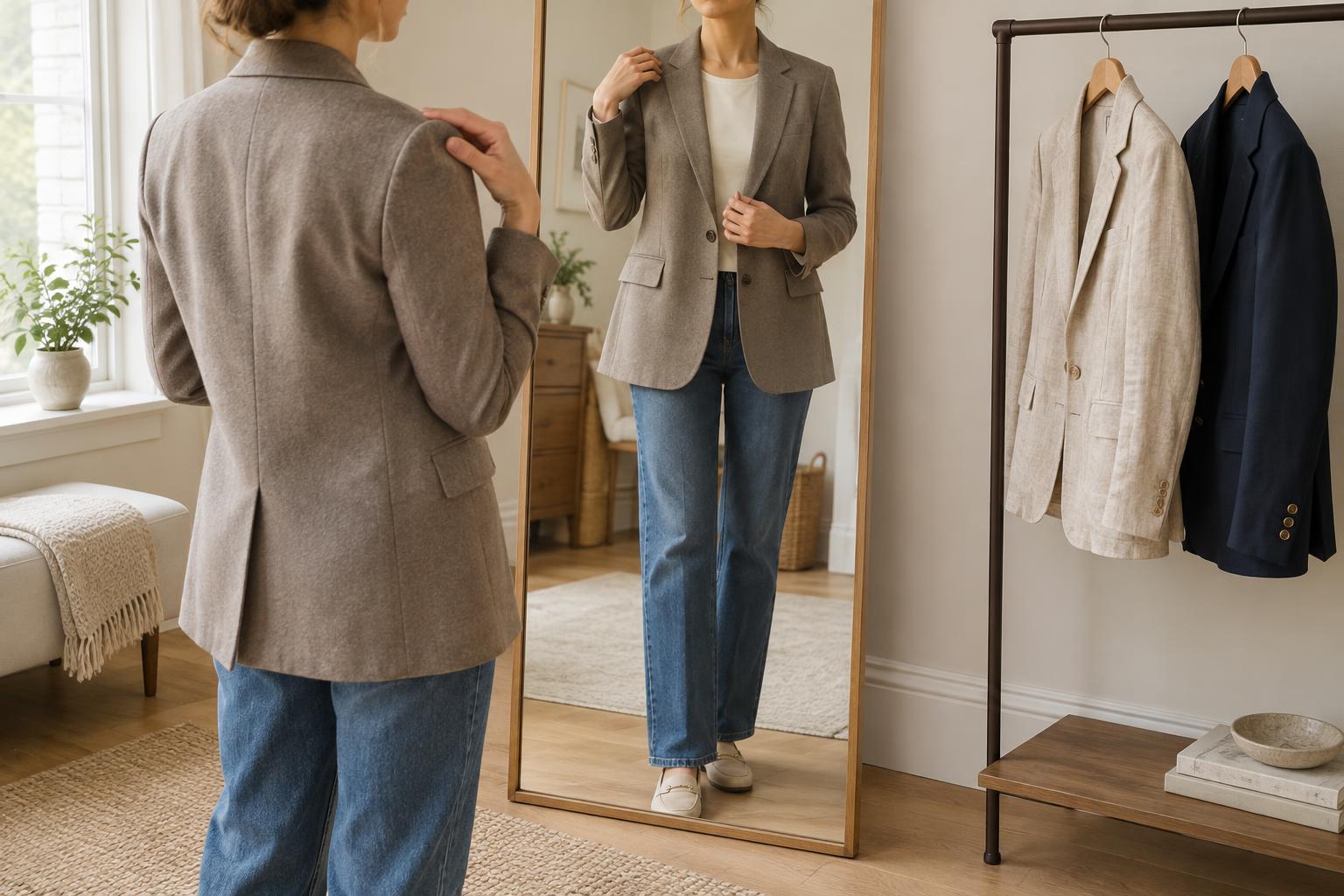
Start at the shoulders. The seam should sit close to the edge of your shoulder without pulling toward your neck or extending so far that the sleeve collapses. Shoulder shape varies, and some designs intentionally have a dropped or broader line, so judge the result against the blazer’s intended silhouette. If the upper body feels wrong, a different size or cut is often more useful than hoping an alteration will fix it.
Fasten the blazer if it is designed to be worn closed. The front should lie reasonably smooth without a strong X-shaped pull at the button or excess fabric bunching around the waist. Then sit down, reach forward and lift your arms as you normally would. A blazer need not feel like sportswear, but you should be able to move without constant tugging. Check that the sleeves allow the shirt or knitwear you plan to wear underneath.
Length and sleeve length are partly matters of proportion and preference. Look at the blazer with your usual trousers, not just in isolation: a longer jacket can balance wider legs, while a shorter one may work well with higher rises. Sleeve shortening is sometimes possible, but buttons, vents and lining can make it more involved. Consider alteration costs before deciding that a nearly right blazer is a bargain.
Understand what structure changes
Structure comes from more than shoulder pads. Lining, internal layers, fabric and the way the jacket is cut all affect how firmly it holds its shape. A more structured blazer tends to create a defined line through the shoulders and chest. An unstructured style follows the body more closely and may feel lighter, though it can also show more of what you wear beneath it.
Neither approach is automatically more flattering. If you like a clean outline over soft shirts, some structure may help. If you want a layer that feels casual when left open, look at softer construction. Try both in a full-length mirror and pay attention to the side and back views. The back should not strain across your shoulders or pool heavily above the hem, even if you prefer a relaxed fit.
Match fabric weight to how you will wear it
Fabric weight influences warmth, drape and the blazer’s overall mood. A lightweight linen or cotton blend can feel comfortable in warmer conditions, but may crease readily or lack the smooth line you want for a more formal outfit. Medium-weight wool or wool blends can offer a balance of drape and versatility. Heavier cloth often holds a strong shape and suits cooler weather, but may feel cumbersome indoors or under a coat.
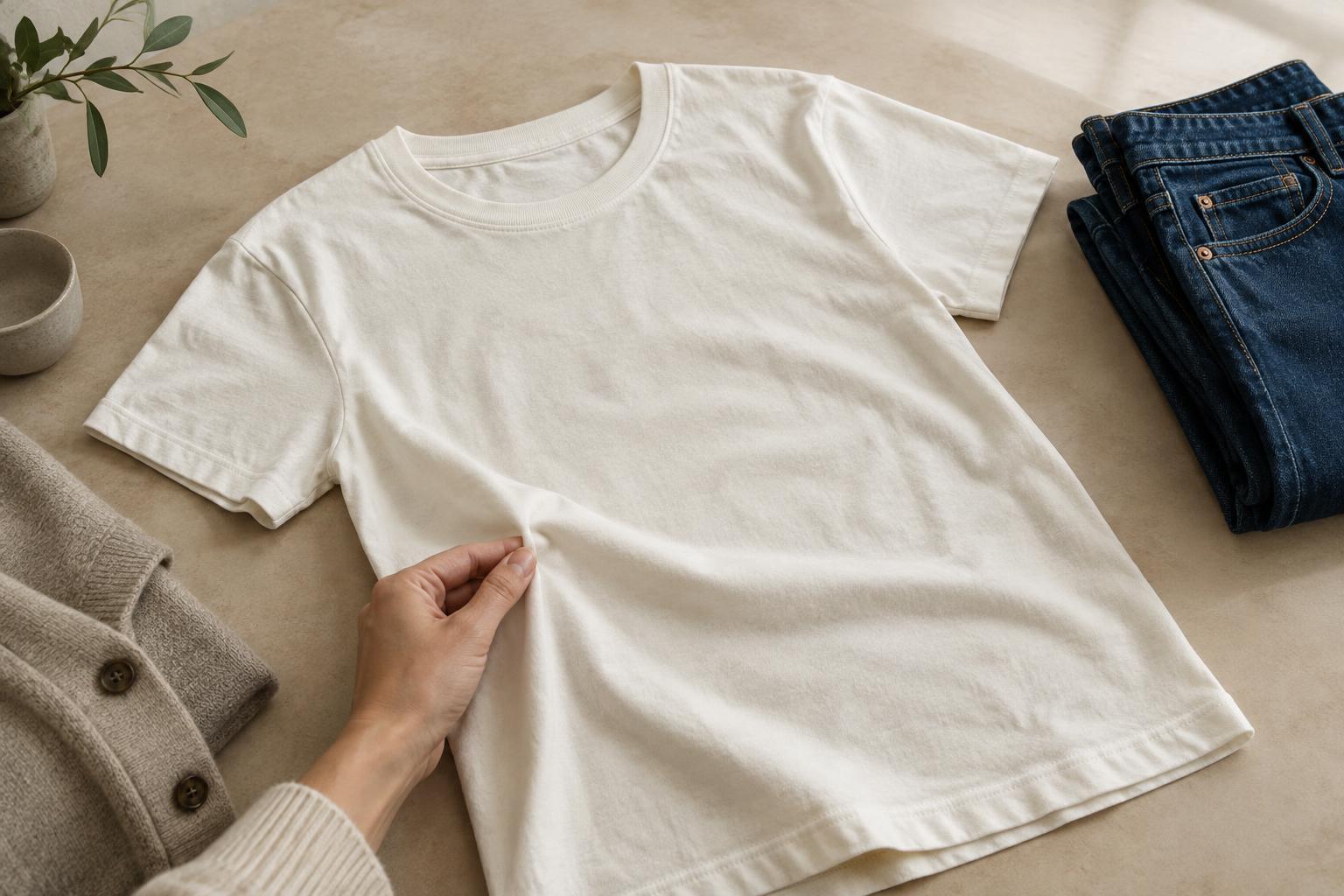
Handle the fabric rather than relying on its label alone. Does it spring back after you gently squeeze it, or does it retain a pronounced crease? Does it fall smoothly from the shoulder, or feel stiff? Check the lining as well: a fully lined blazer may slip more easily over a shirt, while a partially lined one may feel less substantial. Fabric composition offers clues, but the finished jacket is the better test.
Make the final choice with your wardrobe in mind
Try the blazer with a complete outfit, including the shoes you expect to wear. A navy, charcoal or warm neutral jacket may be easy to combine with existing clothes, but color is only one part of versatility. Texture matters: a slightly textured blazer can sit comfortably beside denim, while a very smooth, formal-looking one may make the same outfit feel more dressed up.
Before buying, check the care label, seams, buttons and pockets. Think realistically about cleaning and storage, especially if you intend to wear the blazer frequently. The right choice is one you can put on without planning your entire day around it: comfortable through the shoulders, appropriate for your usual layers and substantial enough for the conditions in which you will wear it.