Start with the job it needs to do
The best everyday T-shirt is not necessarily the softest or most expensive one on the rail. It is the one you will reach for repeatedly. Before considering fabric or fit, picture how you plan to wear it. A tee that sits neatly beneath a blazer may need a smoother surface and a closer neckline than one intended for relaxed weekends. If you usually tuck your shirts into trousers, length and hem bulk matter more than they might for an untucked outfit.
Consider what is already in your wardrobe. White, navy, black and muted tones can be easy to combine, but the most useful colour is one that works with your own jackets, trousers and accessories. A simple tee can also provide a quiet backdrop for a scarf or a more expressive piece of jewellery. That versatility comes from getting the proportions right, not from following a fixed rule about what an essential must look like.
Examine the fabric in your hands
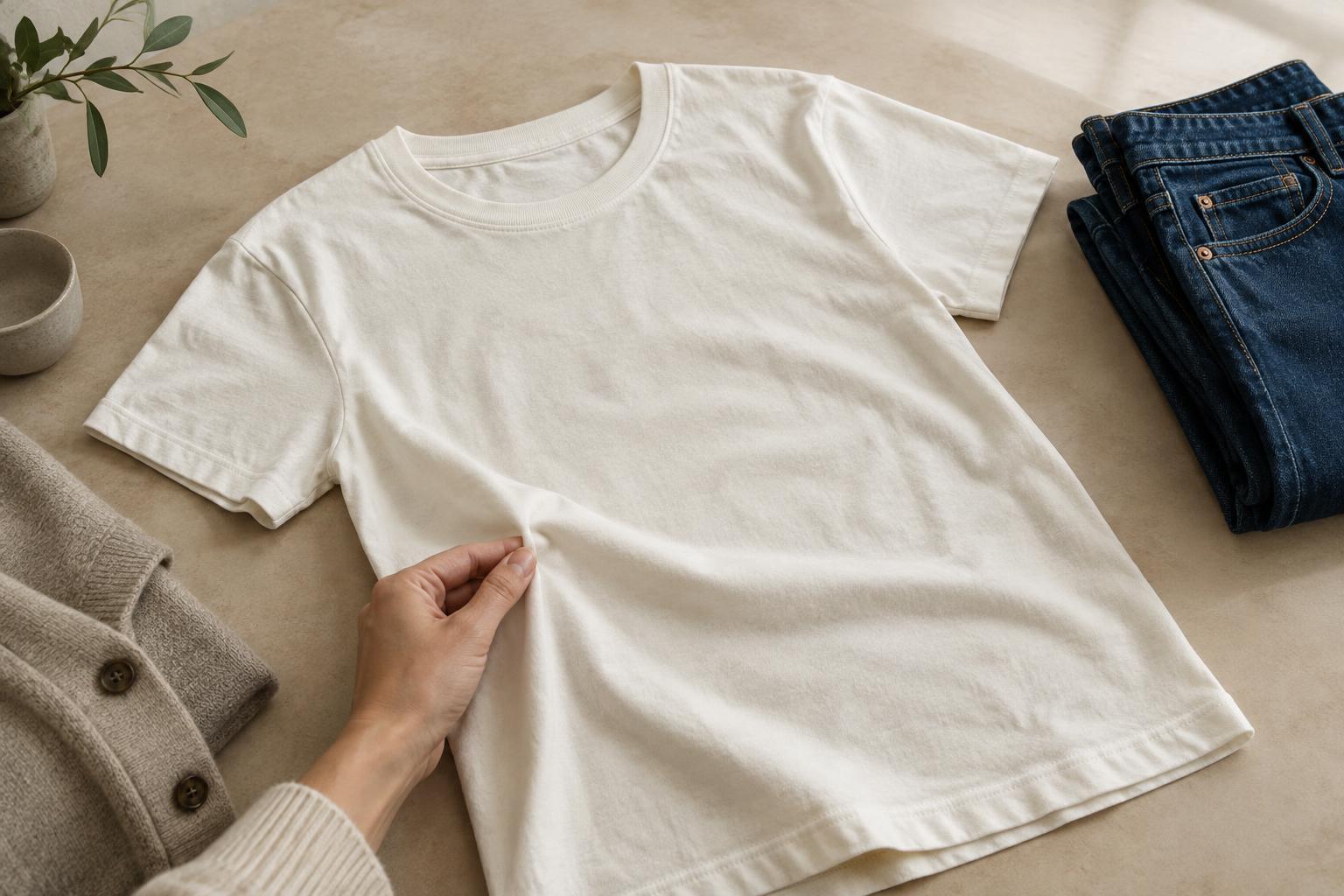
Most everyday tees are made from knitted fabric, which gives them their familiar stretch. Cotton is a common choice, but the word “cotton” alone tells you little about how a particular shirt will feel or wear. Compare the fabric’s weight, smoothness and recovery. Gently stretch a small area and see whether it returns to shape. Hold a light-coloured shirt up to the light if opacity matters to you, then check it against your skin or the layer you would wear underneath.
A lightweight knit can be pleasant in warm weather or under other garments; a denser one may feel more substantial when worn alone. Neither is automatically better. Blends can change how a shirt drapes and dries, while added elastane may give it more stretch. Read the fibre label, but let your intended use guide the decision. If you dislike cling, look for fabric that falls away from the body rather than relying on a size change to solve every fit issue.
Check the shape and construction
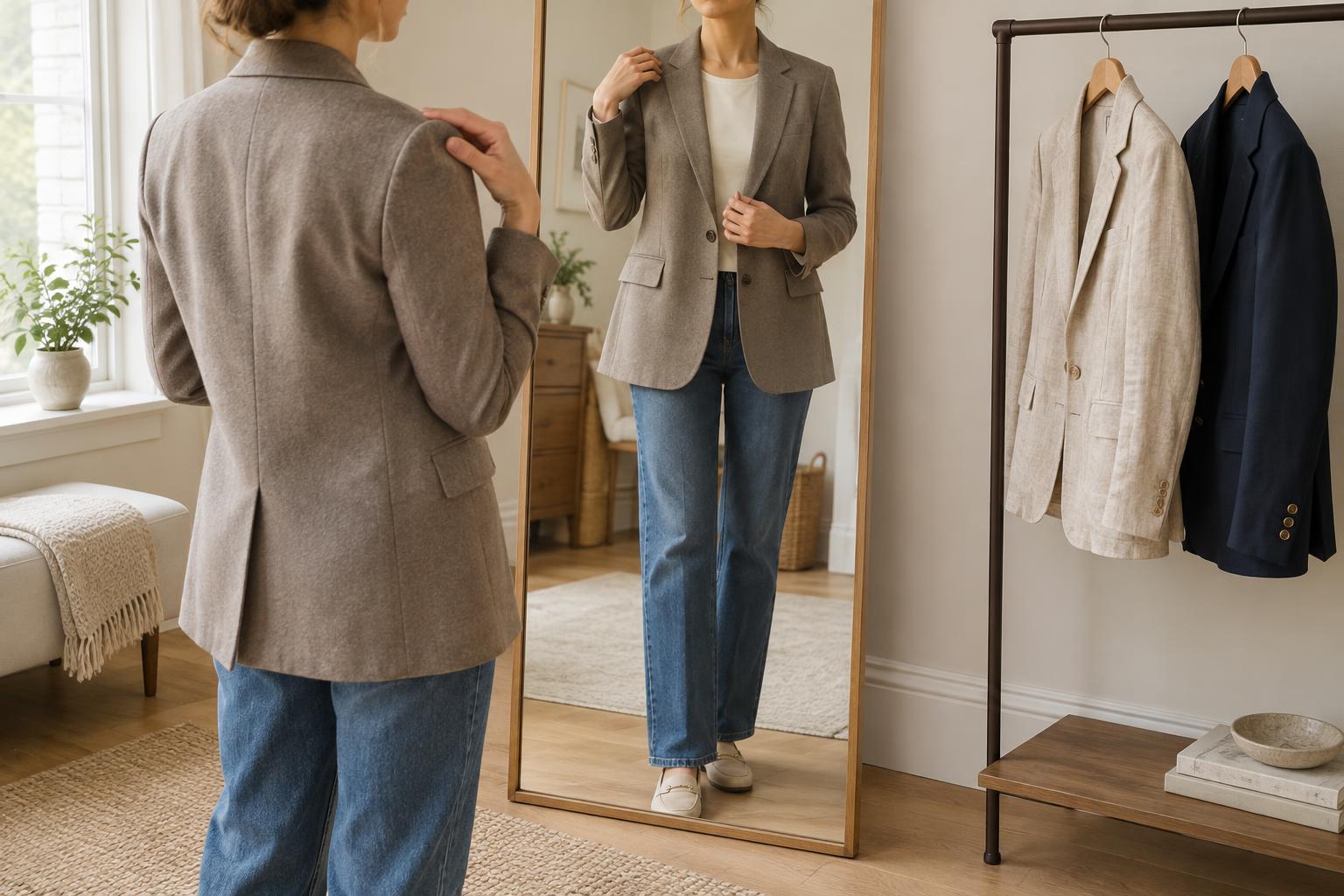
Try the T-shirt on if you can. The shoulder seam should sit where you want it, and the sleeves should leave enough room to move without pulling across the upper arm. Raise your arms, sit down and try a partial or full tuck. Notice whether the hem rides up, whether the neckline feels restrictive and whether the fabric twists around your torso. A relaxed fit can still look deliberate when the shoulder, sleeve and length are in proportion.
Then look at the details. The neckline should lie comfortably flat rather than buckle or gape. Check that the side seams and hem appear even, and that the stitching does not visibly pucker the fabric. Give the seams a gentle inspection rather than pulling hard on them. A slightly uneven stitch does not tell you everything about durability, but obvious loose threads, missed stitches or a distorted collar are reasonable reasons to keep looking.
Think about care before the first wash
A T-shirt earns its place in an everyday wardrobe by being practical to maintain. Read the care label before buying, particularly if you expect to machine-wash the shirt often. The instructions should suit your routine. If a tee needs treatment you know you will not give it, it may not be the useful basic you are seeking, however good it looks in the fitting room.
At home, follow the label and avoid assuming that every knit tolerates the same heat or drying method. Washing with similar colours and turning a printed or embellished tee inside out may help protect its appearance. After washing, reshape the neckline and hem while the fabric is still damp if needed, and let the shirt dry as directed. These habits cannot correct poor construction, but they give a well-chosen tee a better chance of staying in rotation.
Make the final choice with real outfits
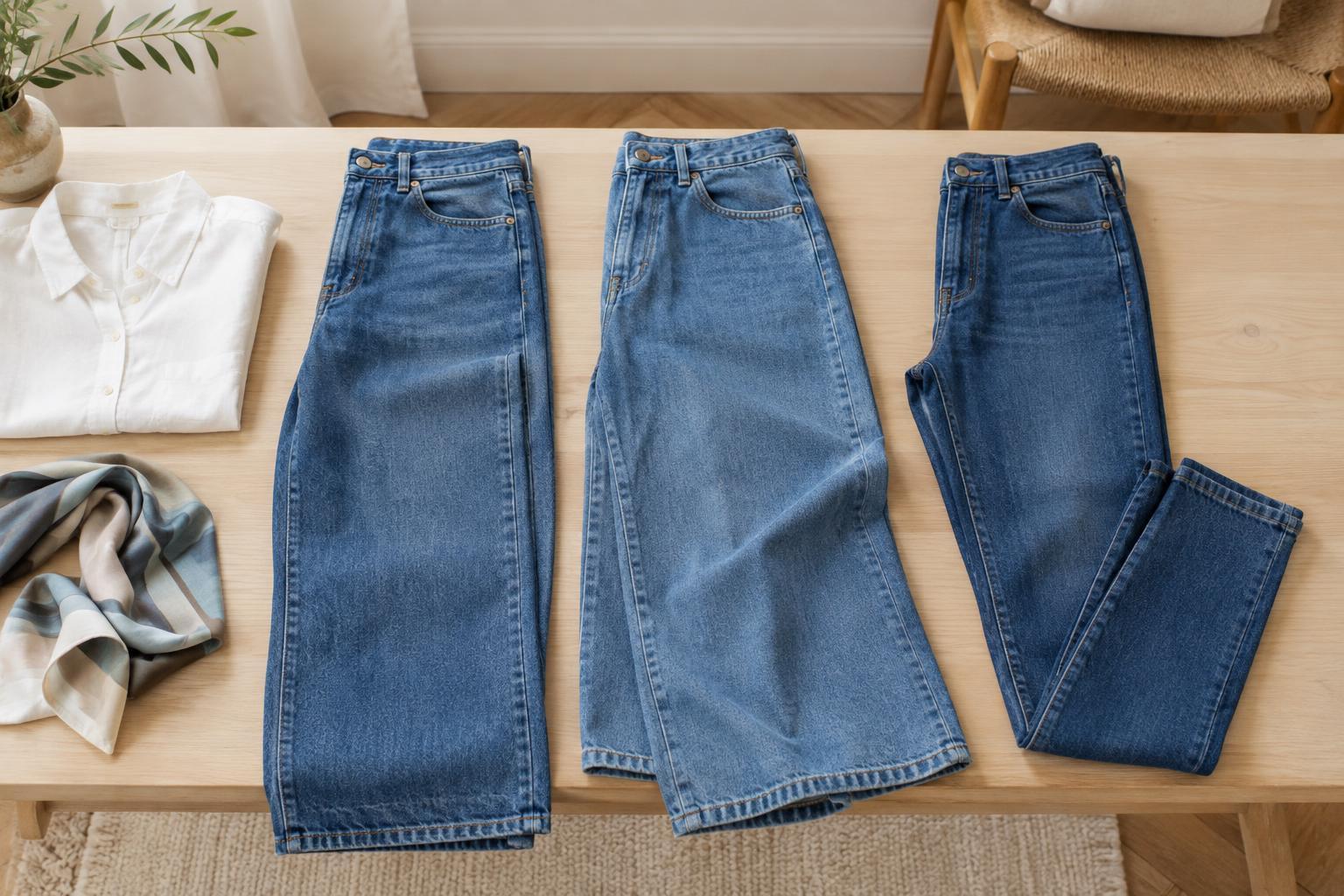
Before buying multiples, test one T-shirt with several outfits. Wear it under a jacket, with your most-used trousers and with any skirt or jeans you often reach for. Check the neckline alongside a scarf, if that is part of your style: a crew neck offers a different frame from a V-neck or a wider opening. You may discover that one cut works best as a layering piece while another looks better on its own.
Quality is a combination of comfort, construction and usefulness, not a single detail on a tag. If the fabric feels right, the collar and seams look sound, and the shape works with the clothes you actually wear, you have a stronger reason to choose it. A good everyday T-shirt should make getting dressed easier without asking for constant adjustment.