Start with movement, not the size label
A crisp shirt, simple blazer or pair of dark trousers can anchor many outfits, but only if you feel comfortable wearing it. The size on the label is a starting point, not a verdict: two garments marked the same size may have different proportions, and a relaxed design should not fit like a tailored one. Judge each piece against its intended shape and the way you plan to wear it.
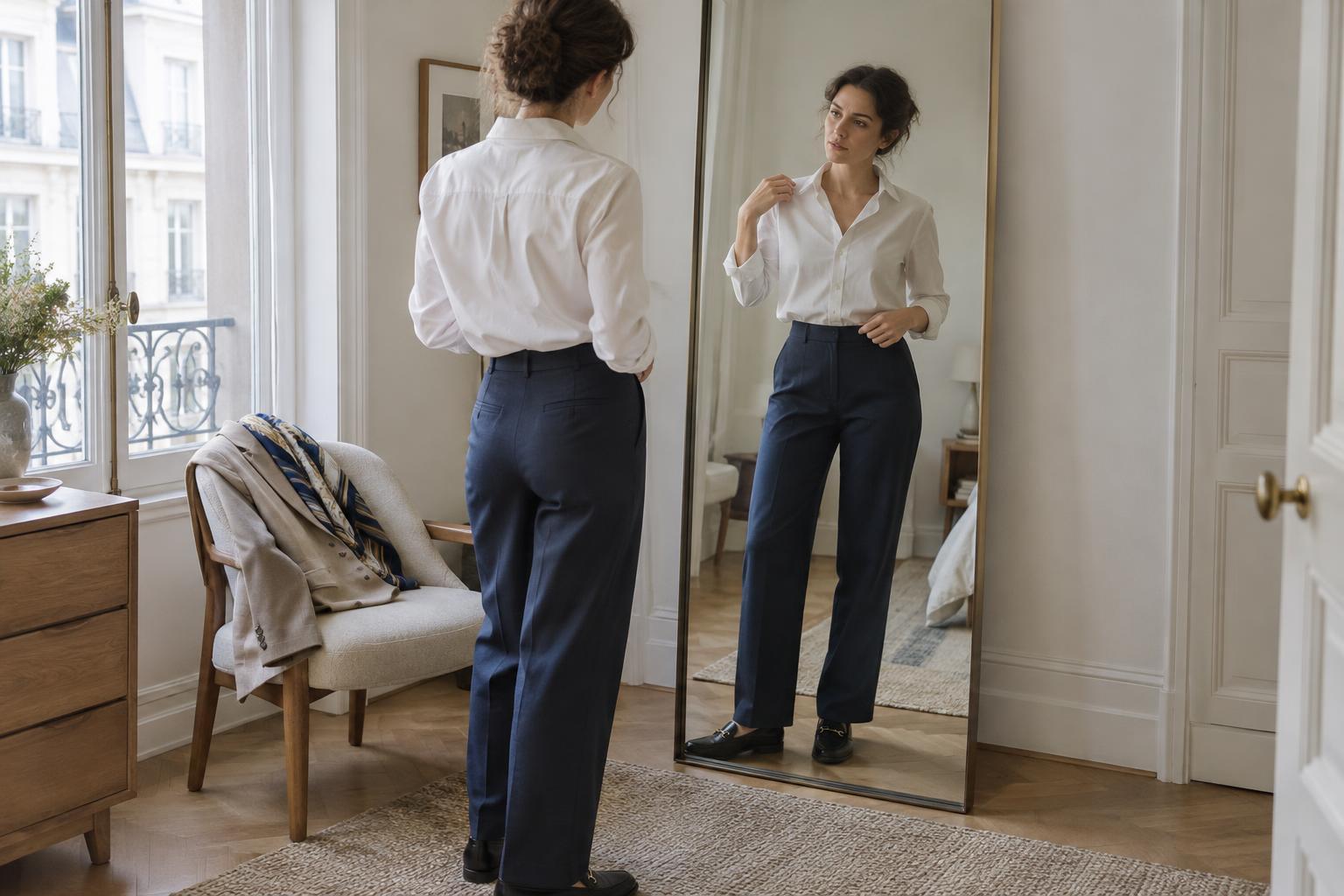
When trying on a basic, stand naturally before adjusting anything. Then sit, walk, reach forward and raise your arms. Notice whether the garment returns to place or needs constant pulling. Bring along, or wear, the shoes and layers you would normally pair with it. This quick movement test makes fit problems easier to spot than a still mirror check alone.
Shoulders: check the garment’s framework
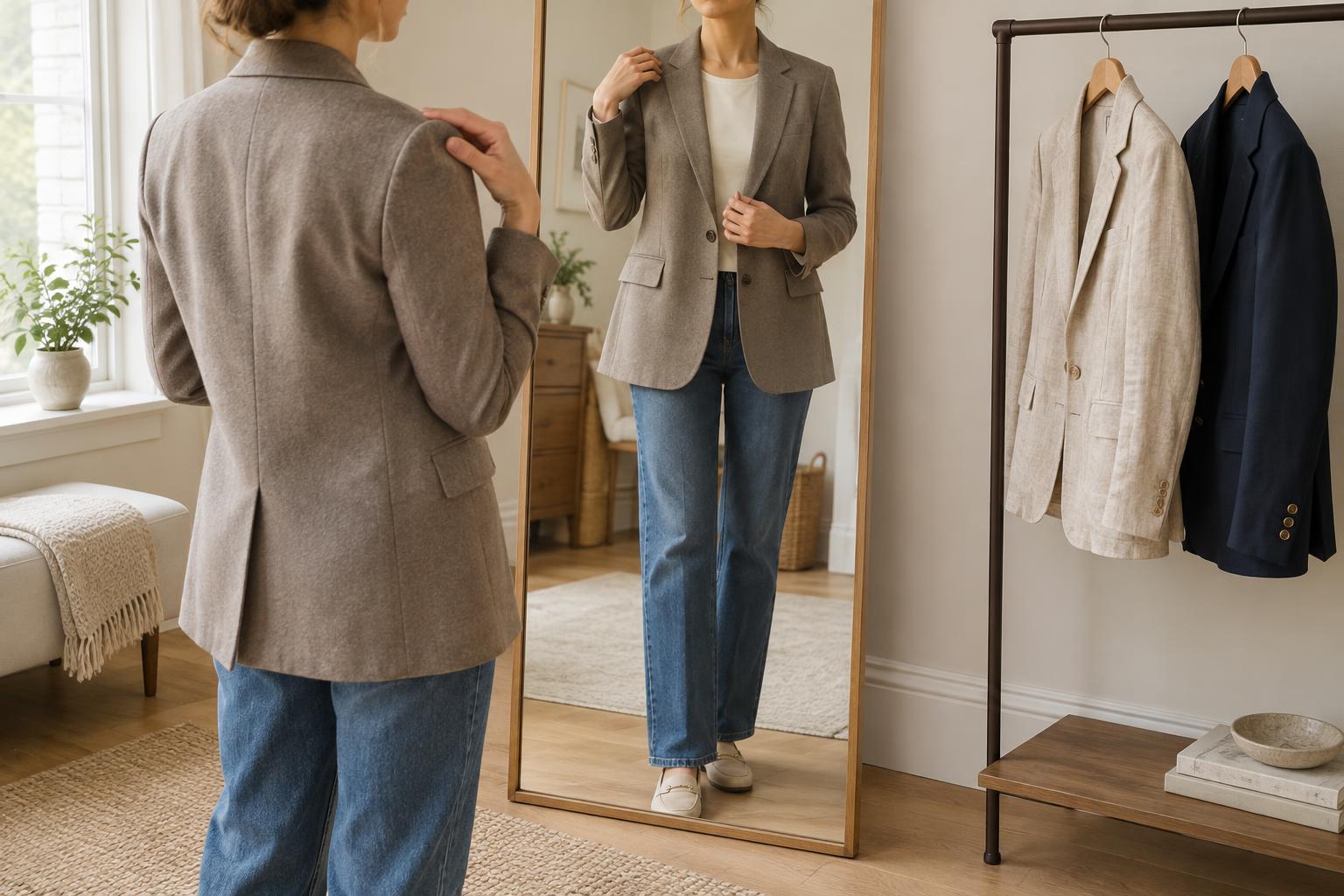
For a structured blazer or coat, look at where the shoulder seam or shoulder edge sits in relation to your own shoulder. If it extends well beyond the intended line, the upper body may look too broad; if it pulls inward, you may feel restricted when reaching. A softly dropped shoulder is different: its seam is meant to sit lower, so assess the overall drape rather than applying a strict seam rule.
On a shirt, check for strain across the upper back and for fabric pulling at the front when you move your arms. A little ease helps a shirt remain comfortable under a jacket. If the shoulders are wrong, changing sizes or trying another cut is often more useful than planning an alteration. Shoulder adjustments on structured garments can be involved, while sleeve length is usually a simpler issue to address.
Waist: distinguish shape from tightness
A defined waist does not need to feel restrictive. On trousers and skirts, the waistband should stay reasonably in place without digging in when you sit. If it gaps at the back but fits comfortably through the hips, a small waist alteration may help. If fastening it creates pulling across the hips or stomach, try a different size or cut before assuming the waist alone is the problem.
For a dress or blazer, look at where the garment narrows. A seam or shaped section that sits far above or below your natural waist can make the whole piece feel awkward, even if its circumference is comfortable. Try it with your usual layers and move around. Light shaping can sometimes be adjusted, but extensive changes to a garment’s proportions may cost more effort than choosing a better-fitting design.
Rise: find where trousers want to sit
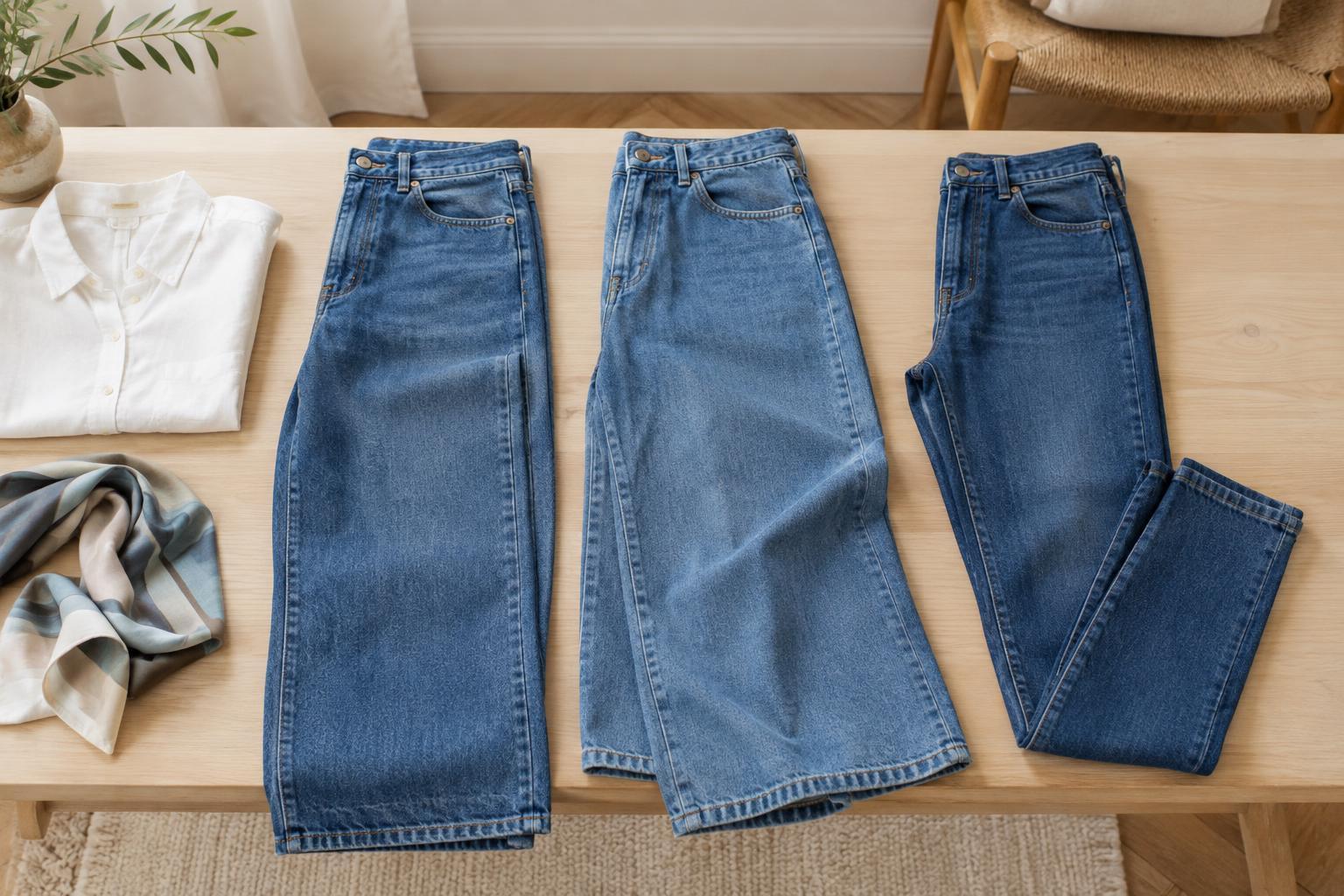
Rise is the distance from the crotch seam to the waistband, and it affects more than whether trousers appear high- or low-waisted. A rise that is too short for you may pull at the crotch or feel uncomfortable when seated. A rise that is too long may leave excess fabric through the front or seat. Fabric, cut and your preferred waistband position all influence how these signs appear.
Button the trousers, let the waistband settle naturally, then sit and stand a few times. Check whether you can move without tugging the waistband back into place. Do not rely only on a front-facing mirror view: the side and back show how the seat hangs. Because rise is difficult to change substantially, treat persistent pulling or bunching as a reason to try another style.
Length: decide with the whole outfit in mind
Length is often the most flexible part of fit, but it should be judged with the right shoes. Trouser hems might graze the shoe, fall near the ankle or sit higher by design; the useful question is whether the line looks intentional and works when you walk. Check that both legs hang evenly and that a hem you like while standing does not feel unexpectedly short when seated.
For shirts, consider whether you want to tuck them, leave them loose or do both. A jacket should work with the layers beneath it without forcing you to adjust its hem. Sleeve length also changes the impression of an outfit: try bending your arms and reaching forward, not just letting them hang at your sides.
Before buying, make a short list of what fits now and what would need changing. Simple hems and modest waist adjustments may be worth considering; uncomfortable shoulders or a troublesome rise are harder to ignore. A versatile basic earns its place when its fit supports the way you actually dress.