Start with the garment, not a rule
A good base layer supports the outfit you want to wear. Sometimes that means an undergarment that disappears; other times, a visible camisole or bra strap is part of the look. Before choosing anything, put on the garment and notice its neckline, armholes, back, fabric weight and fit. Move around, sit down and raise your arms. The mirror will tell you more than the label on an undergarment.
Comfort matters as much as a smooth outline. If a layer slips, pinches or needs constant adjustment, try a different cut or size rather than assuming you must tolerate it. Color is worth testing in daylight, too: a shade close to your skin tone may be less visible beneath a light fabric than bright white, but the best match depends on the garment and your preference.
Match necklines and straps thoughtfully
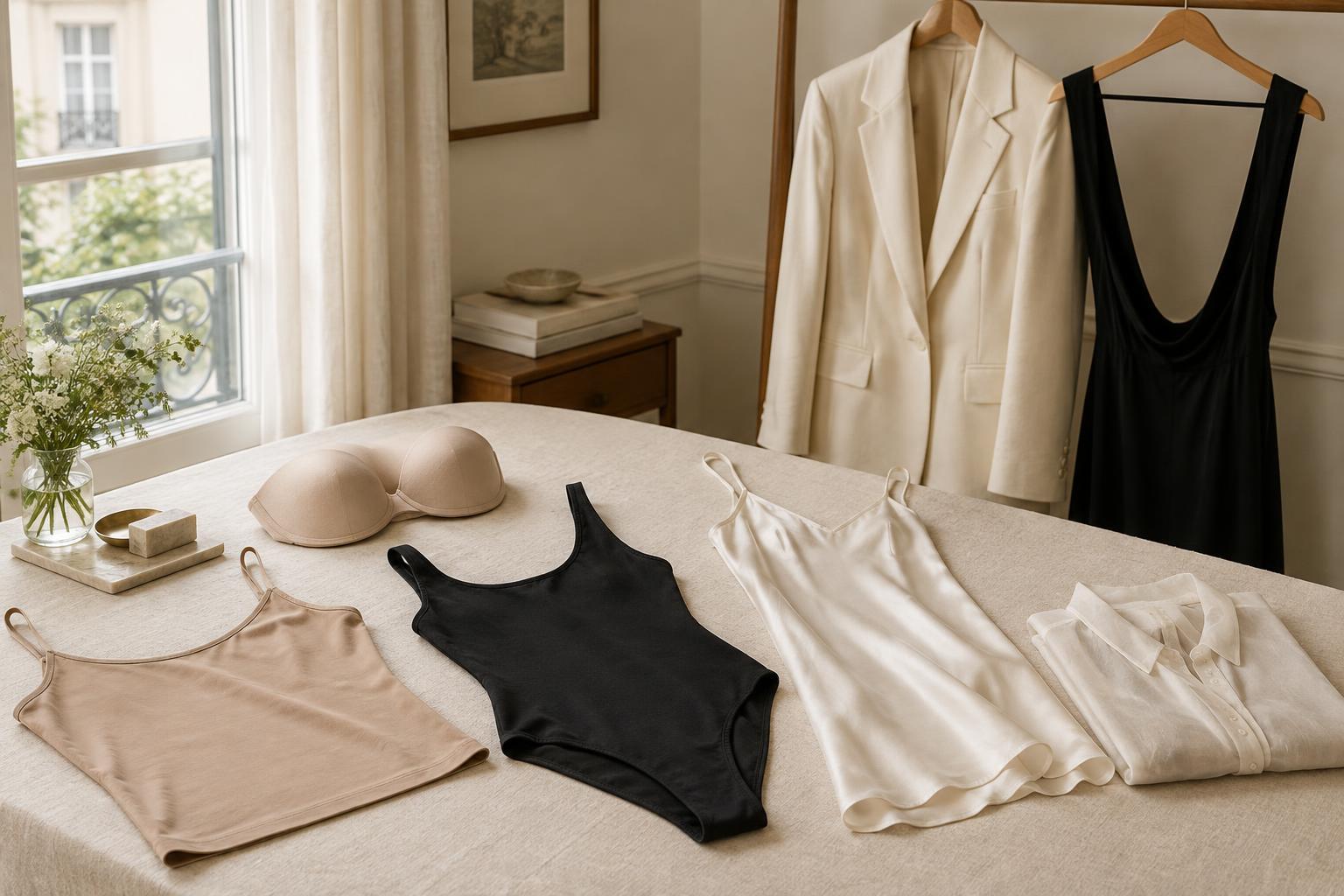
A crew-neck knit or buttoned shirt usually leaves plenty of room for a familiar bra, vest or camisole. A wide boat neck, square neck or off-the-shoulder top calls for a closer look at strap placement. Options include a strapless style that stays secure without digging in, a convertible style with adjustable straps, or a deliberately visible strap in a color that works with the outfit.
For a deep V or wrap neckline, check both coverage and movement. A lower-cut undergarment may follow the neckline, while a lace-trimmed camisole can add coverage and look intentional. If a wrap front shifts when you sit or lean forward, a thin camisole can be simpler than repeatedly readjusting the garment. Choose one that lies flat at the waist so it does not bunch beneath the outer layer.
Sleeveless tops deserve a side view. Armholes can reveal more than a neckline does, particularly on loose blouses. A narrower-cut base layer may stay hidden, while a neat tank can turn that opening into a layered detail.
Plan for open backs and fitted silhouettes
Back details change what will show. With a low or open back, decide whether you want the undergarment to blend in, be visible or be absent. A garment with built-in support may need no additional layer for some wearers. Others may prefer a visible bandeau, a decorative back strap or another style that feels secure. Try the complete outfit before an occasion, especially if you plan to wear it for several hours.
Fitted jersey dresses, thin trousers and close-cut skirts can show seams and waistbands. Smooth-edged undergarments or a light slip may reduce visible lines, but they are choices, not requirements. Avoid sizing down for an artificially sleek finish: a tight waistband can create more bunching and feel uncomfortable. A bodysuit can keep a tucked-in top in place, provided its length and fastening are comfortable when you sit and move.
For tailored trousers, consider where the waistband meets your base layer. A camisole tucked beneath a shirt can keep the shirt from feeling rough against the skin, but extra fabric at the waist may disturb a clean fit. A shorter layer, or one worn untucked under the shirt, may work better.
Work with sheer and lightweight fabrics
A sheer blouse offers several possibilities. A close-fitting camisole creates a quieter foundation; a contrasting tank makes the layering more noticeable. For a lightweight skirt or dress, a separate slip can help the outer fabric move freely and provide the coverage you prefer. Check the slip’s length against the hem and any side slit so it does not appear unexpectedly as you walk.
Fabric texture also matters. A smooth layer tends to sit more easily beneath fine silk or lightweight knits than a heavily textured one. If clothes cling, try a different fabric pairing before adding more layers. In warm weather, a single comfortable layer may be more useful than a complicated combination designed to hide every outline.
Build a small, useful selection
You do not need a separate undergarment for every outfit. Start with the clothing cuts you wear most often, then note the gaps. A comfortable everyday option, a camisole that works beneath light tops, and a base layer suited to your trickiest neckline may cover more situations than a drawer full of rarely worn solutions. Keep a few colors that work with your wardrobe rather than buying an assumed universal shade.
Care helps these pieces keep their shape. Follow each garment’s label, use a gentle wash method where recommended, and let elasticated items dry as directed rather than exposing them to unnecessary heat. Before leaving home, make one final check while standing, sitting and walking. The best base layer is the one that lets you enjoy the outfit without thinking about what is underneath it.