Start with the wardrobe you actually use
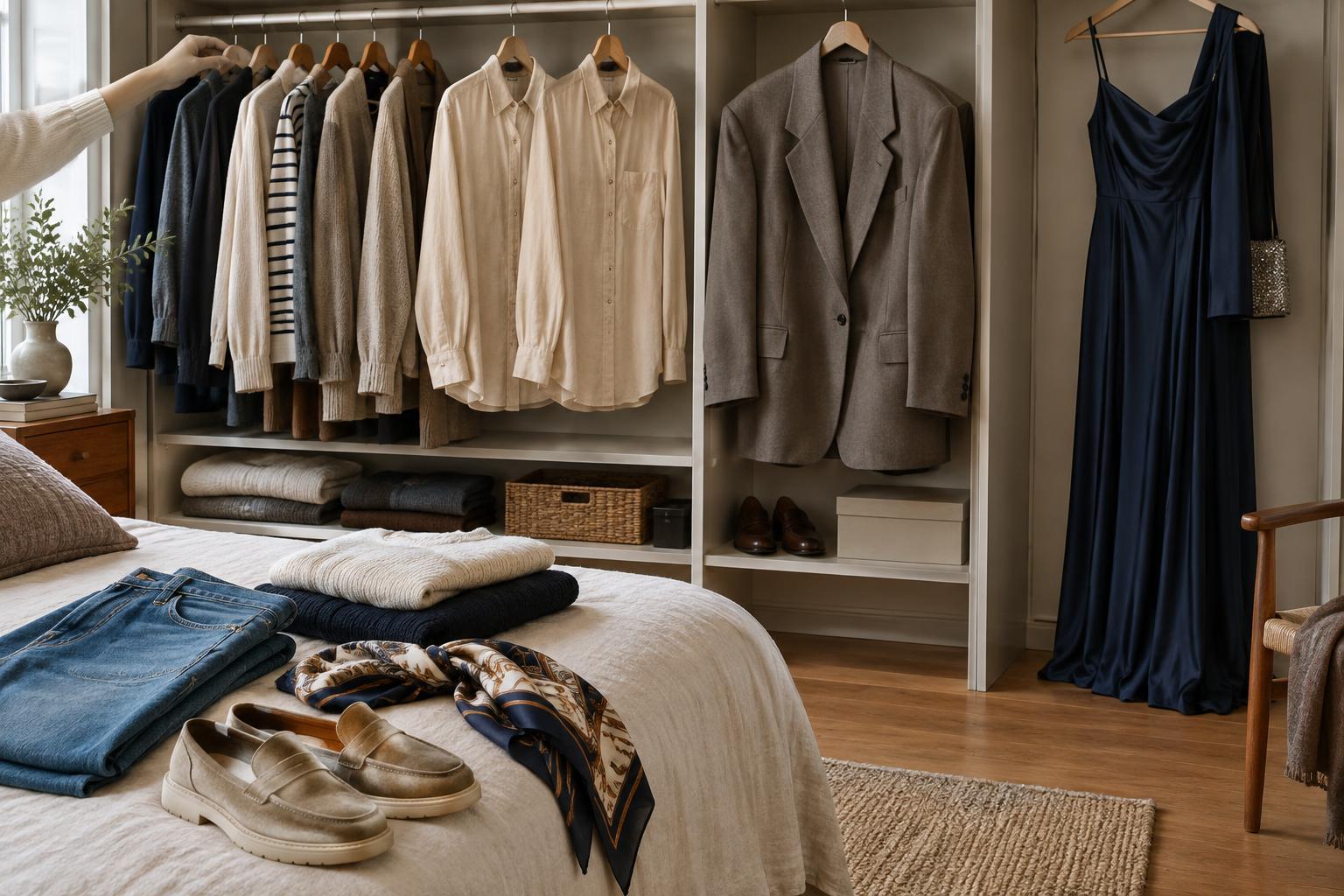
A clothing purchase can seem sensible on its own and still add little to your wardrobe. A navy sweater might be versatile, but if you already reach for two similar ones, a third may spend most of its time folded away. Before shopping, look at what you wear repeatedly, what stays untouched and what feels difficult to style. The aim is not to own as little as possible. It is to make each addition useful alongside what you already have.
Pay attention to the reasons a garment goes unworn. Perhaps its fabric needs more care than you can comfortably give it, its shape works with only one pair of trousers, or it belongs to a lifestyle you rarely lead. Those observations are more helpful than a generic list of wardrobe essentials. A well-chosen piece fits your routine, your preferences and the clothes already in rotation.
Mistake one: buying duplicates without a purpose
Duplicates are not automatically wasteful. If you wear a white shirt often, a second one may let you alternate between washes. The problem is buying near-identical pieces because each looks appealing in isolation, without considering whether it does a different job. Five dark jackets, for example, may offer less flexibility than one jacket and a layer that works in another season.
Before buying, identify the closest item you own and compare them. Does the new piece have a different weight, cut or level of formality? Can you name situations in which you would choose it instead? If the only distinction is a tiny detail you may not notice once dressed, pause. You can also take a quick wardrobe photo before shopping, so you do not have to rely on memory.
Colour variation can be useful when it changes how an outfit comes together. A light scarf may brighten combinations that a dark one does not. But buying every colour of a favourite item is not necessary for a balanced wardrobe. Choose the version you can picture wearing with several pieces you already own.
Mistake two: treating poor fit as a minor detail
A garment can be the right colour and fabric yet remain unworn because it pulls when you sit, slips from your shoulders or needs constant adjustment. Try it on with the movements of an ordinary day: sit, walk, raise your arms and check how it looks from the side. For a coat or jacket, try it over the layers you expect to wear underneath. Comfort matters because even a polished outfit loses its ease when you are preoccupied with fixing it.
Separate alterations you would realistically arrange from changes that depend on wishful thinking. A hem may be straightforward to adjust, depending on the garment, while changing the shoulder line of a tailored jacket is a more involved proposition. If an item needs work before you can wear it, consider that effort as part of the decision rather than assuming you will deal with it later.
Do not let a size label settle the question. Cuts vary, and the best choice is the one that sits well on your body. If you are shopping online, compare the garment measurements with something you own and like, and check the return terms before deciding.
Mistake three: dressing for an imagined calendar
Aspirational pieces can be delightful. The difficulty comes when they crowd out clothes for your actual week. A formal dress may catch your eye while you still lack a comfortable layer for regular outings. Ask yourself where you would wear the item in the next few months and what you would wear with it. If you cannot answer without inventing an occasion or buying several more pieces, it may be better to leave it for now.
You need not limit yourself to purely practical clothing. A silk scarf, an expressive blouse or an elegant pair of shoes can bring pleasure to familiar outfits. Look for a version that belongs in your life as it is: a scarf that works with your usual coat, for instance, or a blouse that feels right with trousers you already wear. That gives the special piece more opportunities to come out of the wardrobe.
Use a short pause before you buy
When you are tempted by an item, give it a simple test: Does it fit comfortably now? What existing clothes will it accompany? Is it meaningfully different from what you own? Will its care requirements suit your habits? You do not need a perfect answer to every question, but uncertainty across several of them is a good reason to wait.
A considered wardrobe does not require strict rules or a fixed number of pieces. It develops as you notice what helps you get dressed with ease. Buying fewer near-duplicates, passing on poor fit and being honest about your routine leaves more room for clothes you will enjoy wearing—not just choosing.