Start with the care label, not a fabric rule
A drying decision affects more than how quickly laundry is ready to wear. Heat and tumbling can change a garment’s fit, wear on its surface or stress details such as elastic, lining and trims. Air drying is gentler in some respects, but hanging a heavy wet knit can stretch it out of shape. The best method depends on both the fabric and the way the garment is made.
Check the care label before choosing a method. A crossed-out tumble-dryer symbol means to skip the machine; dots inside the tumble-dryer symbol indicate permitted heat settings. If a label calls for drying flat, use a surface that supports the whole garment. When a piece combines several materials, such as a cotton dress with a delicate lining, follow the instruction that protects the most vulnerable part. If the label is missing, begin with the lower-heat, lower-agitation option and watch how the garment responds.
Pieces that usually benefit from air drying
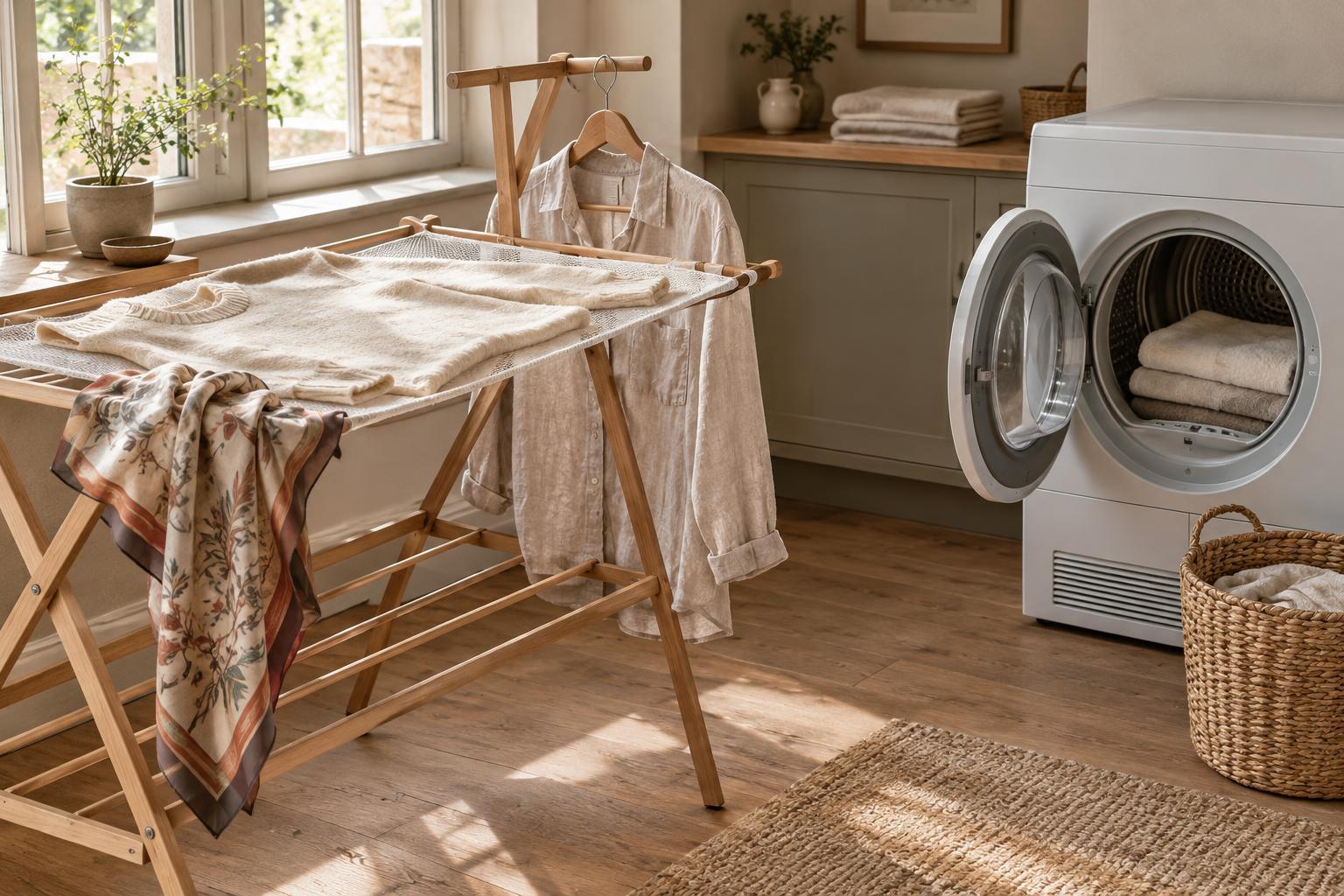
Wool and other knitted garments are often best dried flat. After washing, gently press out excess water without wringing, reshape the garment and lay it on a clean towel or mesh rack. Hanging a wet sweater from its shoulders can pull the knit downward; placing it in direct heat may dry it unevenly. Give thicker pieces enough time to dry through before folding them away.
Silk scarves, lightweight blouses and other delicate pieces generally benefit from careful air drying when their labels permit washing. Smooth out creases, then hang or lay them where air can circulate, away from strong direct sunlight that may affect some colors. Lace, embroidery, beading and garments with structured details also deserve caution: even a low-heat tumble can cause snagging or distort a trim.
Stretch fabrics, tights and clothes with elastic waistbands often last better when kept out of high heat. A rack works well for these items, provided they are spaced apart rather than folded over one another in thick layers. For a lined jacket or tailored piece, do not assume that air drying makes home laundering safe. Its construction may call for a different cleaning method altogether.
When tumble drying can be the practical choice
Sturdy cotton basics, towels and many bed linens can often be tumble dried if their labels allow it. The movement helps separate layers of fabric, while steady airflow can be useful when indoor air drying would leave thick items damp for too long. Choose a setting suited to the load rather than defaulting to maximum heat, and remove items when dry instead of running an extra cycle.
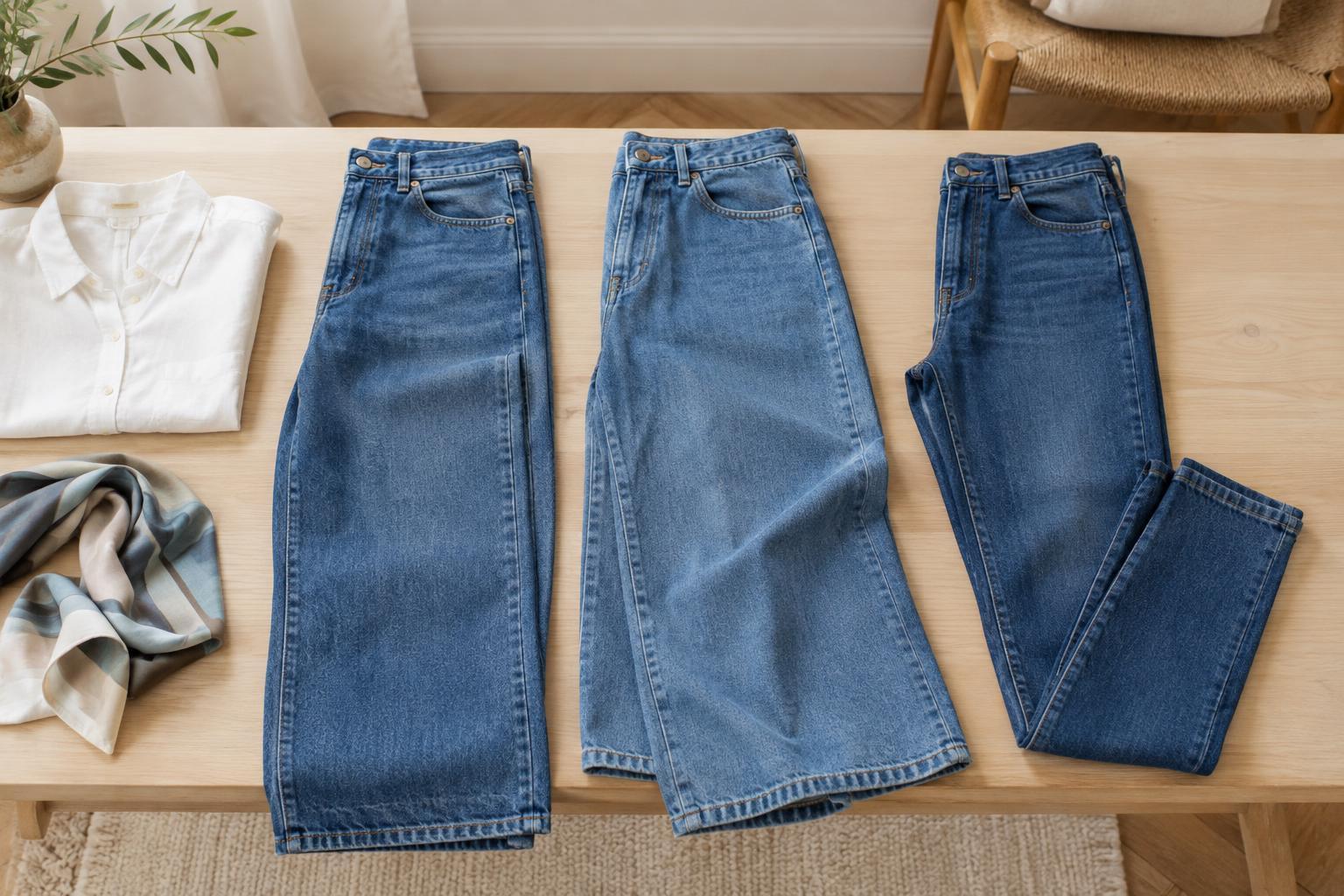
Cotton is not an automatic yes for hot drying. A cotton shirt may have a fitted shape, print or trim that benefits from less heat, and some cotton garments can shrink. Denim may be machine-dryable, but air drying or a lower-heat setting is worth considering when preserving fit is the priority. Check the label on each piece rather than treating all cotton or denim alike.
Some padded items need tumble drying to restore their loft, but only when their care instructions specifically allow it. They may require a low setting and enough room to move. If the filling remains damp inside, the item is not ready to store, even if its outer fabric feels dry.
A simple method for mixed wardrobes
Sort a load before drying it, not just before washing it. Separate delicate fabrics, knits and elastic-rich garments from towels and other sturdy pieces. This small pause makes it easier to give each item the method it needs: a flat rack for a sweater, a hanger for a washable shirt, and an appropriate machine cycle for towels.
Air drying works best with space. Leave gaps between garments, use a well-ventilated area and turn thick items if one side stays damp. Avoid putting wet clothes straight into a crowded wardrobe. For machine drying, keep loads loose enough to move and clean the lint filter as directed by the appliance manufacturer. If you are unsure about a favorite piece, drying it more gently takes longer but gives you a chance to assess the result before using more heat next time.