Start with the space around the neckline
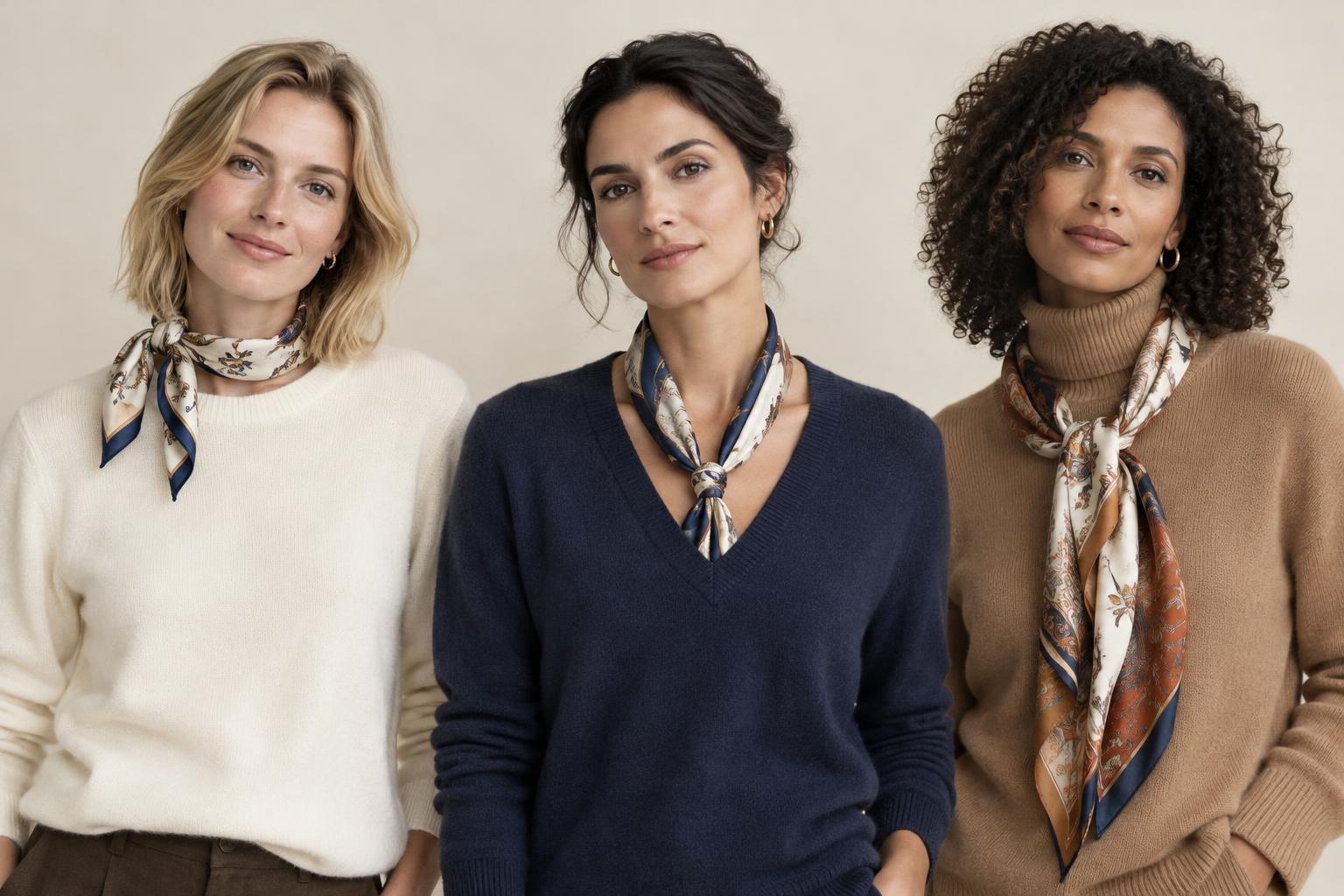
The most useful question when tying a scarf is not “Which knot is best?” but “Where is there room for it?” A crewneck leaves a narrow band of skin or fabric at the throat. A V-neck opens a longer shape down the chest. A turtleneck already fills the space around the neck. Each calls for a different balance between the knot, the scarf’s loose ends and the clothing beneath it.
Before tying, put on the top and any jacket you plan to wear. A knot that looks right over a sweater may feel crowded once a blazer is added. Consider the scarf’s width, too: a small silk square can sit close to the neck, while a longer, softer scarf can hang lower. Neither needs an elaborate technique. A simple tie that stays in place and feels comfortable is often the most useful choice.
Crewnecks: frame the collar without crowding it
A crewneck’s rounded edge gives a scarf a clear line to follow. For a small square scarf, fold it into a narrow band, wrap it once around the neck and make a loose single knot slightly to one side. Let the short ends rest above the collar or tuck them gently inside it. Leaving a little space between the knot and your throat keeps the effect relaxed rather than tight.
If the sweater or T-shirt has a high, close-fitting crewneck, place the knot below the collar instead of directly against it. A longer scarf folded lengthwise can be draped around the neck with both ends falling down the front; a light half-knot keeps it from slipping. With a chunky knit, choose a thin scarf so the accessories and collar do not compete for the same space. A smooth silk square can add definition to a plain cotton or fine-knit top without adding much bulk.
V-necks: work with the open shape
A V-neck creates a point, so a scarf can either echo that line or soften it. To follow the shape, fold a square scarf into a triangle and set the point toward the chest. Bring the ends around the neck and tie them loosely at the back, or bring them forward and tuck them beneath the triangle. Adjust the front point so it sits comfortably within the opening rather than pulling across the neckline.
For a lighter touch, fold the scarf into a long band and tie a small knot at the side, leaving part of the V visible. A long scarf can also hang with two untied ends, creating vertical lines that suit a deeper V. If the scarf covers the entire opening, the neckline may become hard to distinguish; that can be a deliberate look, but it is worth checking in a mirror. Keep necklaces minimal when they occupy the same space as the scarf, or let one accessory take the lead.
Turtlenecks: let the scarf sit over the fabric
Because a turtleneck already covers the neck, there is no need to squeeze a knot against the collar. Try a narrow silk scarf tied loosely over the roll, with the knot at the side and the ends hanging down. This creates a small point of contrast against a solid-colored knit. If the collar is thick, move the knot lower or use a longer scarf that can drape without a knot.
Another option is to fold a square into a triangle and wear it over a fine turtleneck, with its point on the chest. Keep the folds soft rather than pressing them flat against the sweater. Check how the scarf moves when you turn your head or put on a coat: a tie that rides up can be loosened, shifted lower or replaced with a simple drape. For bulky ribbed knits, a narrow, lightweight scarf is usually easier to arrange than a heavy one.
Make the tie feel like part of the outfit
Once the shape works, look at scale and color. A small patterned square can bring detail to a quiet outfit, while a longer scarf in a color already present in your clothing can create a calmer effect. You do not need a precise color match: repeating a general tone or choosing clear contrast can both look intentional. Let the fabric guide the tie as well. Crisp silk holds a defined fold; softer silk or a lightweight woven scarf is better suited to a loose knot or drape.
Finally, wear the scarf for a few minutes before deciding it is finished. Sit down, turn your head and try on your outer layer. If the knot presses at your throat or the ends catch on a fastening, adjust the length or choose another tie. The best scarf arrangement is one you can leave alone as you go about your day.