Start with the outfits you actually wear
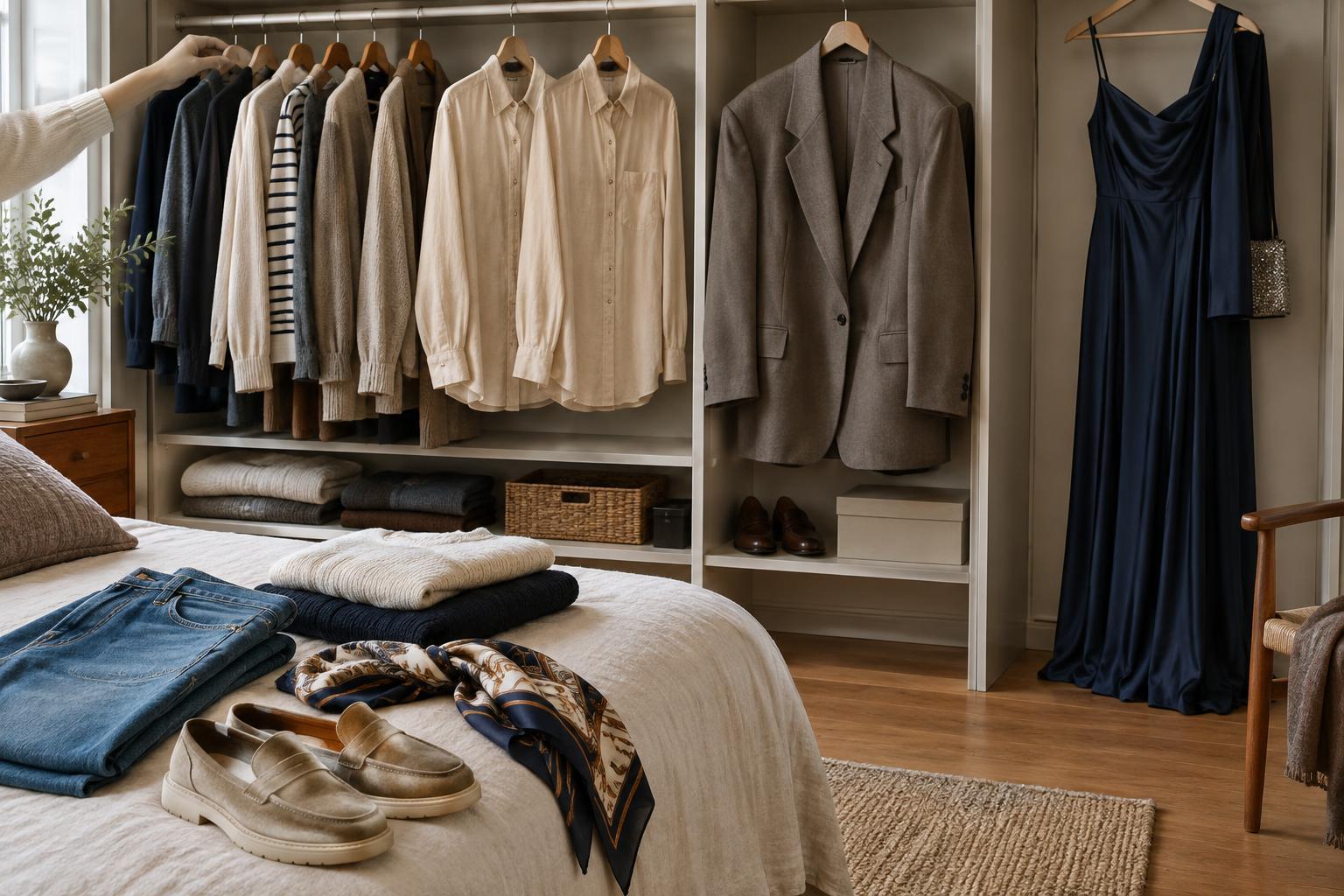
An everyday sweater does not need to work with everything. It needs to work with the trousers, skirts, shirts and coats you reach for most often. Before choosing one, picture three ordinary outfits: perhaps a sweater over a collared shirt, one tucked into high-waisted trousers and one worn beneath a jacket. Those combinations give you a more useful test than asking whether a sweater is simply “versatile.”
Think about where you will wear it, too. A sweater for indoor days may need to sit neatly under a blazer, while one for walks may need room for a base layer. If your wardrobe is built around tailored pieces, a smoother knit can create a tidy line. If you prefer relaxed denim and loose outerwear, a more textured sweater might feel at home. Let your existing clothes set the brief.
Understand what knit gauge changes
Knit gauge describes how closely the stitches are worked. In everyday shopping, “fine gauge” usually points to smaller, closer stitches, while a chunkier knit has larger, more visible stitches. Gauge affects the sweater’s look and the amount of space it takes up in an outfit, but it does not tell the whole story about warmth or durability. Fiber, yarn and knit density matter as well.
Fine-gauge sweaters are often easier to layer beneath fitted coats or jackets and can look polished with tailored trousers. Mid-gauge knits offer a useful middle ground: enough texture to stand on their own without always feeling bulky. Chunky knits bring more visible texture and may work best when your outerwear has room in the arms and shoulders. Try putting your usual coat over a sweater before deciding; a knit that looks ideal on its own can feel crowded once you add another layer.
Look closely at the fabric rather than relying only on a label. Hold it up to the light to see how open the stitches are, and gently stretch a small area to notice whether it returns to shape. An open knit may call for a layer underneath. A dense knit may feel more substantial, though comfort and warmth will still depend on the yarn.
Choose a neckline that works with your layers
A crewneck is a straightforward choice if you like a clean frame around the face. It can sit neatly beneath a jacket and leaves room for a scarf to be the visible accessory. If you regularly wear collared shirts, check whether the sweater’s neck opening lets the collar lie comfortably rather than bunching underneath.
A V-neck creates space for a shirt collar, a simple necklace or a silk scarf tied close to the neck. Its depth makes a difference: a shallow V can feel nearly as easy to wear as a crewneck, while a deeper one may require more thought about what goes underneath. A mock neck offers some coverage without folding over; a turtleneck gives a stronger shape but may feel restrictive if you dislike fabric close to your neck.
Choose the neckline in a fitting room or at home with a familiar top, not in isolation. Notice whether it stays where you want it when you move and whether its edge sits comfortably against your skin. The best neckline is one you will not have to keep adjusting throughout the day.
Check fit while moving, not just standing still
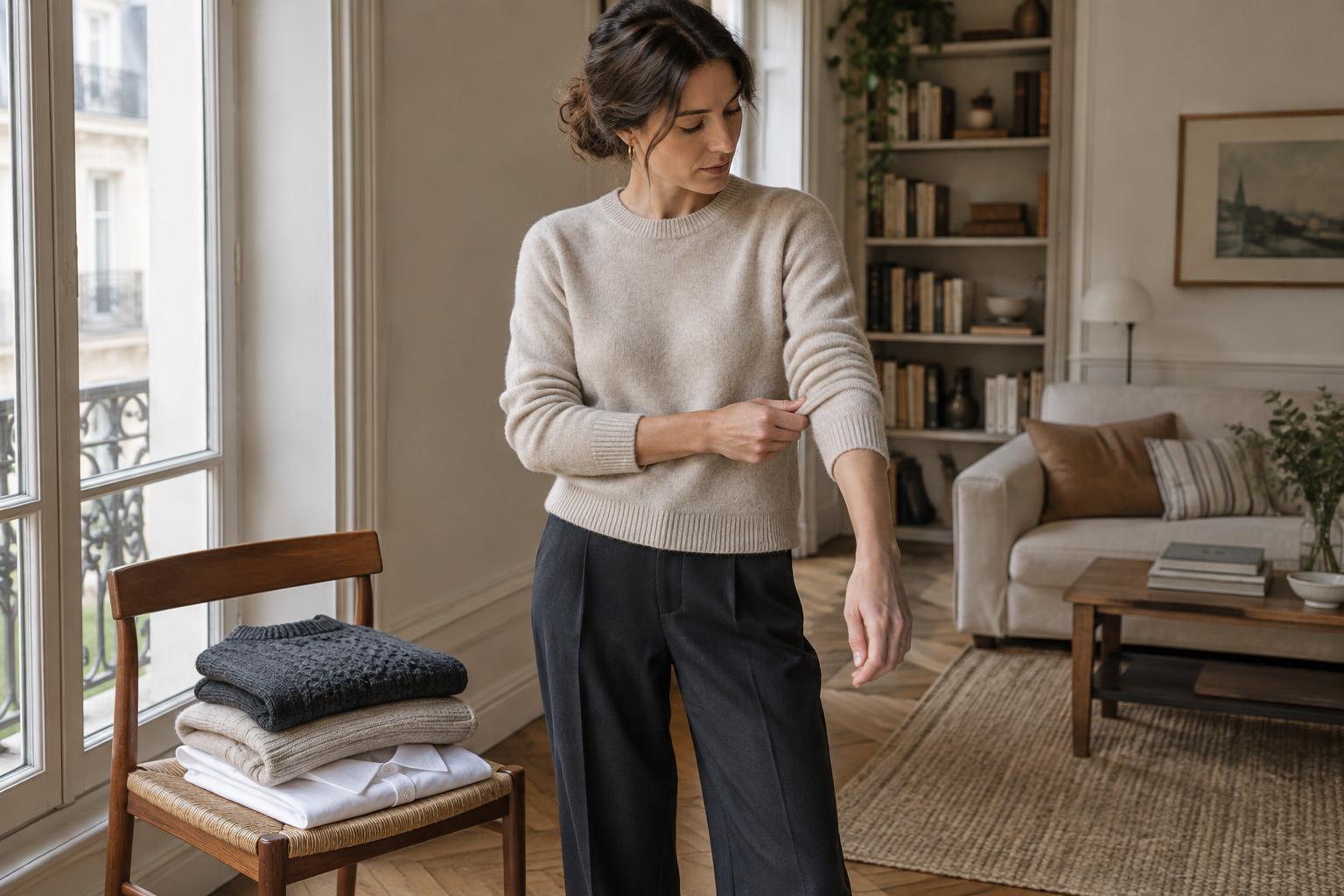
Begin at the shoulders. A set-in shoulder seam usually looks neat when it sits near your natural shoulder, but a deliberately dropped shoulder can be equally comfortable if you like a relaxed shape. Raise your arms, reach forward and sit down. If the sweater pulls across your back, rides up sharply or feels tight at the underarm, it may be less pleasant to wear than it looks in the mirror.
Next, check the sleeves and hem against your usual clothes. Cuffs that sit where you want them are easier to live with than sleeves you must constantly push back. A hem that ends near the waistband can balance wider trousers; a longer hem may suit a narrow bottom or a loose, untucked outfit. If you plan to tuck the sweater, test that too. Fine knits often create less bulk at the waist, but the cut matters as much as the gauge.
Finally, consider ease: the space between the sweater and your body. An everyday fit should give you enough room for the layers you expect to wear without losing the shape you like. Your preferred fit may be close, straight or oversized. What matters is that it feels intentional with your wardrobe and comfortable through a normal day.
Make the final choice with feel and care in mind
A sweater can meet every styling requirement and still be the wrong choice if it irritates your skin. Feel the yarn at the neck and wrists, where it is likely to touch you most. If possible, spend a little time wearing it rather than judging it after a few seconds. Check the care label as well: an everyday piece should fit the amount of washing, drying or careful storage you are willing to do.
Before buying, compare the sweater with one you already wear often. Is the new one filling a gap in gauge, neckline or fit, or does it duplicate a piece you rarely choose? A useful everyday sweater is not necessarily the plainest option. It is the one whose texture, shape and upkeep make it easy to wear again and again.