Start with the evening plan, then build a daytime base
When there is no time or place to change, the most useful outfit is not necessarily the dressiest one. It is the one that feels comfortable throughout the day and can be adjusted to suit the evening setting. Before getting dressed, consider where you are going, how formal it is, whether you will be outdoors, and how far you need to walk. Those details matter more than a generic rule about what counts as an evening look.
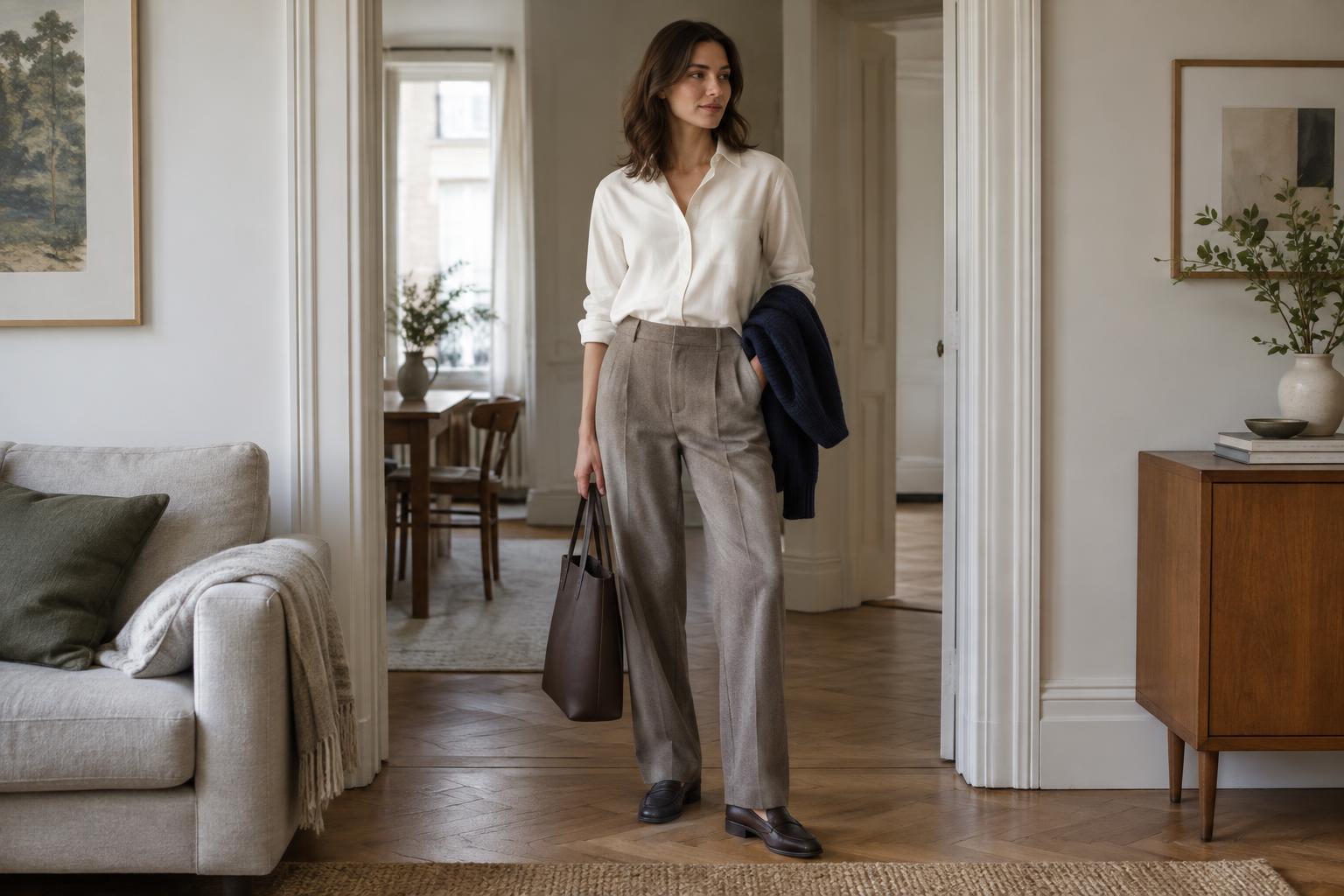
Choose a base that can sit comfortably in both parts of the day: tailored trousers and a simple top, a midi dress under a jacket, or a skirt with a fine knit. A restrained color palette can make later changes feel intentional, but it need not mean wearing only black. Navy, cream, charcoal, deep brown, and muted color combinations are equally adaptable. Check that you can sit, move, and manage the day’s weather in the outfit before relying on it for an evening event.
Let one layer do two jobs
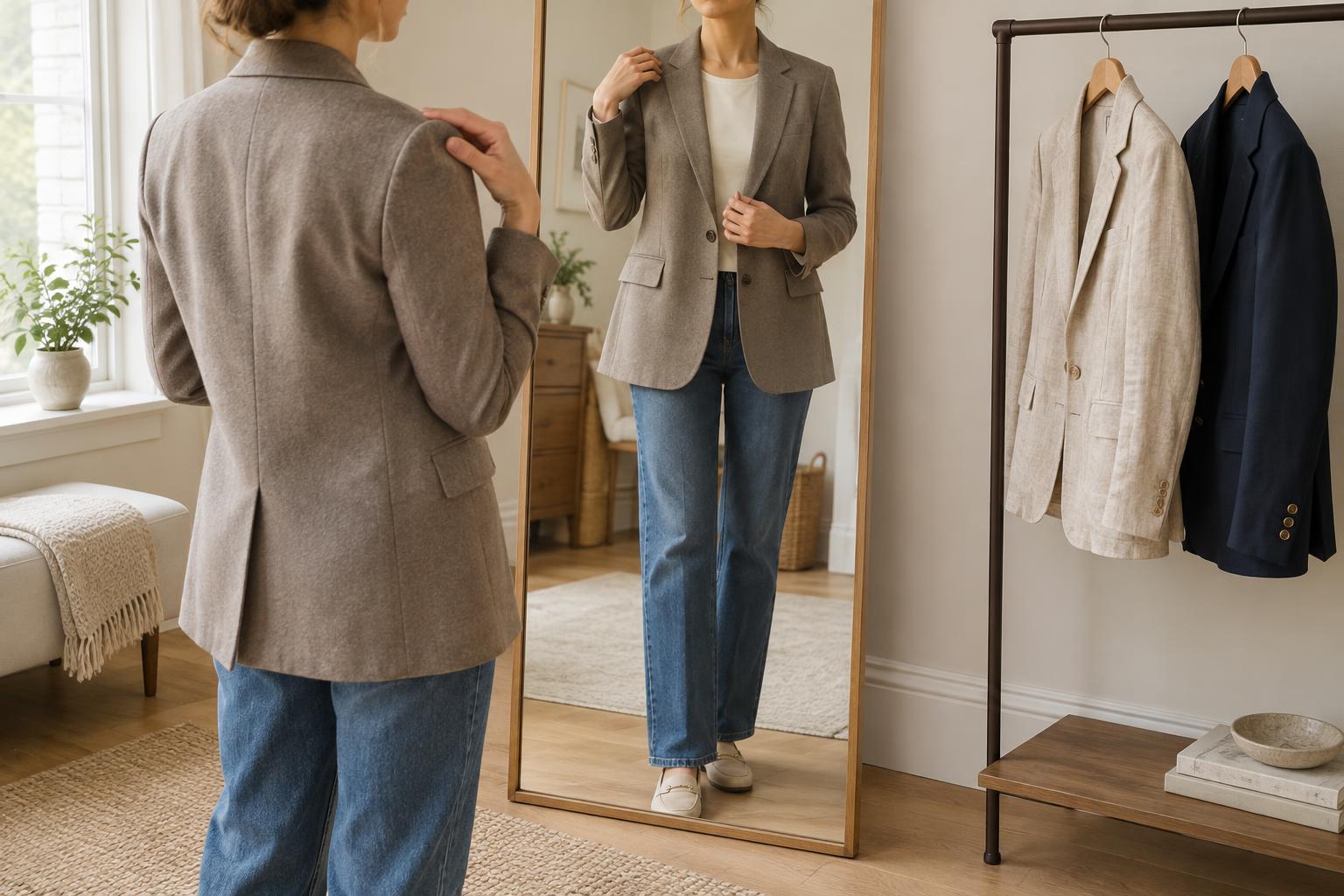
A jacket or cardigan can make a lighter outfit practical during the day and give it structure at night. A blazer worn over a dress, for example, may suit a meeting or a cool commute. For dinner, you can remove it to show the dress’s neckline or sleeves. Alternatively, keep it on and push up the sleeves slightly for a more relaxed shape. Neither adjustment requires spare clothes.
Think about what your outfit looks like both with and without its outer layer. If you plan to take off a jacket, the top underneath should feel finished on its own. If you need the layer all evening, choose one whose fit allows you to move easily and whose fabric will not leave you uncomfortably warm indoors. An extra layer is most useful when it solves a practical problem as well as a styling one.
Pack small changes with a clear purpose
A compact evening kit can make more difference than carrying a second outfit. Depending on the occasion, it might contain a pair of earrings, a silk scarf, a slim belt, or a small bag that folds into your daytime tote. Pick one or two items that change the focus of the outfit. Earrings can draw attention toward the face; a scarf tied at the neck or on a bag can introduce color; a belt can alter the outline of a loose dress or jacket.
Avoid packing accessories simply because they look festive in isolation. They should work with the clothes you are actually wearing and be easy to put on in a few minutes. If changing shoes is realistic, choose a pair you can carry and wear comfortably for the rest of the evening. If it is not, start the day in shoes that already suit both plans. Comfortable flats, loafers, or low heels can be more useful than a spare pair you will dread wearing.
Use quick styling adjustments to shift the mood
The transition often depends on presentation rather than new garments. You might tuck in a top that was worn loose during the day, open the top button of a shirt, change how a scarf is tied, or swap a roomy work bag for a smaller one. Choose adjustments that feel natural on you. An evening outfit does not have to be more revealing or heavily accessorized to look considered.
Give yourself a short reset before you leave for the occasion. Smooth or brush the garment where needed, check for lint, and straighten a collar, hem, or scarf. If your clothes crease easily, hanging your jacket during the day when possible may help. These small steps are especially worthwhile when you have spent hours commuting or sitting; they make the existing outfit look cared for without requiring a complete change.
Prepare for the parts you cannot predict
A good day-to-evening plan leaves room for weather, walking, and the formality of the occasion. For a celebration with a clear dress code, check whether your base outfit meets it before counting on accessories to bridge the gap. For a relaxed dinner or gallery visit, a polished everyday outfit may need very little adjustment. The goal is to feel appropriately dressed for the actual invitation, not to make every evening plan look the same.
Try the full outfit and its evening variation at home if the occasion matters to you. Take a few steps in the shoes, put your essentials in the smaller bag, and see whether the layer you plan to remove is easy to carry. That brief test can reveal more than adding another accessory. When each piece earns its place, changing the mood of an outfit becomes a manageable transition rather than a second round of getting dressed.