Start with the setting, not the occasion label
A dinner party can mean anything from a relaxed meal around a kitchen table to a carefully planned evening with several courses. Before choosing clothes, consider what you know about the host’s home and the invitation. Is there a dress code? Will guests be seated on a sofa, gathered around a table or moving between rooms? If you are unsure, aim for one step above your usual everyday clothes rather than assuming restaurant-level formality.
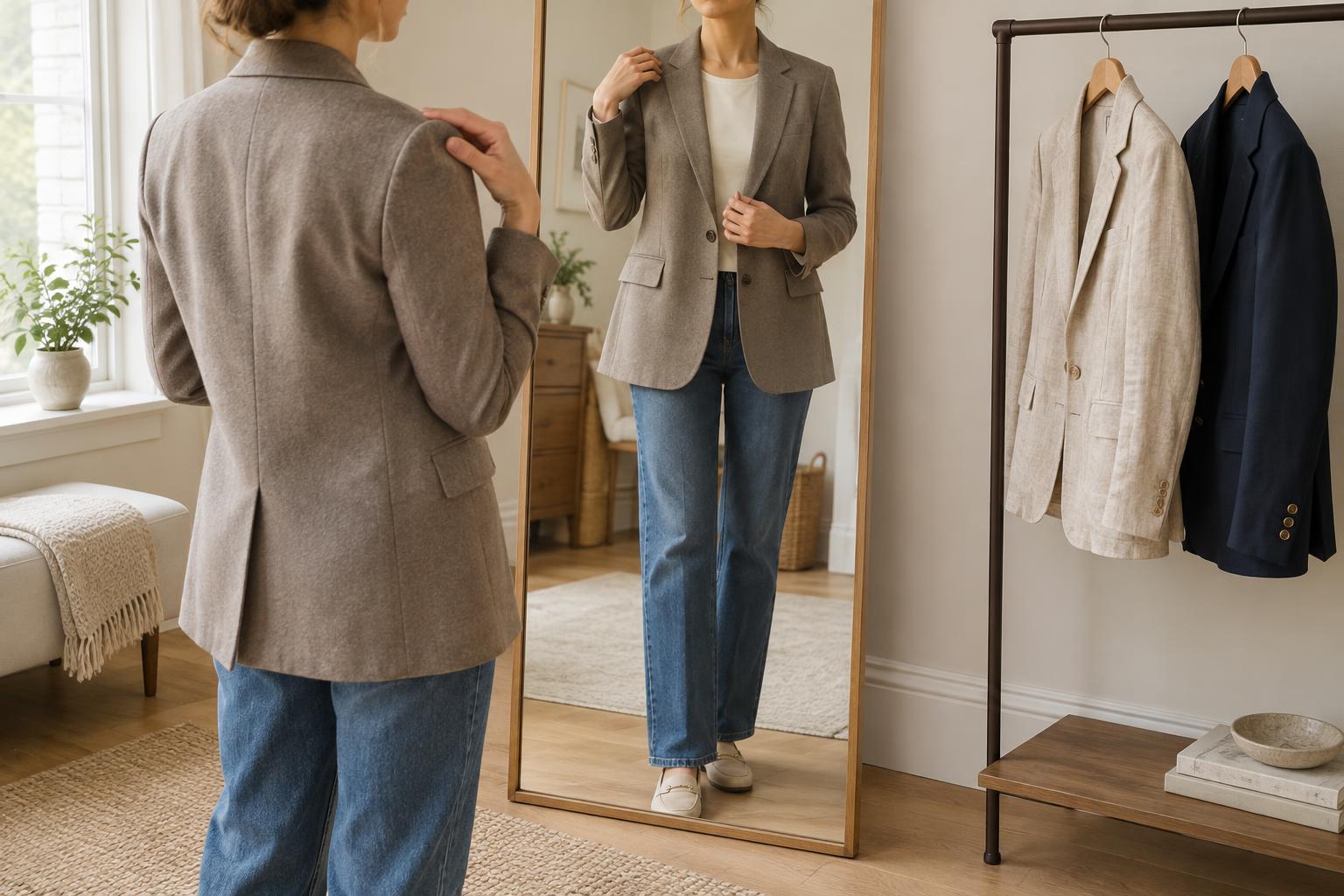
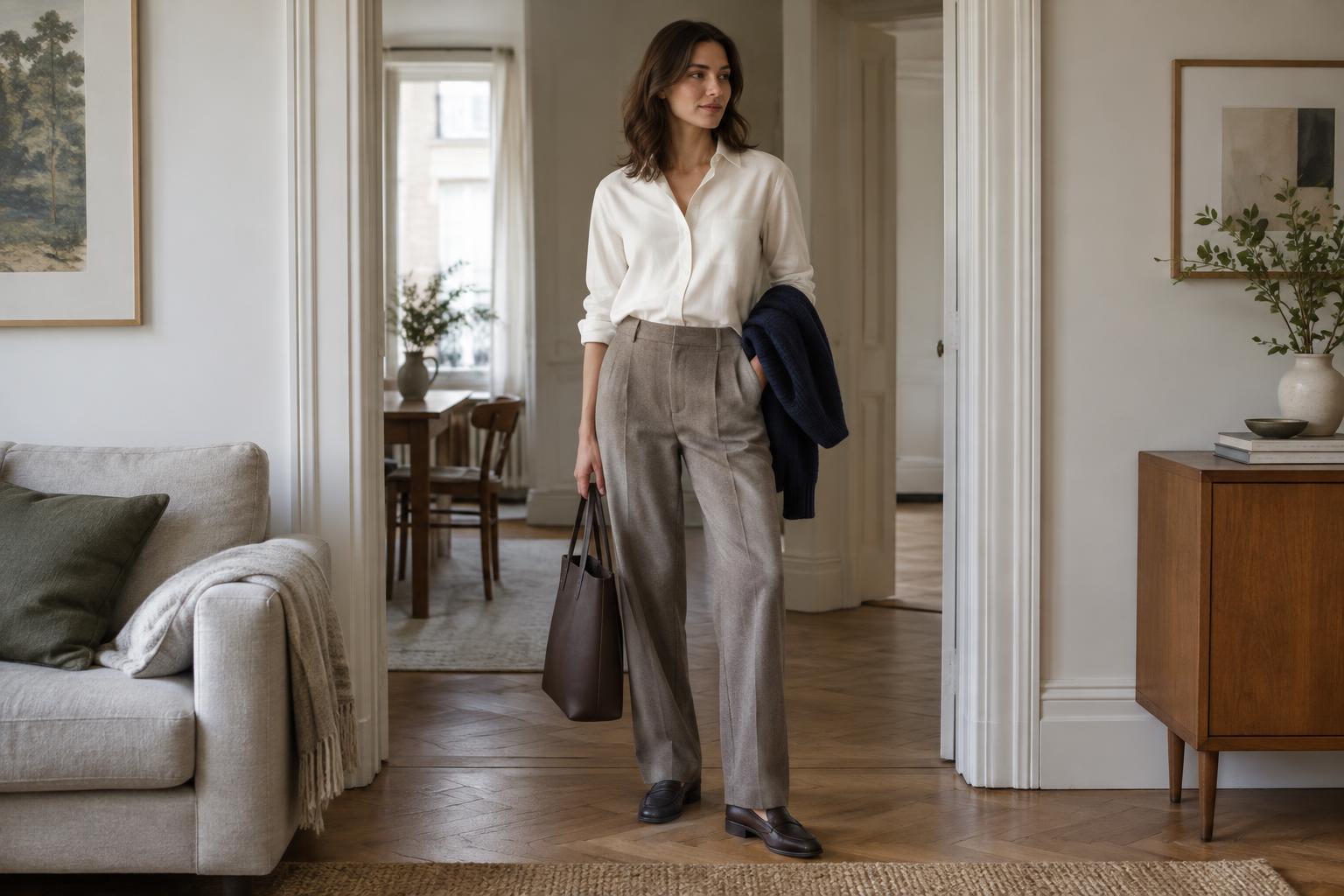
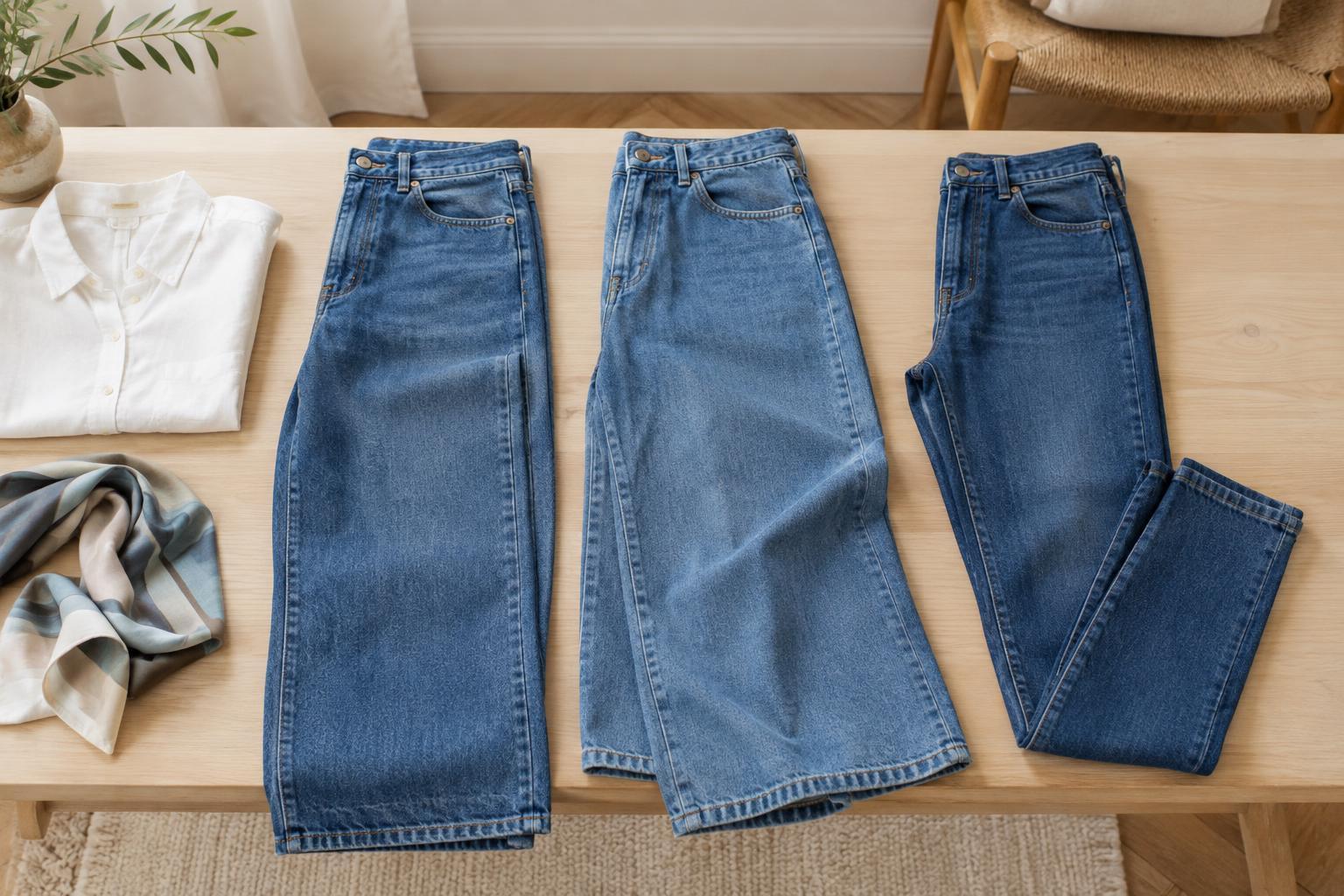
A useful starting point is a familiar outfit with one element that feels considered: tailored trousers with a soft blouse, a simple dress with an elegant cardigan, or dark jeans with a refined jacket if the gathering sounds casual. This approach gives you room to adjust. It also keeps the focus on being a comfortable guest, not on wearing an outfit that needs constant attention.
Choose clothes you can sit and move in
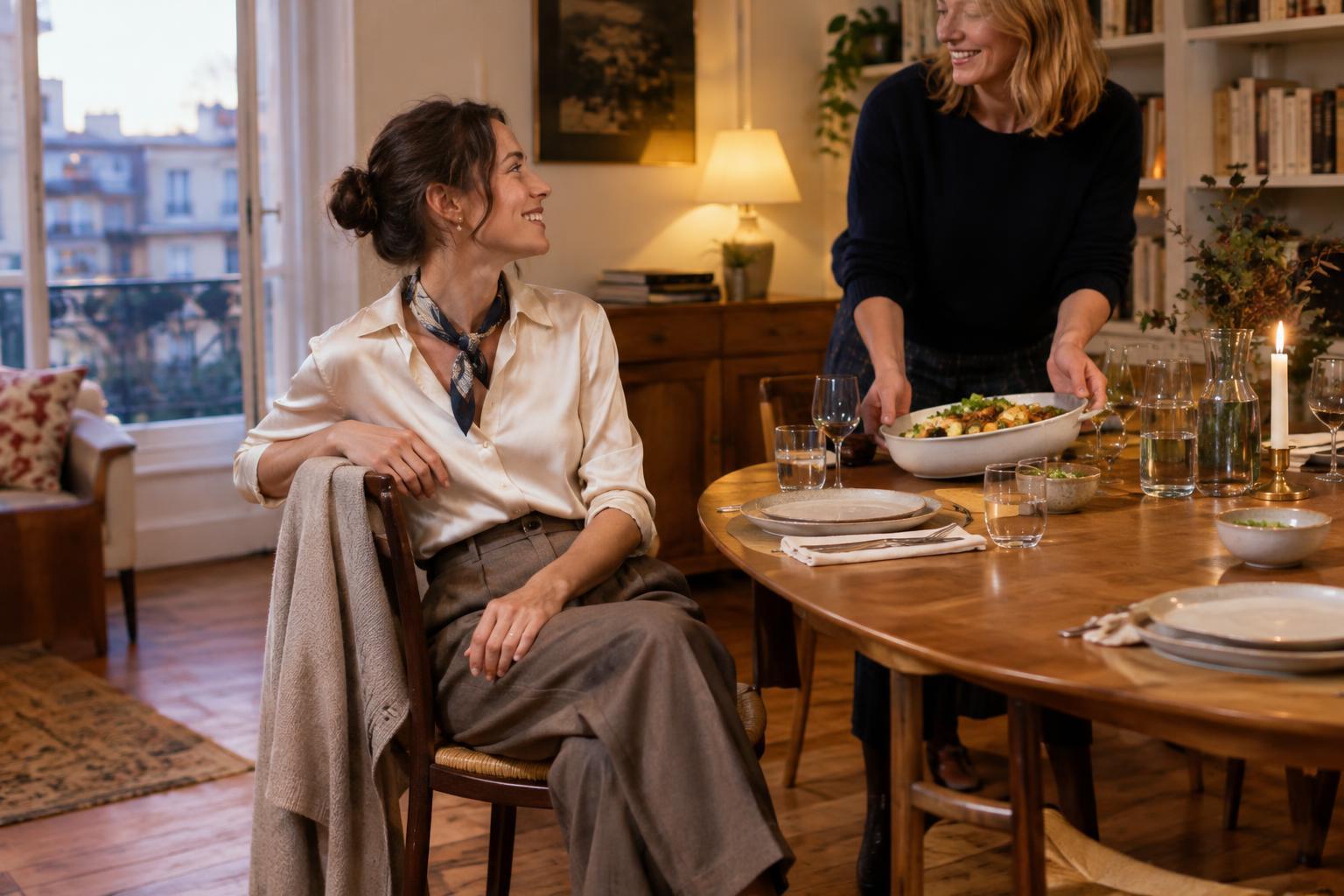
At home, guests may sit for longer than they would at a restaurant, sometimes on low chairs or a sofa. Try your outfit while seated before you leave. Check whether a waistband presses, a skirt rides up, sleeves catch on the table or a neckline needs frequent adjusting. A garment that looks beautiful while standing may feel less effortless halfway through dinner.
If you might offer to carry plates or help clear the table, think about movement too. Sleeves that stay out of the way, trousers with a comfortable fit and a dress that allows a natural stride can make the evening easier. You do not need to dress for housework; you simply want clothes that let you participate without worrying about every gesture.
Plan for floors, footwear and changing temperatures
Shoes deserve more thought in a home than in a restaurant. You may cross delicate floors, climb stairs or encounter a request to remove your shoes. Clean, comfortable flats, loafers or low heels are versatile choices. If you expect shoes to come off, choose socks or hosiery you are happy to wear in company. Follow the host’s lead rather than assuming every home has the same custom.
Indoor temperatures can also be hard to predict. A light layer, such as a fine cardigan or unstructured jacket, is easier to manage than a heavy piece you must keep on to complete the outfit. Choose one that still looks intentional when removed. If you are carrying a coat, consider whether your outfit feels finished without it once you are inside.
Let accessories add interest without getting in the way
A small accessory can make a straightforward outfit feel ready for an invitation. A silk scarf tied close to the neck, simple earrings or a well-chosen belt adds detail without requiring a new ensemble. The most useful pieces stay comfortable through a long meal. If a bracelet knocks against the table or a long necklace dips toward your plate, it may be better saved for another occasion.
Fragrance is worth considering in a shared dining space. If you wear it, a light application is generally more considerate than a strong scent that competes with the food. The same principle applies to the rest of the look: polish does not have to mean excess. A balanced outfit gives each element room to be noticed without demanding attention.
Make a final check before you go
Once dressed, spend a minute doing what you will actually do at dinner: sit down, stand up, reach forward and walk across the room. Check that your shoes feel secure and that your layers work together. This quick test is often more useful than another look in the mirror. If something needs repeated fixing, swap it for a more dependable piece.
Then leave a little flexibility in the outfit. A jacket can come off, a scarf can be loosened and comfortable shoes can carry you through an unexpectedly long evening. Dressing well for a host’s home is less about achieving a perfect formal look than arriving prepared to relax, enjoy the company and feel at ease in someone else’s space.