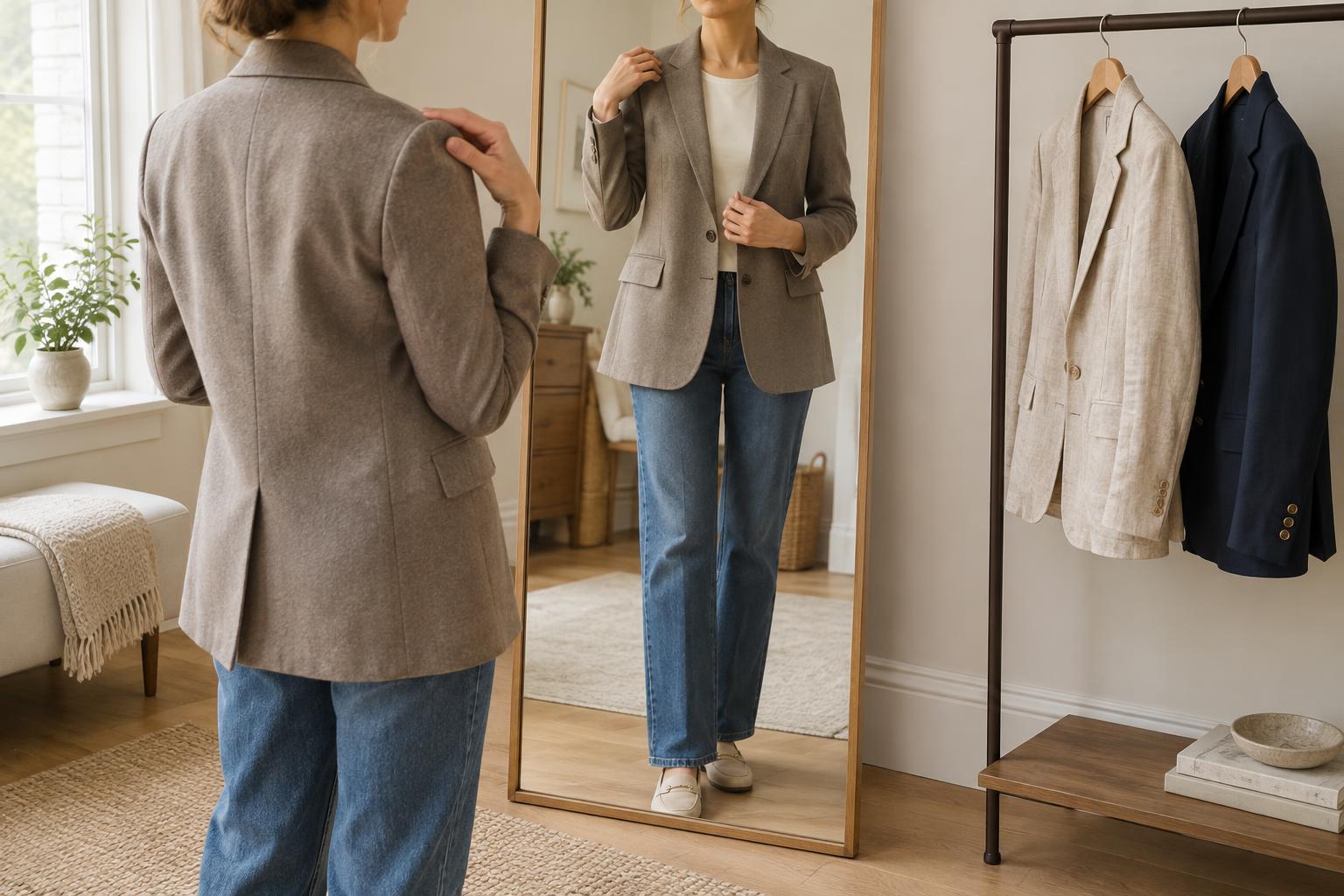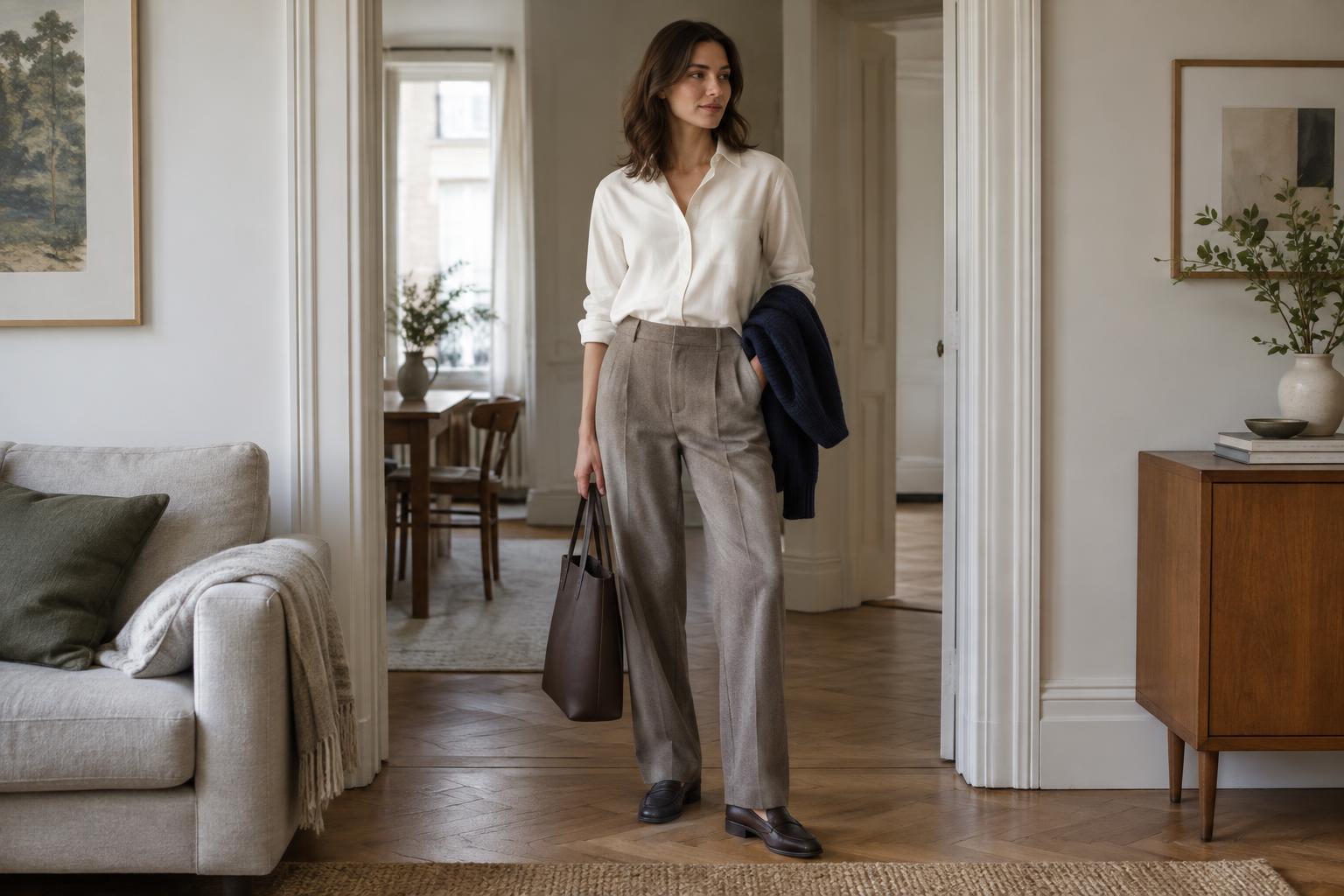
Start with your week, not a wardrobe checklist
A list of “essential” basics can be appealingly tidy, but it cannot tell you how many pieces you need. Someone who wears a clean T-shirt each day and washes clothes twice a week has different requirements from someone who alternates shirts and knitwear and does laundry less often. Your starting point is the number of times you reach for each type of garment between washes.
Think through an ordinary week rather than an idealized version of your style. What do you wear to work, at home and on days out? Which pieces sit against your skin, and which can comfortably be worn again before washing? If you change clothes after work or exercise, include those changes too. This gives you a working count of actual wears, not a target borrowed from somebody else’s wardrobe.
Use the laundry cycle to set a minimum
For each category, count the fresh pieces you typically use from one wash day to the next. If you put on a fresh everyday top on five days and usually wash clothes once a week, five wearable tops are a starting point—not necessarily the final number. Add enough breathing room for a delayed wash, a stain or an item that is still drying. If laundry happens more often, you may need fewer pieces.
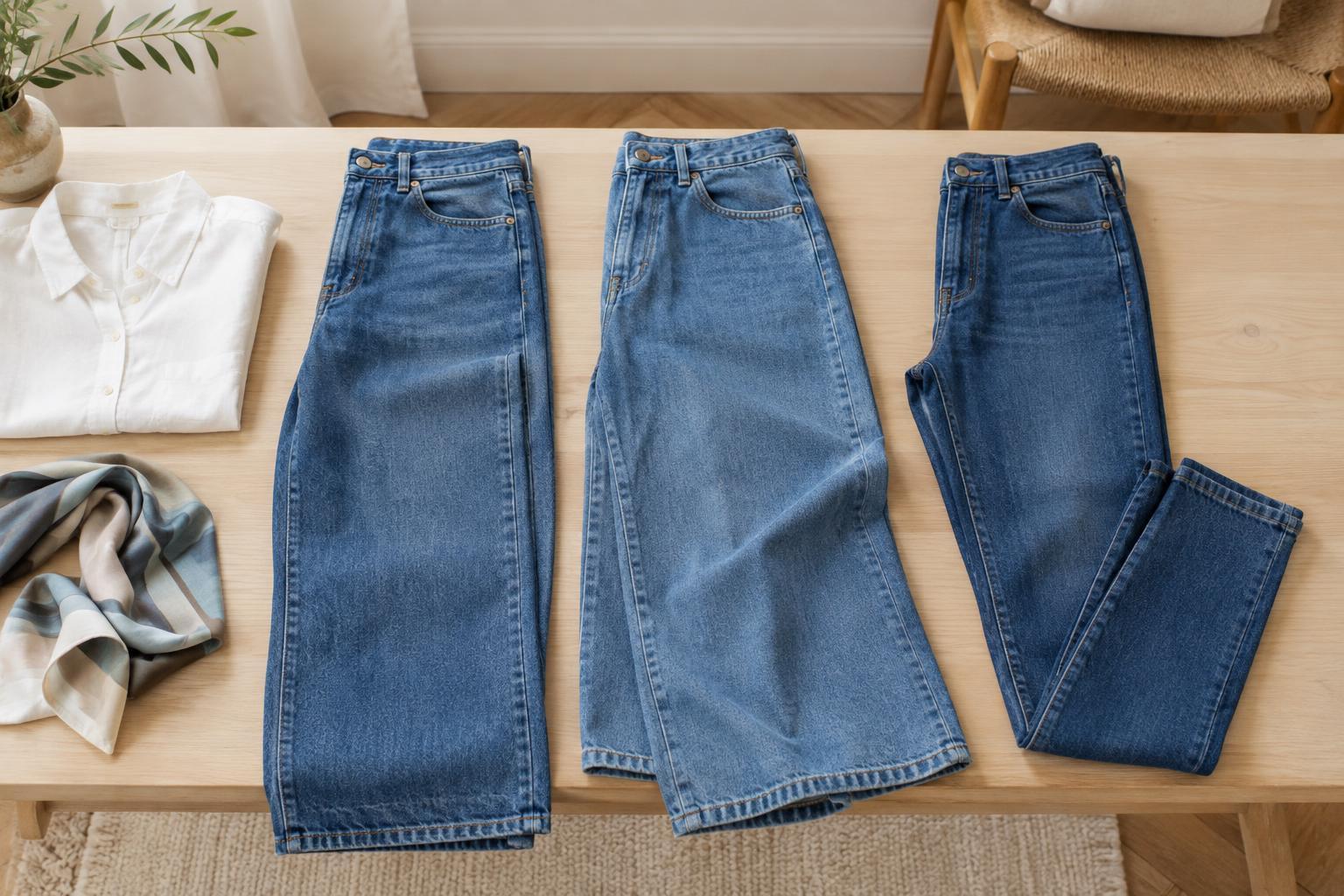
Apply the same method separately to trousers, layers and other basics. They do not all need to match your top count. A pair of trousers you are happy to rewear may cover several outings, while a shirt worn next to the skin may go straight into the laundry. Consider the whole cycle: washing, drying, any pressing you are willing to do, and putting clothes away. An item that needs more care than you have time for may not be reliably available, even if it is technically clean.
Count outfits, not just garments
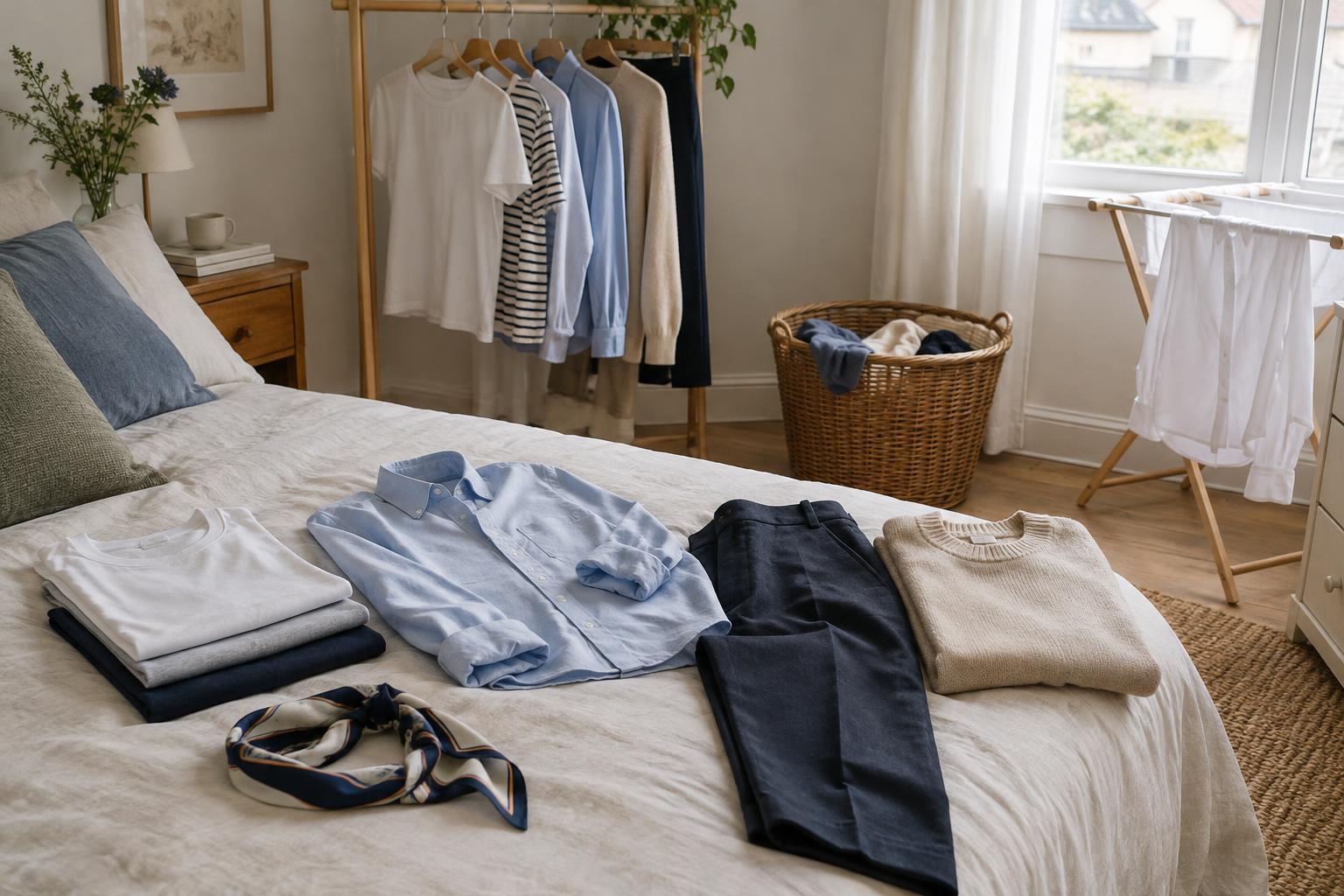
The useful question is not only “Do I own enough tops?” but “Can I get dressed with what is clean?” Six tops that work with only one pair of trousers offer less flexibility than a smaller group that mixes easily with several bottoms. Before buying another basic, look at the outfits you repeat. Note which pieces do the most work and where a missing layer, cut or color regularly holds you back.
A restrained palette can make this easier without requiring everything to be neutral. You might use a few compatible base colors, then bring variety through a patterned scarf, a different neckline or a textured knit. This is a practical way to make repeated pieces feel considered. It also helps you identify what you truly need: perhaps another everyday shirt, rather than another special piece that does not fit your usual routine.
Leave room for weather and real life
Your minimum count is a baseline, not a strict limit. Seasonal changes may shift which basics are useful: a lightweight top may become a layering piece, while a warmer knit takes its place on colder days. If your storage is limited, it can help to separate what you wear now from what belongs to another season. Count your readily wearable pieces, not every garment in a drawer.
Also consider how much disruption your wardrobe can absorb. A small reserve may be worthwhile if you cannot easily run an extra wash or if air-dried clothes take longer to be ready. On the other hand, buying several backups for rare possibilities can leave you with clutter. Aim for enough choice to handle your normal week and a modest interruption, rather than trying to prepare your wardrobe for every imaginable situation.
Adjust the count as you wear your clothes
You do not have to settle on a perfect number before making a change. For a few laundry cycles, notice what runs out first. If you repeatedly lack a clean top you enjoy wearing, that category may need another dependable option. If the same pieces remain unworn while favorites rotate through the wash, the issue may be fit, comfort or outfit compatibility rather than quantity.
When you do add a basic, choose it for a specific role in your existing wardrobe. Check whether it works with the bottoms and layers you already reach for, and whether its care requirements suit your routine. The goal is not the smallest possible wardrobe or the fullest one. It is a collection of clothes that makes ordinary dressing easy, with enough flexibility to repeat outfits confidently and keep laundry manageable.