Start with contrast, not a rule
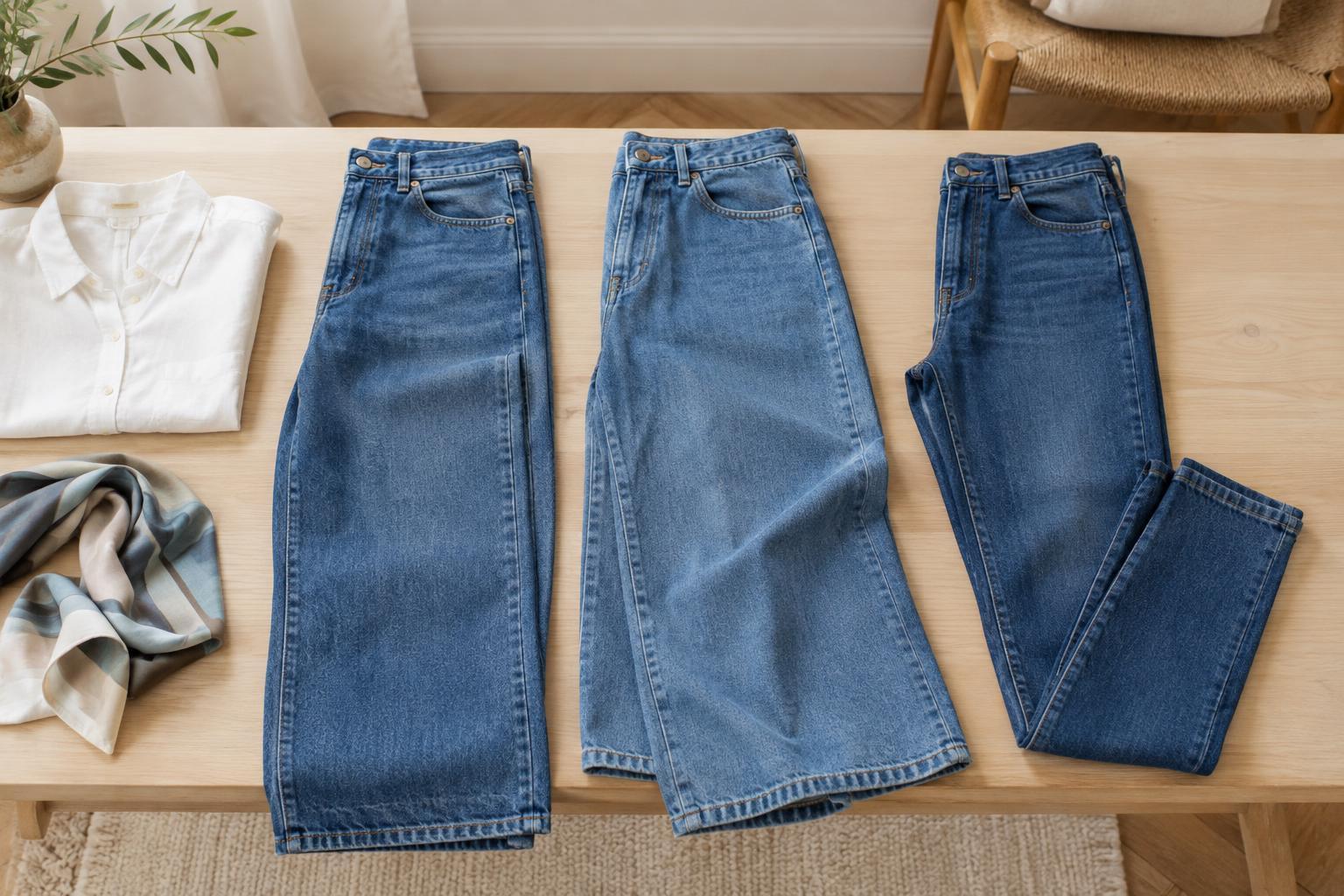
A loose piece and a fitted piece often work well together because each gives the other a clear shape. Think of a relaxed button-down worn with straight, close-fitting trousers, or a slim knit paired with wide-leg trousers. The contrast lets you enjoy ease without losing the outline of the outfit. It is a useful starting point, not a requirement: two relaxed pieces can look intentional, and two fitted pieces can look elegant.
For a French-inspired approach, aim for an outfit that appears considered but feels natural to wear. Choose one piece you want to build around, then decide where you would like more movement and where you would like a cleaner line. “Fitted” need not mean tight. A garment can skim the body, leave room to breathe and still provide definition.
Decide where to show the outfit’s shape
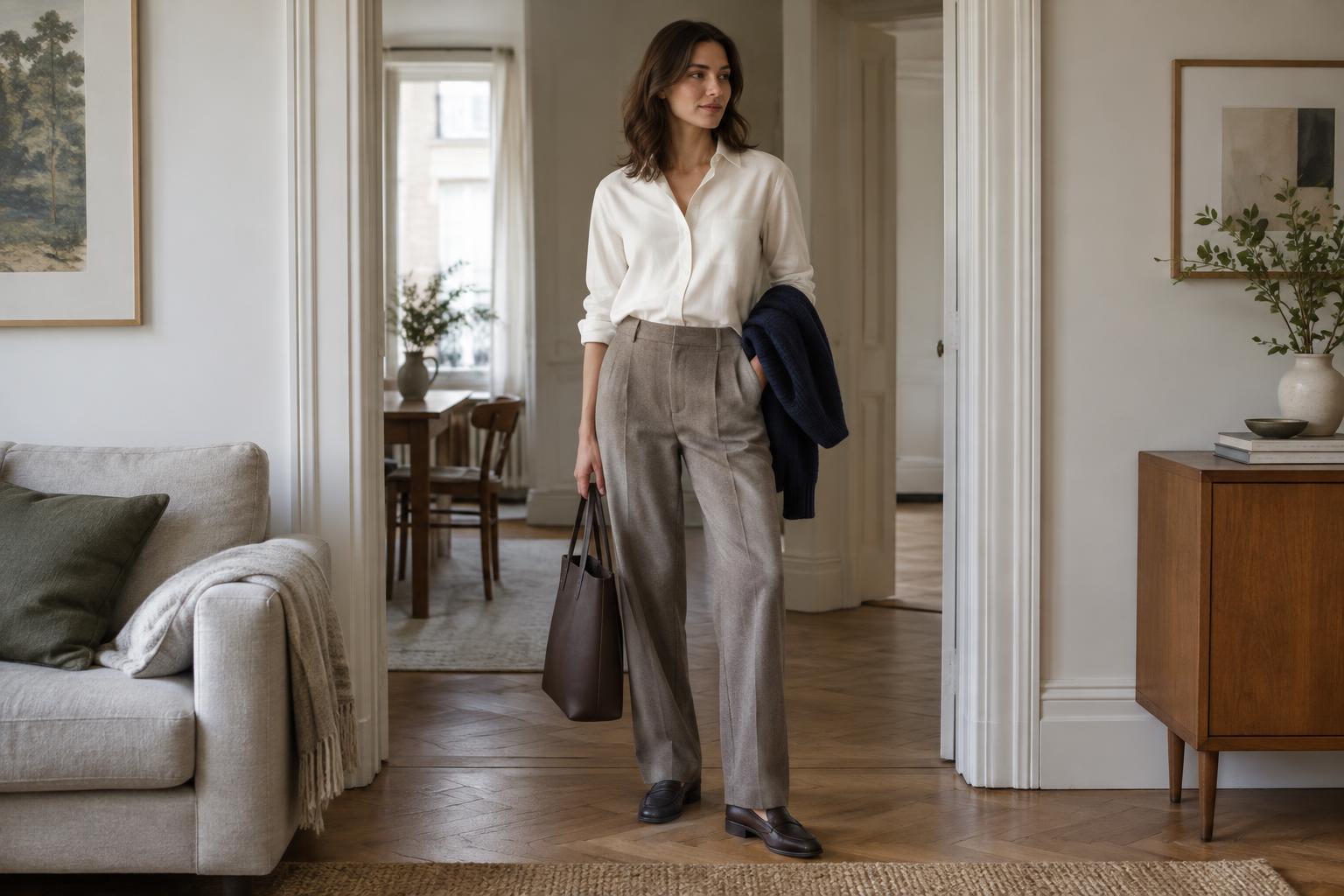
When a generous top meets a generous bottom, a small point of definition can help the pieces relate to one another. Try tucking just the front of a shirt into trousers, leaving a cardigan open over a closer-fitting top, or choosing a jacket that ends near the waist. These adjustments reveal where one garment ends and the next begins without requiring every part of the outfit to be close-fitting.
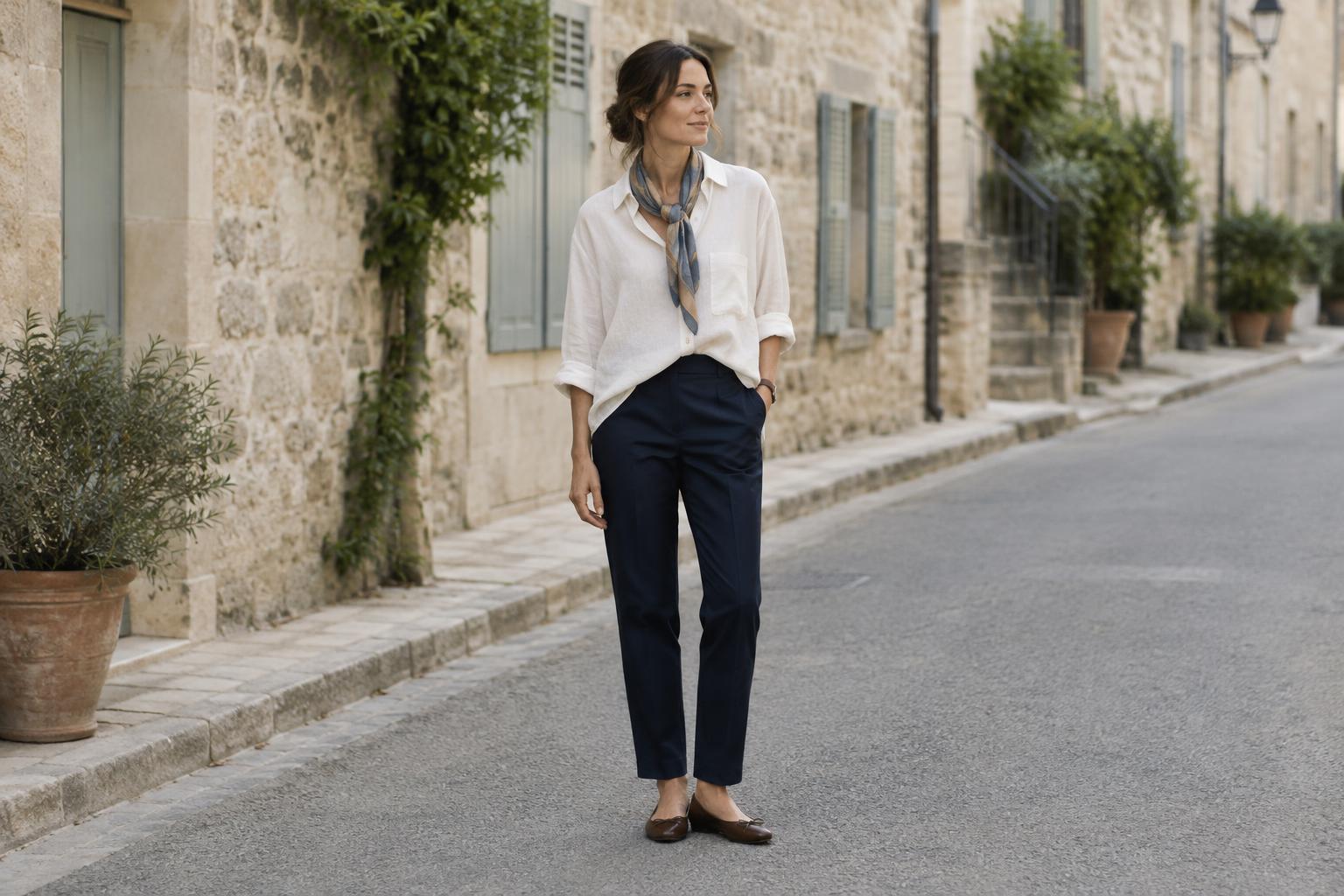
Hem placement matters as much as width. A long, untucked shirt over wide trousers creates a different outline from a shirt that stops at the hip. Neither is inherently better, but if an outfit feels visually heavy, changing one length may be more effective than changing the whole look. Roll a sleeve to show the wrist, try a shorter layer, or let a belt define a waist beneath a loose jacket.
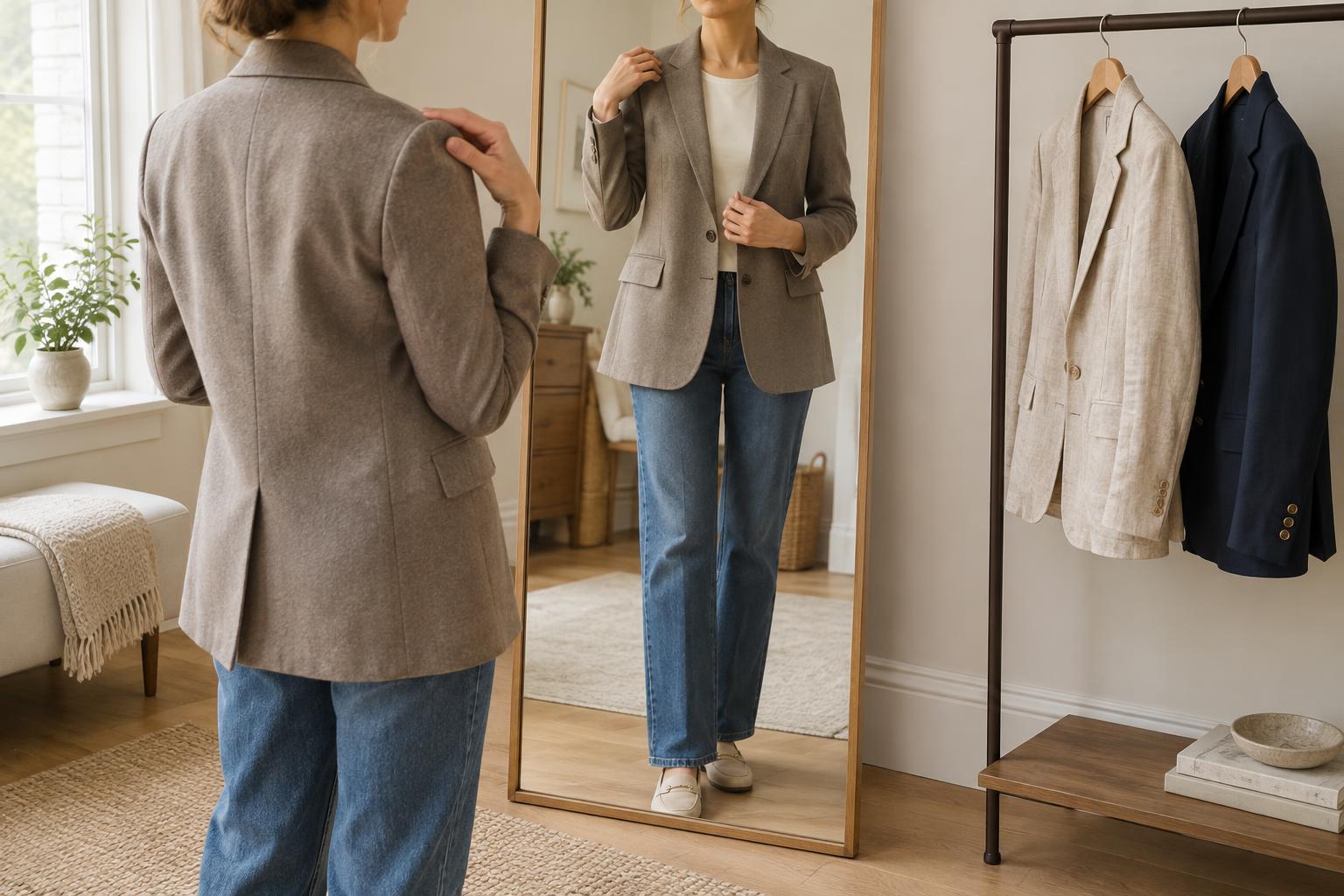
Use the mirror as a guide rather than following a fixed formula. The most useful balance is the one that makes the outfit feel comfortable and easy to move in.
Build simple combinations around one relaxed piece
An oversized shirt is a flexible place to begin. Wear it open over a fitted T-shirt with straight jeans, or button it and pair it with slim trousers. If you prefer a softer outline, half-tuck it into fuller trousers and leave a few buttons open at the collar. The shirt provides movement while the neckline, tuck or narrower layer underneath gives the eye a place to rest.
Wide-leg trousers offer the reverse starting point. A tucked-in knit or a top that ends at the waistband keeps their volume visible. For a less defined look, add a loose sweater and push up the sleeves or choose one with a slightly cropped hem. With a roomy dress, a neat jacket, a belt or a close-fitting layer underneath can change the silhouette without taking away the dress’s ease.
Shoes can reinforce the direction you choose. A streamlined shoe keeps the lower half visually light; a chunkier one adds weight and can make a wide trouser leg feel grounded. Try both before deciding which suits the occasion and your preferences.
Let fabric do some of the work
Two garments may have similar measurements yet hang very differently. A fluid shirt drapes close to the body in places, while a crisp shirt holds its shape away from it. A soft, wide trouser leg moves as you walk; a structured one creates a more defined outline. If a combination feels bulky, consider whether both fabrics are holding too much volume in the same place.
Mixing textures can make a straightforward silhouette more interesting. A fine knit beneath a substantial coat, or a smooth top with softly textured trousers, creates contrast without extra accessories. Lightweight scarves can add a gentle line near the face or hang vertically over an open jacket. Keep the scarf relaxed if the rest of the outfit already has several strong shapes.
Comfort deserves equal attention. Check whether a waistband sits where you want it, sleeves stay in place and layers move easily together. A beautiful outline is less useful if you have to keep adjusting it.
Make small changes before changing the outfit
If an outfit does not feel balanced, change one detail at a time. Tuck or untuck the top. Open the jacket. Turn up the cuffs. Swap a long layer for a shorter one, or try shoes with a different visual weight. Looking at each version separately makes it easier to see which adjustment helps.
Consider the outfit in motion as well as in a mirror. Sit down, walk and reach for something. Loose clothing should offer ease, while fitted clothing should allow comfortable movement. An outfit that looks precise only when you stand still may need a different size, fabric or combination.
The aim is not to achieve one ideal silhouette. It is to learn how your clothes interact so you can choose the amount of structure you want on any given day. Once you know what a tuck, hem or layer changes, balancing loose and fitted pieces becomes a practical tool rather than a set of rules.