Start with dry shoes and the right brush
Suede’s soft surface is made up of short fibres, often called the nap. Brushing lifts those fibres and removes loose dust, but brushing while the shoes are wet can press dirt into the surface or disturb the finish. If your shoes have been caught in rain, let them dry completely before you try to clean them.
Gently fill the shoes with plain, unprinted paper to help them hold their shape and absorb some moisture. Leave them in a ventilated room, away from radiators, direct sunlight and other strong heat, which can leave leather stiff or unevenly dried. Replace damp paper if needed. Before brushing, check any care instructions that came with the shoes, particularly if they have decorative finishes or mixed materials.
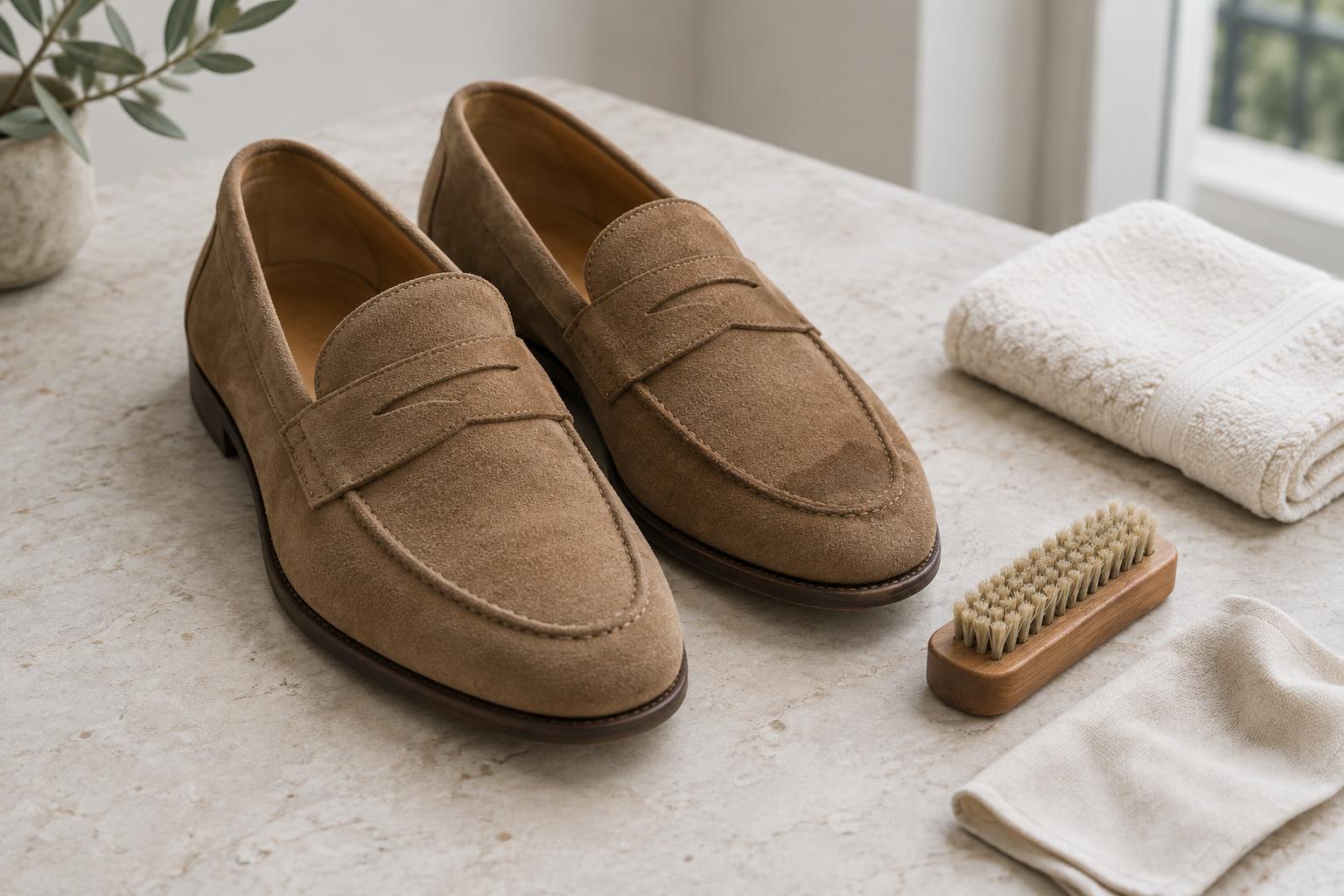
Choose a clean brush intended for suede. A soft rubber or crepe brush is a cautious starting point for delicate finishes; brushes with firmer bristles require a lighter hand. Keep a separate brush for suede so that polish or grime from smooth leather shoes does not transfer onto it. Test your technique on a less visible area first.
Brush gently to restore the nap
Once the shoes are fully dry, use short, light strokes to lift surface dust. Begin by brushing in one direction, following the lay of the nap. If a flattened patch remains, a few gentle strokes in the opposite direction may help lift it; finish by brushing the area evenly so it blends with the rest of the shoe. Avoid scrubbing back and forth or bearing down on a single spot.
Pay attention to seams, the toe and the area around the sole, where dust tends to collect. Use the edge of the brush carefully rather than forcing bristles into stitching. A soft, dry cloth can remove loose debris from non-suede parts. Regular light brushing is usually preferable to waiting until dirt has built up and then trying to remove it with force.
Assess a water mark before treating it
A water mark may look like a darker patch or a pale ring after the shoe dries. Sometimes brushing alone makes a faint mark less noticeable because it evens out the nap. Let the shoe dry fully, brush the whole affected panel lightly and look at it in ordinary daylight before deciding whether it needs more attention.
If the mark persists, try a clean suede eraser on a small, inconspicuous area first. Work gently on the dry surface, without pressing hard, then brush away the eraser residue. This may help with a superficial mark, but it will not reverse every change in colour. If the shoe has an unusual dye, a very delicate finish or substantial value to you, a specialist cleaner is the safer next step.
Do not treat a white, crusty deposit as an ordinary water ring: it may be residue from salt or another substance and may need a different approach. Likewise, avoid experimenting with household cleaners, soap or vinegar on an unknown finish. Products that seem harmless on one pair can leave a stain or alter the texture of another.
Use moisture sparingly if a ring remains
A distinct ring can form where one area became wet while the surrounding suede stayed dry. If the shoe’s care instructions allow water-based cleaning, you can consider evening out the affected panel with a clean cloth barely dampened with water. Test a hidden area first and stop if colour transfers or the suede changes noticeably. The aim is a light, even touch across the panel, not a wet patch or a soaked shoe.
Work from seam to seam rather than rubbing only the edge of the ring, and do not repeat the process aggressively if the result is uncertain. Allow the shoe to dry naturally with plain paper inside, then brush the nap lightly once it is completely dry. This method carries a risk of new marks or dye movement, so it is reasonable to skip it and ask a suede-care professional for help, especially with pale, brightly dyed or expensive shoes.
Make routine care easier
After cleaning, let the shoes rest before putting them away. Store them somewhere dry with enough space that the nap is not crushed, and give them a quick brush when you notice dust. If you choose a protective spray labelled for suede, follow its directions, test it discreetly and let it dry thoroughly before wear. A spray may help limit future spotting, but it will not make suede waterproof.
On wet-weather days, choosing a different pair can spare you a more difficult clean later. For everyday care, the simplest sequence is often the best: dry first, brush lightly, assess the mark and use any further treatment with restraint.