Start with the label and the blazer’s construction
A blazer has more to care for than its visible fabric. The lining, shoulder structure, lapels and any internal layers may respond differently to water, heat and agitation. Before trying to freshen a blazer, read its care label and check whether the outer fabric and lining are made from different materials. If the label calls for professional cleaning, treat that as the guidance for a full clean rather than assuming the blazer can go in a washing machine.
Look over the garment while it is dry. Pay attention to the collar, cuffs, underarms and pockets, where wear or marks are easy to miss. This quick inspection helps you decide whether the blazer needs simple airing, attention to a small mark or a more thorough clean. It also gives you a chance to remove anything heavy from the pockets before hanging it up.
Air it out after wearing
After a day of wear, give the blazer time outside a crowded wardrobe. Place it on a hanger that supports the shoulders, unbutton it and let air circulate around the lining. A dry, ventilated room is a better choice than a damp bathroom or prolonged direct sunlight. Once the blazer feels dry and has lost any warmth or moisture from wear, it can go back into the wardrobe.
If the lining feels slightly damp at the underarms, avoid pressing the blazer tightly against other clothes. Letting it dry fully before storage may help prevent a stale smell. Strong fragrance sprays can mask an odor without addressing its cause, and some sprays may leave marks on fabric. If airing does not freshen the garment, check the care label before taking further steps.
Brush the outside and treat marks cautiously
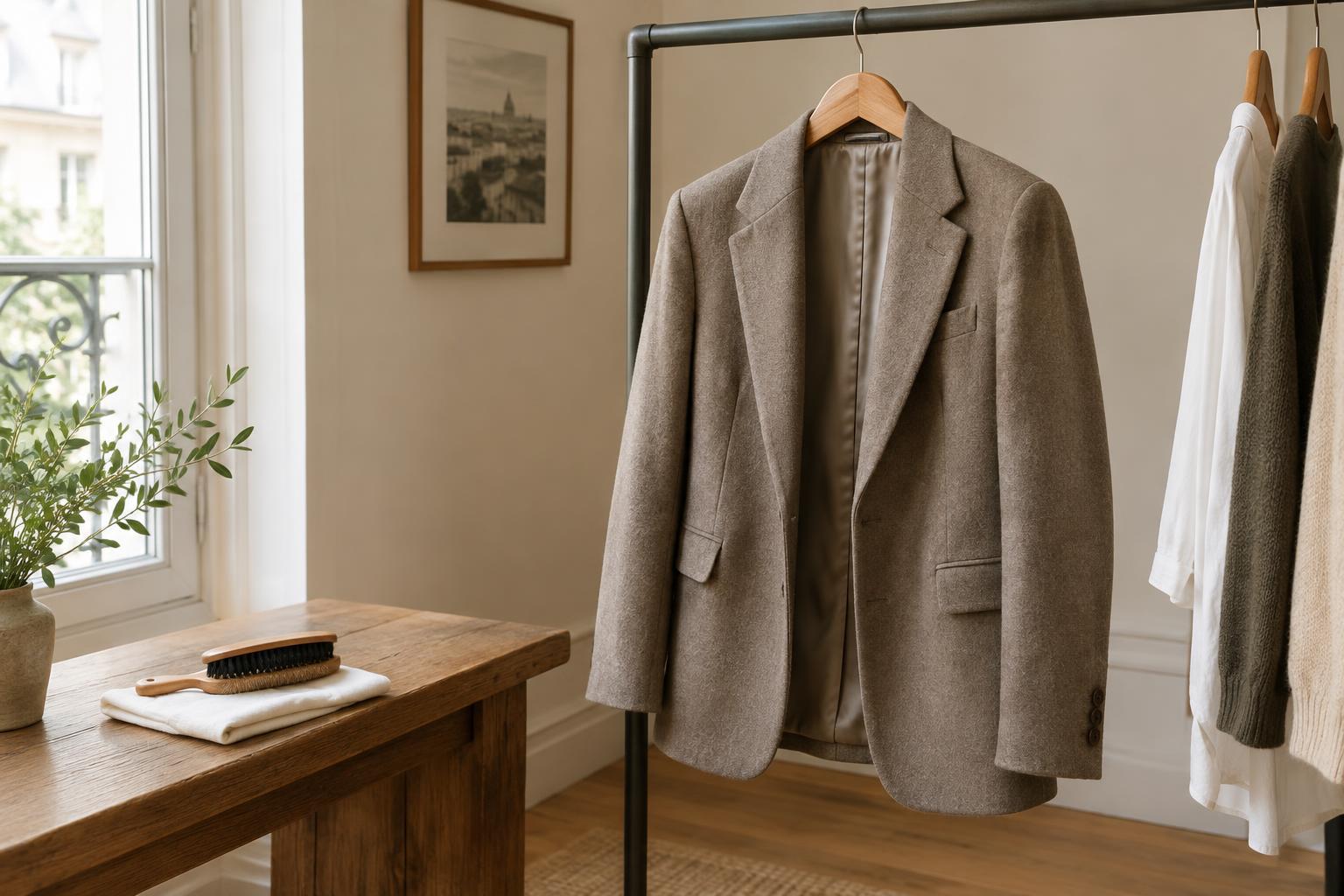
A soft clothes brush can lift loose dust, lint and surface debris from many woven blazer fabrics. Use light strokes in the direction of the fabric’s nap, if it has one, and take extra care around buttons and decorative details. For a fabric that snags easily or has a delicate surface, a gentle lint roller may be more suitable. Test any tool on a less visible area if you are unsure.
For a small fresh mark, start by blotting rather than rubbing. A clean, dry cloth may be enough to absorb a spill before it spreads. Water or a cleaning product can create a ring, affect the dye or soak through to internal layers, so do not assume that spot-cleaning is harmless. If the mark is oily, widespread or on a fabric you are uncertain about, leave it for a cleaner who can assess the whole garment.
Be gentle with wrinkles and the lining
Minor creases may relax while the blazer hangs. If the care label permits steaming, use a little steam without pressing the steamer head against the fabric, and allow the blazer to dry before wearing or storing it. Keep steam away from areas that seem especially structured or sensitive to moisture. A blazer with puckering at the lapels or bubbling in the fabric may have an issue beneath the surface that more heat will not fix.
The lining deserves a separate look, particularly around the underarms and seams. Smooth out any folds before hanging the blazer so they do not become trapped inside. Avoid pulling at a lining that catches or twists; check whether it is caught on a watch, button or loose thread. If a seam has opened, repairing it early can help keep the lining from tearing further.
Store it with enough room to keep its shape
Choose a hanger wide enough to support the shoulders without pushing beyond them. Fasten a button loosely if it helps the fronts hang evenly, then leave space between the blazer and neighboring garments. Overcrowding can flatten the shoulders and set creases in the sleeves or lapels. Empty the pockets so they do not pull the fabric out of shape.
For longer storage, put the blazer away clean and fully dry, following its care label for any needed cleaning. A breathable garment cover can protect it from dust while allowing some airflow; avoid sealing a recently worn blazer in plastic. When you bring it out again, check the lining and shoulders, then give it time on its hanger before deciding whether any creases need attention. Small, consistent habits often do more for a blazer’s appearance than repeated cleaning.