Start with the week you actually have
Before choosing clothes, glance at your schedule. Note which days call for a particular level of polish, which involve a long walk or commute, and when you might need to dress for changing temperatures. This gives each outfit a job. A quiet day at home and an evening out do not need the same shoes, even if the rest of the outfit stays similar.
Choose one comfortable outfit for the most typical day first. It might be straight-leg trousers, a knit top and flats, or jeans, a button-down and ankle boots. Treat it as a starting point rather than a uniform. If it works for your routine, its pieces can appear again in different combinations.
Repeat pieces, not necessarily complete outfits
Variety does not require a fresh set of clothes every day. You might wear the same trousers with a tucked shirt on Monday, a relaxed sweater on Wednesday and a simple top under a blazer on Friday. The trousers provide continuity; the changes in shape and layering make each look feel suited to its day.
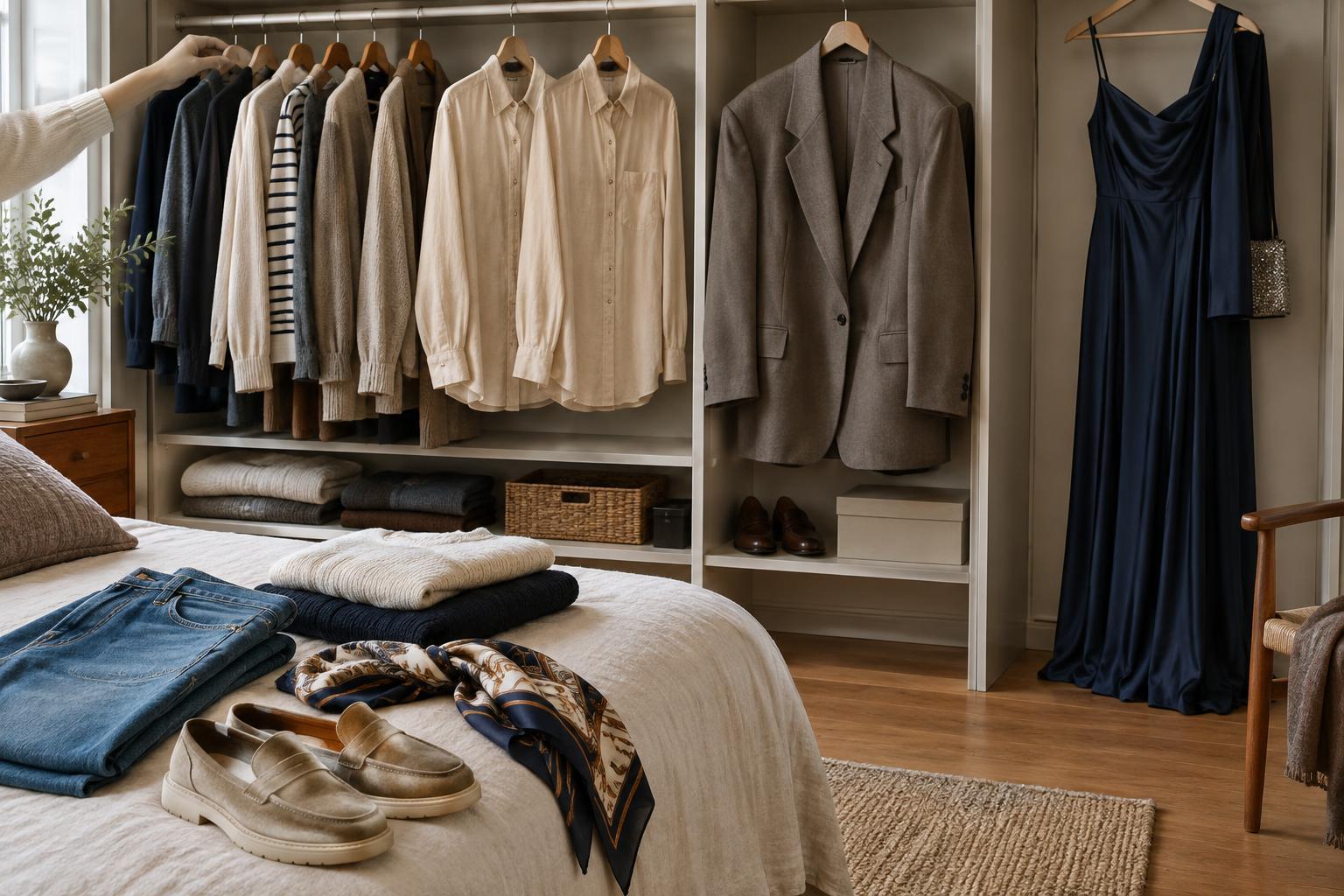
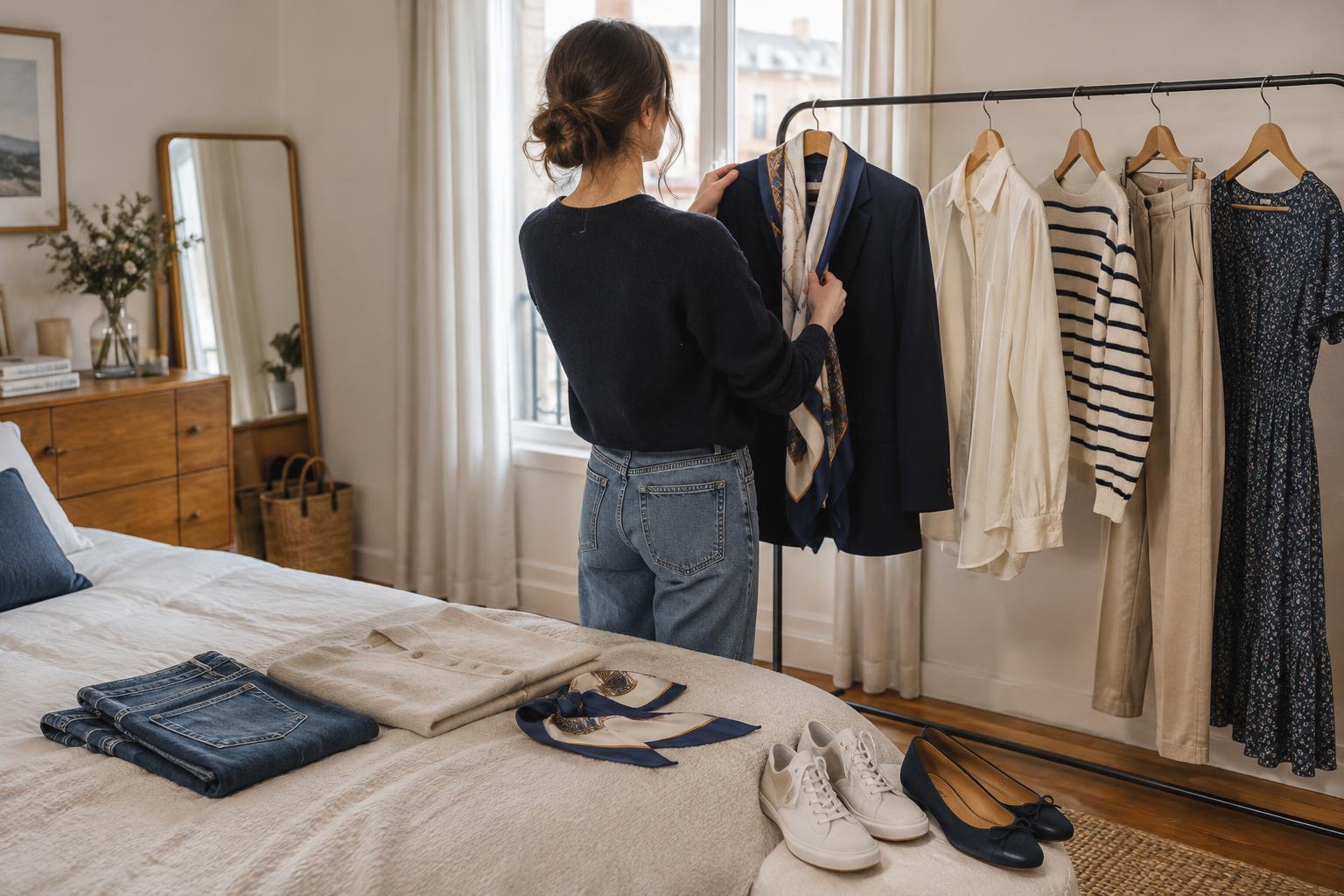
Try laying out two bottoms, three tops, one optional layer and the shoes you expect to need. Rather than making every possible combination, assemble four or five you would genuinely wear. Check whether each top works with at least one bottom and whether the shoes make sense with the hem length. This small trial can reveal a practical problem before a busy morning does.
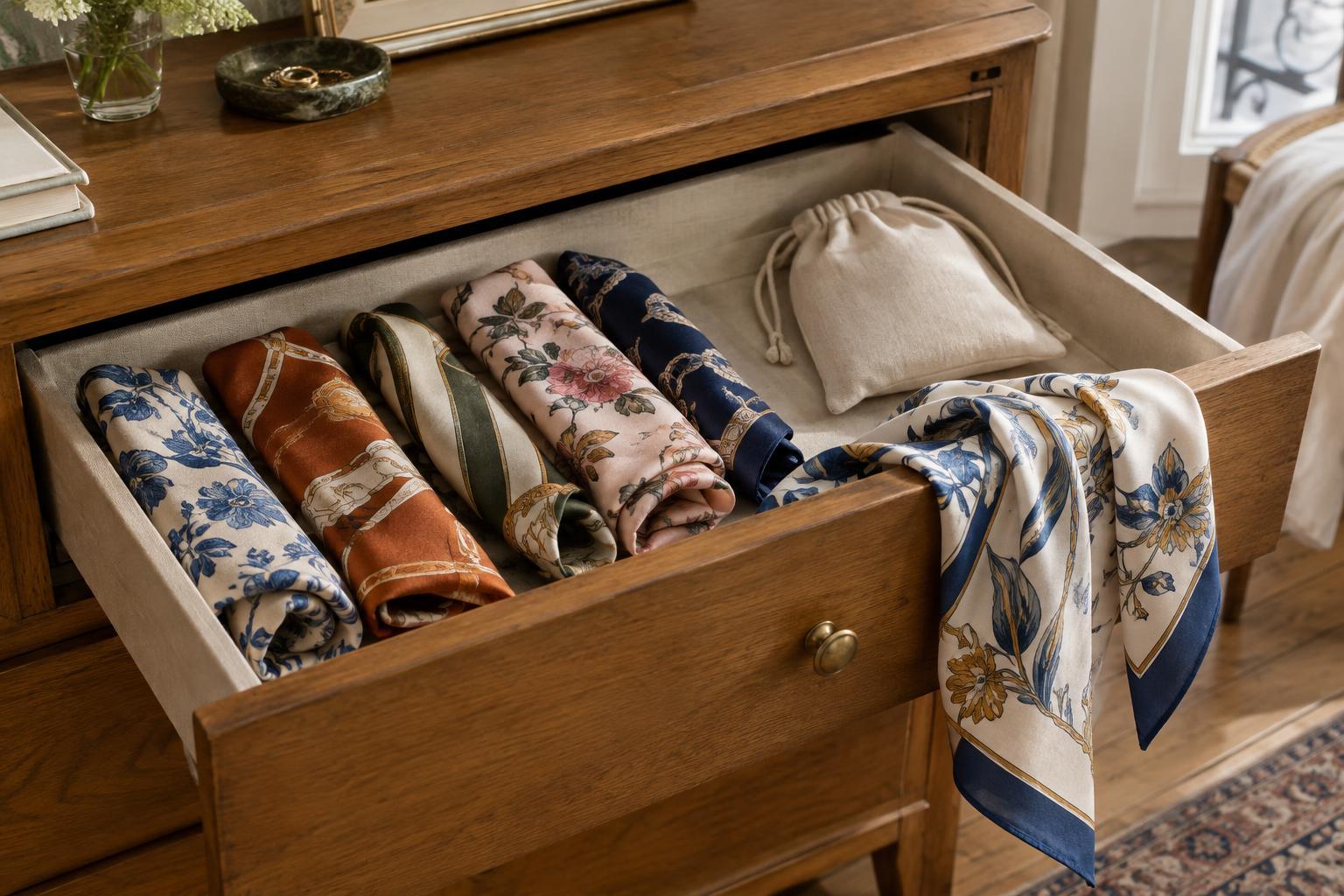
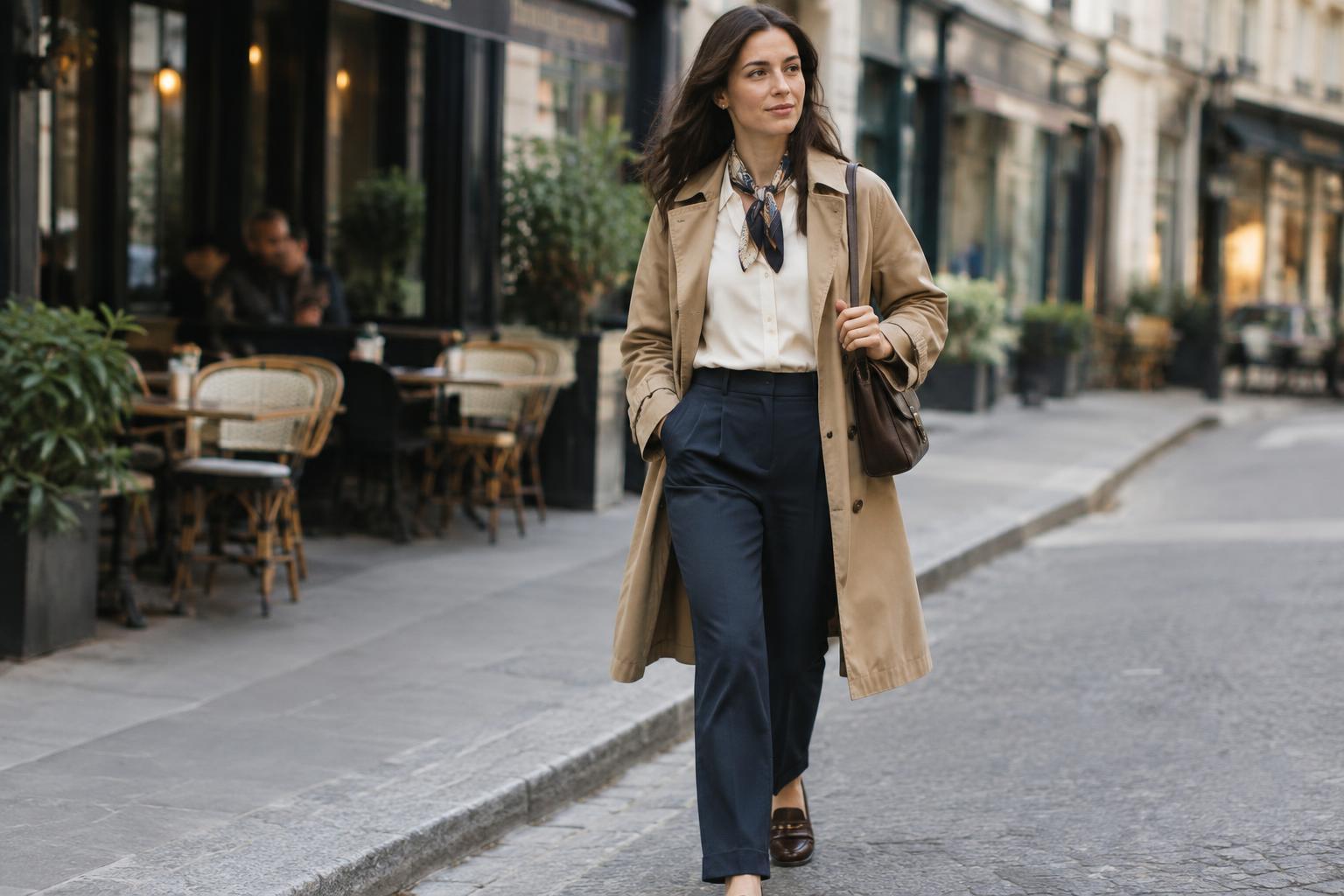
If you enjoy accessories, use them to shift the mood without rebuilding the outfit. A scarf at the neck, a belt or a different bag can add interest to familiar clothes. Keep the change useful: a roomy bag may matter more than a decorative one on a day when you need to carry extra items.
Leave room for weather, comfort and laundry
A weekly plan works best as a guide, not a strict timetable. Keep one easy alternative for warmer, colder or wetter conditions. A light layer you can remove is often more adaptable than an outfit that only feels comfortable at one temperature. If a planned pair of shoes becomes impractical, swap the shoes and check whether the trouser or skirt length still works.
Consider which garments you are comfortable wearing more than once before washing, and follow their care labels. A top worn close to the skin may need a different rotation from an outer layer. If an outfit depends on something still in the laundry basket, it is not ready for the week. For further browsing on garment upkeep, see Fabrics and Clothing Care · A Stylish Man.
Use a quick final check
Once you have several combinations, look at them as a group. Is there an outfit for your most demanding day? Are you relying on the same shoes when they might need a break? Can you sit, walk and reach comfortably in each look? A brief try-on is especially helpful when combining pieces you have not worn together before.
Photographing combinations or writing a short note can make successful outfits easier to repeat later. Record the details that matter to you, such as which layer fits under a coat or which shoes work with a particular hem. Over time, this becomes a practical record of outfits you like, rather than a set of rules about what you should wear.
The aim is not to make every day look completely different. It is to have a few dependable combinations ready, with enough flexibility to respond to the day ahead. Repeating a favorite piece is a sign that it is doing its job.