Start with the scarf you actually wear
A storage system should make getting dressed simpler, not turn a scarf into something too precious to touch. Before choosing a drawer divider or hanger, look at your collection. Which scarves do you reach for often? Which ones are waiting for a particular season or outfit? Keep the regulars where you can see and remove them without shifting a stack of other accessories.
Sort by a feature that helps you make outfit decisions: size, color family or frequency of wear. A row of small squares may be more useful than a perfectly ordered rainbow if you usually choose a scarf by how you plan to tie it. Leave a little room around each piece. When a drawer is packed tightly, pulling out one scarf can disturb several others and make delicate fabric easier to catch.
Let scarves air before putting them away
After wearing a scarf, check it in good light for makeup, food marks or damp spots. If it feels damp from rain or wear, allow it to dry fully before storing it. Follow its care label for cleaning rather than assuming every silk scarf can be washed the same way. A scarf that needs attention is best kept separate from the clean pieces so you do not forget about the mark.
Untie knots and remove scarf rings before putting a scarf away. Leaving a tight knot in place may create stubborn creases, while hardware can press against the fabric in a drawer. Give the scarf a gentle shake, lay it flat for a short time if space allows, and then fold or roll it without pulling the edges taut. This small pause between wearing and storing also gives you a chance to notice a loose thread before it catches on something else.
Choose a fold that fits the space
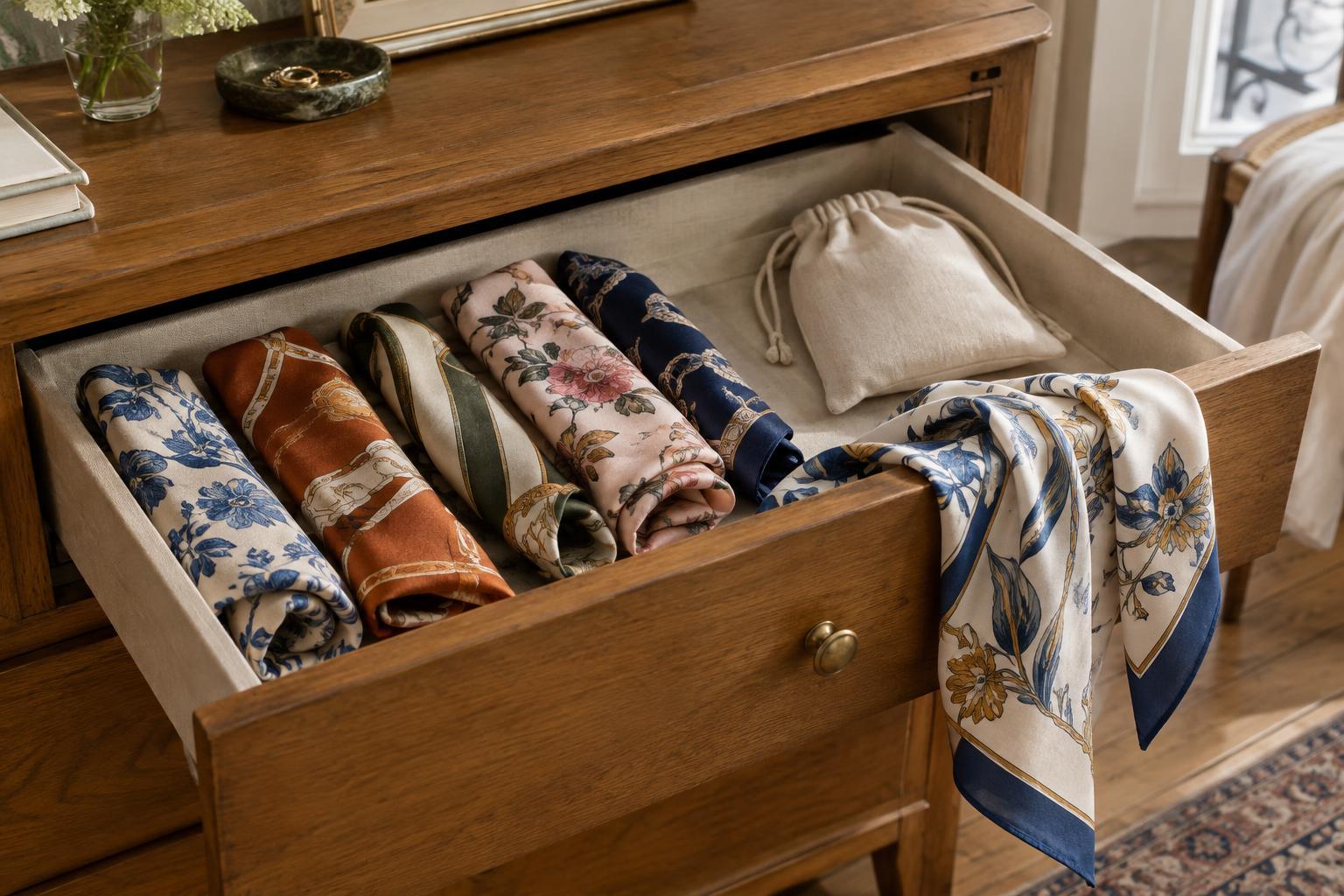
A shallow drawer works well when scarves can lie loosely folded in a single layer or stand in soft, upright folds. Place each scarf so that you can identify its color or print without unfolding the whole pile. If several scarves share one compartment, a smooth divider can keep them from sliding together. Avoid rough baskets or exposed fasteners that could snag the fabric.
For a larger square, fold along its existing creases if that feels natural, but do not press it into a tiny, rigid package just to fit a box. You can also roll it loosely around a smooth core or tuck it into an individual soft pouch. Change the fold occasionally if a scarf stays stored for a long time. The aim is not to eliminate every crease; it is to avoid leaving the same sharp lines and pressure points undisturbed.
Hanging can be convenient for frequently worn scarves if the support is smooth and the fabric is not crowded. Check that clips, hooks or neighboring accessories will not catch an edge. If a scarf is heavy or very delicate, a loose fold in a drawer may feel more secure than leaving it hanging for an extended period.
Protect the storage space, not just the fabric
Choose a clean, dry place away from direct sunlight. Prolonged light can affect some dyes, and a damp storage area is unsuitable for clothing and accessories generally. Before filling a drawer, run a hand over its interior for splinters, staples or other rough spots. A smooth lining or separate soft pouch can provide a barrier where the drawer surface is less than ideal.
Keep scarves apart from jewelry, belts with exposed buckles and bags with open zippers. These items are useful outfit companions, but they are not gentle drawer neighbors. If you use scented products in a wardrobe, do not place them directly against silk. A simple arrangement with space to lift out each scarf is often more helpful than an elaborate organizer that squeezes everything into narrow slots.
Make the system easy to maintain
Set aside one visible spot for a scarf that has been worn but is not yet ready to return to the drawer. That might be an empty section of a shelf or a clean, smooth hanger. Once it has aired and you have checked it, put it back in its usual place. This prevents a chair or handbag from becoming an accidental storage system.
When packing a scarf for a trip, fold it loosely and place it inside a clean fabric pouch or a compartment away from shoes and exposed closures. On arrival, take it out rather than leaving it compressed at the bottom of a bag. Back at home, review your arrangement as you use it: if a favorite scarf is always buried, move it forward. The best storage method is the one that lets you enjoy your scarves while handling them with care.