Start with the weather you actually dress for
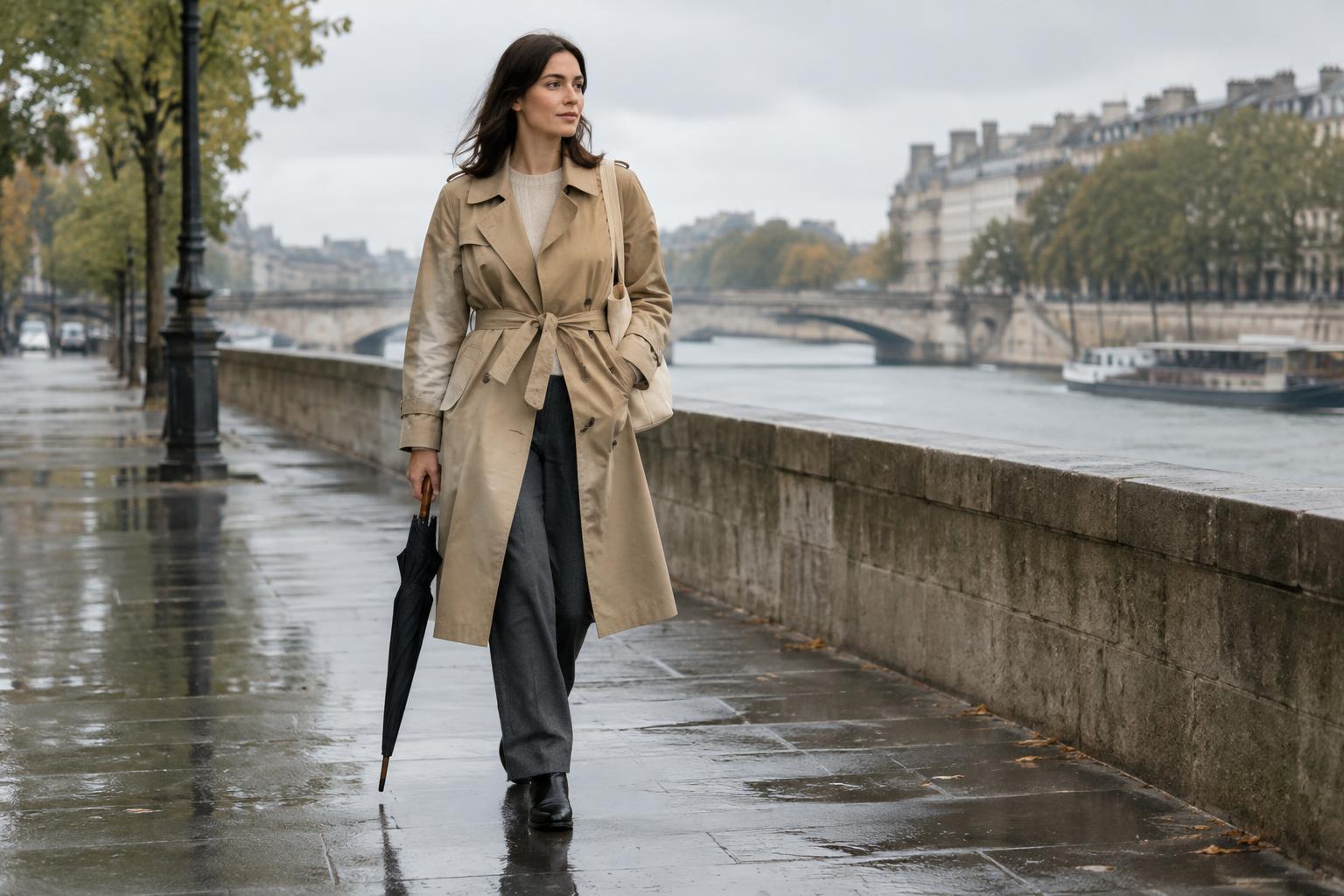
A trench coat can be a versatile wardrobe piece, but it is not one coat for every condition. Begin by thinking about when you expect to wear it: on mild, damp mornings, through breezy transitions between seasons, or mainly as a light layer over work clothes. Your answer matters more than the idea of a “classic” trench. A coat that looks elegant indoors but leaves you uncomfortable on your regular walk will not earn much space in your routine.
For frequent rain, check whether the fabric has a water-repellent finish and whether the maker describes the coat as suitable for showers. Water-repellent does not necessarily mean waterproof, especially at seams, pockets and closures. If you regularly spend long periods in heavy rain, you may need a dedicated raincoat instead. In a dry climate, breathability and a comfortable weight may matter more than water resistance. If winters are cold, plan to layer underneath rather than expecting a typical uninsulated trench to provide substantial warmth.
Choose fabric by feel as well as appearance
Cotton and cotton-blend trenches often have the structured drape associated with the style. A tightly woven fabric may offer some protection from wind, while a blend can change how the coat feels, wrinkles or dries. Synthetic fabrics can be lighter and may be easier to pack, although their texture varies widely. There is no universally best composition: compare coats in person when possible, paying attention to weight, stiffness and how the fabric moves as you walk.
Consider your tolerance for upkeep. A crisp fabric may show creases after a commute, while a softer one may lose the sharp silhouette you want. Look at the care label before buying, particularly if you prefer machine-washable outerwear or want to avoid frequent specialist cleaning. If the coat has a removable lining, check how securely it attaches and whether the coat still hangs well without it.
Fit the coat over your real outfits
Try a trench on over the thickest layer you are likely to wear beneath it, whether that is a knit, a blazer or a light jacket. Button it, tie the belt and lift your arms. The shoulders should let you move without pulling sharply across the upper back, and the front should close without strain. Sleeves should cover the layers underneath without swallowing your hands. If you often carry a shoulder bag, test the coat with it to see how the fabric sits at the shoulder.
Decide how you prefer to wear the belt before judging the fit. A neatly tied belt creates shape; leaving the coat open makes it a relaxed outer layer. Both should look comfortable rather than forced. Check the placement of the belt loops and pockets, too. Details that seem minor on a hanger can make a difference when you reach for your keys or sit down on a train.
Let your commute guide the length and details
A shorter trench can be convenient for cycling, driving or frequent movement in and out of a car. A longer one offers more coverage for trousers, skirts and dresses, but may feel cumbersome on crowded transport or stairs. When trying on a coat, sit, walk at a brisk pace and check whether the hem catches around your legs. The right length is the one you can wear comfortably during an ordinary day, not only while standing in front of a mirror.
Useful details depend on your habits. A back vent can make a longer coat easier to move in; pockets should be deep enough for what you actually carry. Buttons, buckles and a double-breasted front add visual interest, but they also affect how quickly the coat goes on and off. If you value simplicity, a less detailed trench may be the better everyday choice. If you often wear scarves, check that the collar sits comfortably when one is tucked beneath it.
Pick a color you can repeat, then care for the coat
Beige is familiar, but navy, olive, brown and black can be equally workable wardrobe colors. Choose a shade that complements the clothes and shoes you wear most, and consider how easily it shows marks in your routine. A lighter trench may brighten an outfit of dark basics; a darker one may feel easier to wear on busy travel days. The most versatile color is the one you enjoy reaching for repeatedly.
Once you have chosen a coat, follow its care label, especially if the fabric has a protective finish or bonded layers. Hang it where air can circulate after a damp outing, and let it dry before putting it away. Empty the pockets and fasten the belt loosely for storage so the coat keeps its shape. These small habits help a practical wardrobe essential remain pleasant to wear season after season.