Start with the outfits you actually wear
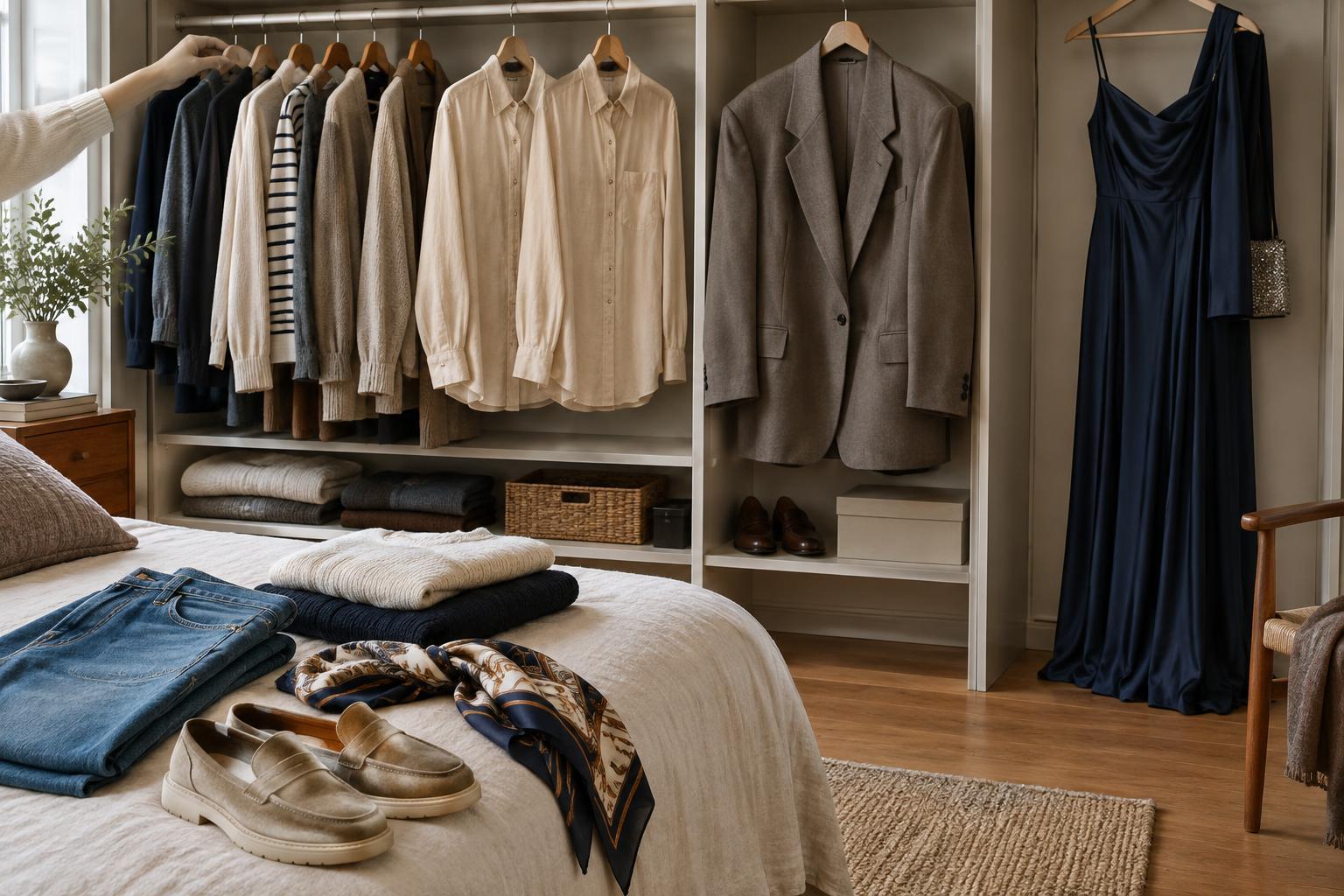
Before choosing a skirt, look at the tops, shoes and outer layers you reach for most often. A versatile skirt does not need to work with every item you own. It needs to make several outfits that suit your life. If you usually wear flat shoes and relaxed knits, test the skirt with those pieces rather than imagining an entirely new wardrobe around it.
Think about where you would wear it: a typical workday, an errand-filled afternoon, a dinner or a weekend outing. Your answer helps narrow the choices. A skirt that looks polished with a shirt but also feels comfortable with a simple T-shirt may be more useful to you than one reserved for a single occasion.
Choose a shape that feels easy to style
Silhouette affects both comfort and the proportions of an outfit. A straight skirt gives a clean line and can pair with a fitted top or a loose sweater. An A-line skirt has more room through the hips and can balance a tucked-in shirt or a short jacket. A softly pleated skirt adds movement, though its volume and texture may make it a stronger visual feature. None is inherently more versatile; the best choice is the shape you can picture wearing repeatedly.
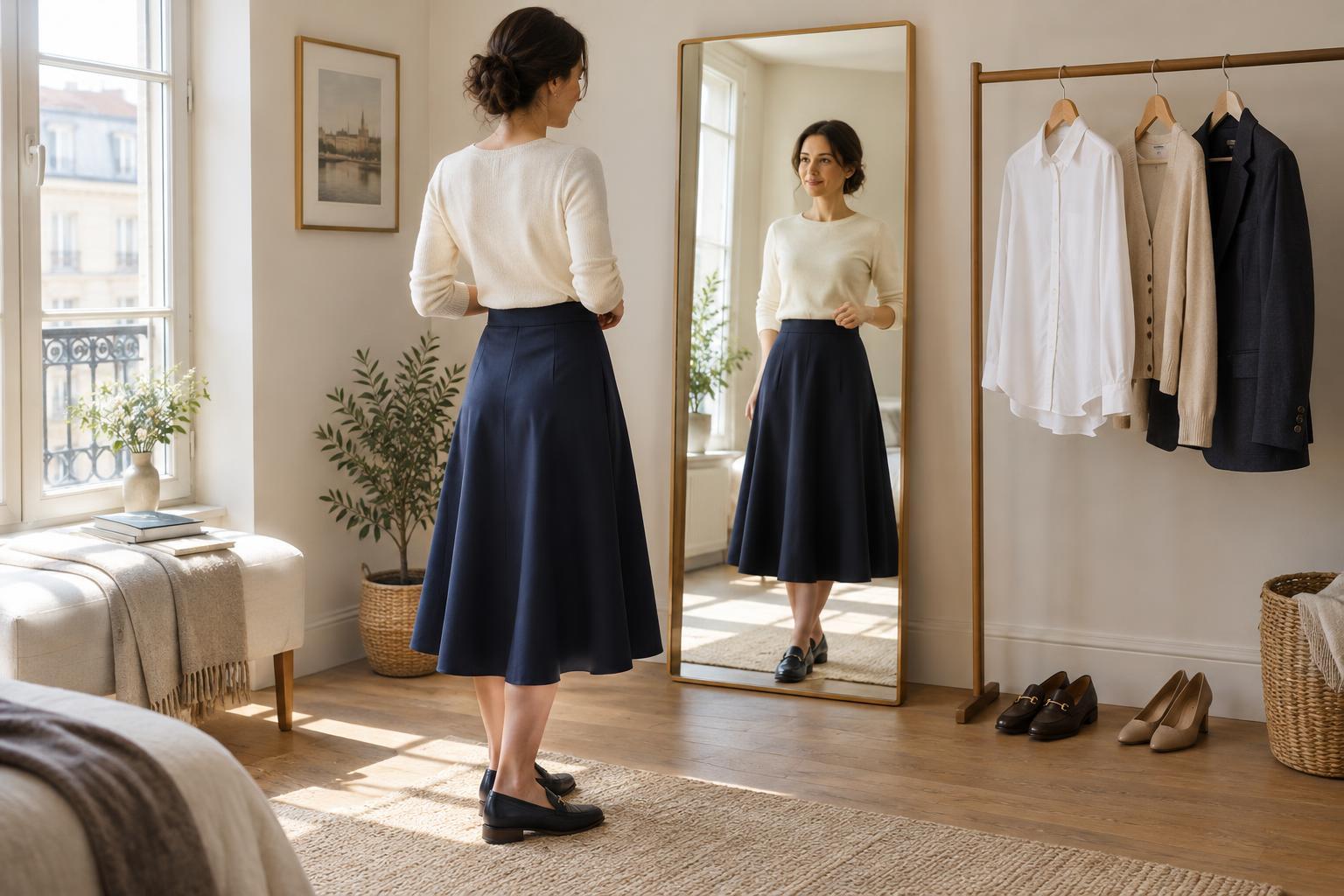
Length matters in similarly practical ways. Try sitting, walking and taking a full stride. Notice where the hem falls with your usual shoes and coats, not just how it looks while standing still. If you like a longer skirt, consider whether it moves comfortably around your legs. If you prefer a shorter one, check that you feel at ease bending and sitting in it.
Check the fit beyond the size label
A useful skirt should stay comfortable through an ordinary day. The waistband should sit where you want it without digging in or slipping as you move. Check whether pockets pull open, seams twist, or fabric clings where you would rather it skim. If the skirt has a slit, make sure its placement and height work for the situations in which you plan to wear it.
Fit is also about how the skirt works with other clothes. Try tucking in a shirt and leaving a knit untucked. If the waistband becomes bulky under a top you wear often, a smoother style might serve you better. Small alterations, such as a hem adjustment, can sometimes improve a promising skirt, but account for that effort before deciding it belongs in your wardrobe.
Let fabric and color do some of the work
Fabric can determine how often a skirt feels practical. A structured cotton or wool blend may hold a crisp shape, while a softer fabric may drape and move more freely. Consider the weight for your climate and the seasons in which you expect to wear it. Hold the fabric up to the light if coverage is a concern, and check whether a lining feels comfortable. Read the care label before buying: a skirt that requires care you are unlikely to give it may spend more time unworn.
For an adaptable color, start with what already appears in your wardrobe. Navy, black, brown, grey and muted tones can be easy to combine, but a favorite color or subtle pattern may be just as useful if it connects to several tops you own. If you enjoy scarves, a simple skirt can provide a quiet base for printed silk or a bright neck scarf. The aim is not a prescribed palette; it is a skirt that gives you options.
Make three outfits before you commit
A quick outfit test can reveal whether a skirt is versatile for you. Plan one everyday look, one more polished look and one for a change in temperature. For example, the same skirt might work with a T-shirt and flats, a button-down shirt and loafers, then a fine knit and boots. Use items you already own when making this test. If every outfit requires another purchase, keep looking.
Finally, pay attention to whether you feel like yourself in the skirt. An easy-to-wear piece is not simply neutral or plain; it fits comfortably, suits your routines and leaves room for different combinations. Choose the skirt that makes getting dressed simpler, then let shoes, layers and accessories change its mood as needed.