Start with the day you want the shirt to handle
Before choosing a color or collar, picture where you will wear the shirt. An everyday option might need to sit neatly under a sweater, stay comfortable at a desk and look good worn untucked with trousers. Those uses point to different details: a smooth fabric for layering, room through the back for movement and a hem that looks intentional without constant adjustment.
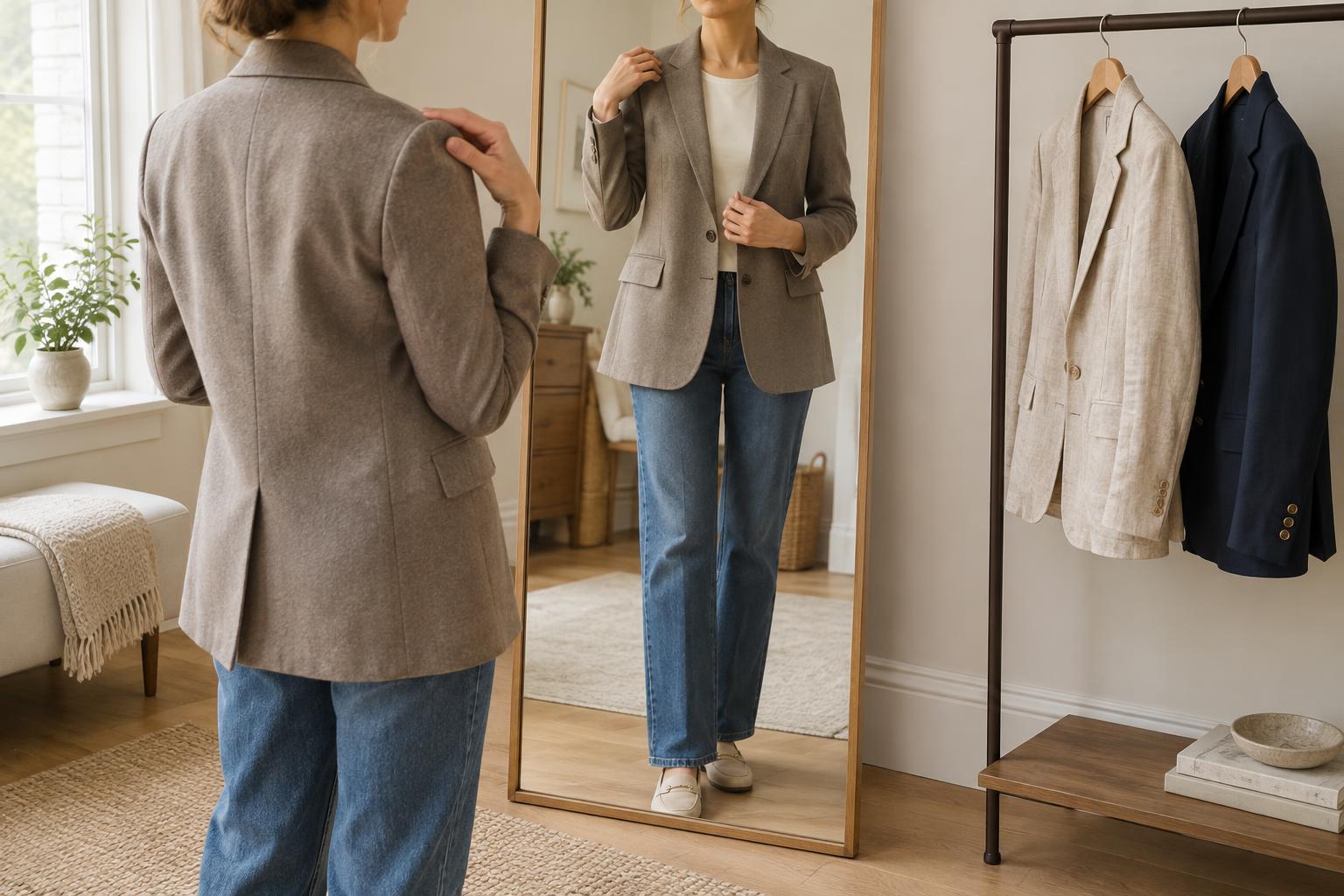
Consider what you already reach for. If most of your wardrobe is relaxed, a sharply tailored shirt may feel out of place even when it technically fits. If you often wear structured jackets, an oversized shirt may bunch beneath them. The most useful choice is not necessarily the crispest or most polished one; it is the shirt you can put on without planning the rest of your outfit around its limitations.
Check the shoulders and chest first
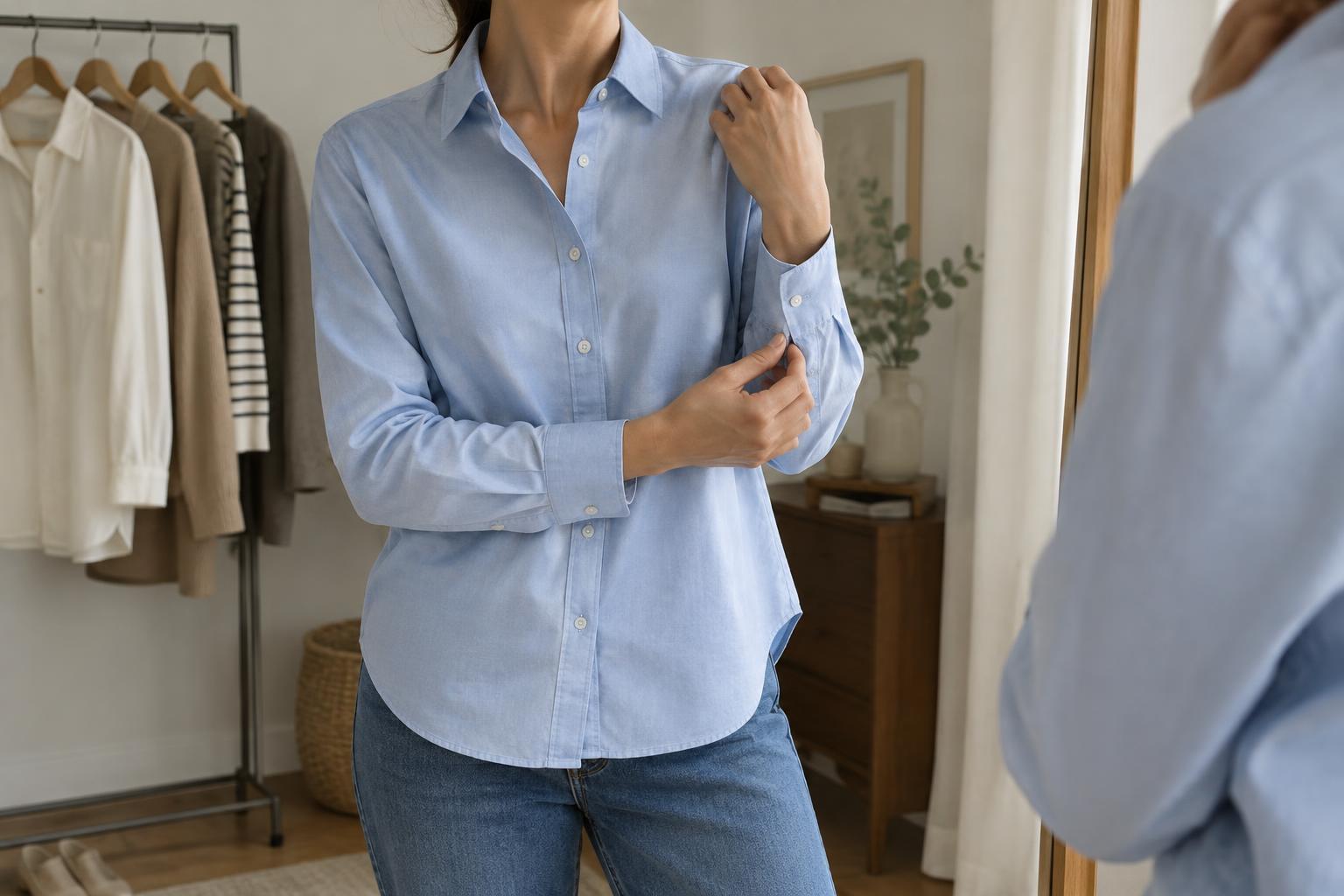
Try the shirt on with the kind of underlayer you would normally wear. For a conventional fit, the shoulder seams should sit near the ends of your shoulders, without pulling inward or dropping farther than you want. A deliberately relaxed cut can have lower seams, so judge its shape as a whole rather than treating one seam position as a rule.
Button the shirt all the way up through the chest, then sit down, reach forward and raise your arms. Look for strain across the back and gaps between the front buttons. A shirt that closes while you stand still may still be too restrictive for a full day. If the chest fits but the waist feels loose, that may be easier to style with a partial tuck than a tight chest is to tolerate. If the shoulders fit but the chest gaps, try another cut or size rather than relying on the buttons to hold the fabric in place.
Decide how much ease you like
Ease is the extra space between your body and the garment. A close fit can look tidy beneath a jacket, but it should not require you to keep your arms at your sides. A relaxed fit offers more movement and can feel particularly natural over a T-shirt or with the sleeves rolled. Neither is inherently better for everyday dressing; the goal is a silhouette that feels comfortable in motion.
Pay attention to the sleeves and hem as well. Cuffs should fasten without squeezing your wrists, and sleeves should let you bend your elbows freely. If you plan to wear the shirt untucked, check its length in a mirror with your usual trousers or jeans. A long, curved hem often lends itself to tucking, while a shorter, straighter hem may be simpler to leave out. Try a full tuck and an untucked look before deciding which proportions suit you.
Choose fabric for comfort and upkeep
Fabric affects how a shirt feels as much as its cut does. Cotton poplin tends to have a smooth, crisp look; oxford cloth usually has more texture and can feel substantial. Linen often feels airy but creases readily, which may be part of its appeal. Blends vary, so use the label as a starting point and your hands as the final check: is the cloth comfortable against your skin, and does its weight suit the season when you expect to wear it?
Hold the shirt up to the light if you are concerned about sheerness, and check how it falls after you have moved around. Think about the care you are willing to do. A shirt that needs pressing to achieve the look you want may not become a frequent choice if you prefer a quick wash-and-wear routine. Read the care label before buying, especially if you hope to machine-wash it.
Make the final decision with your wardrobe in mind
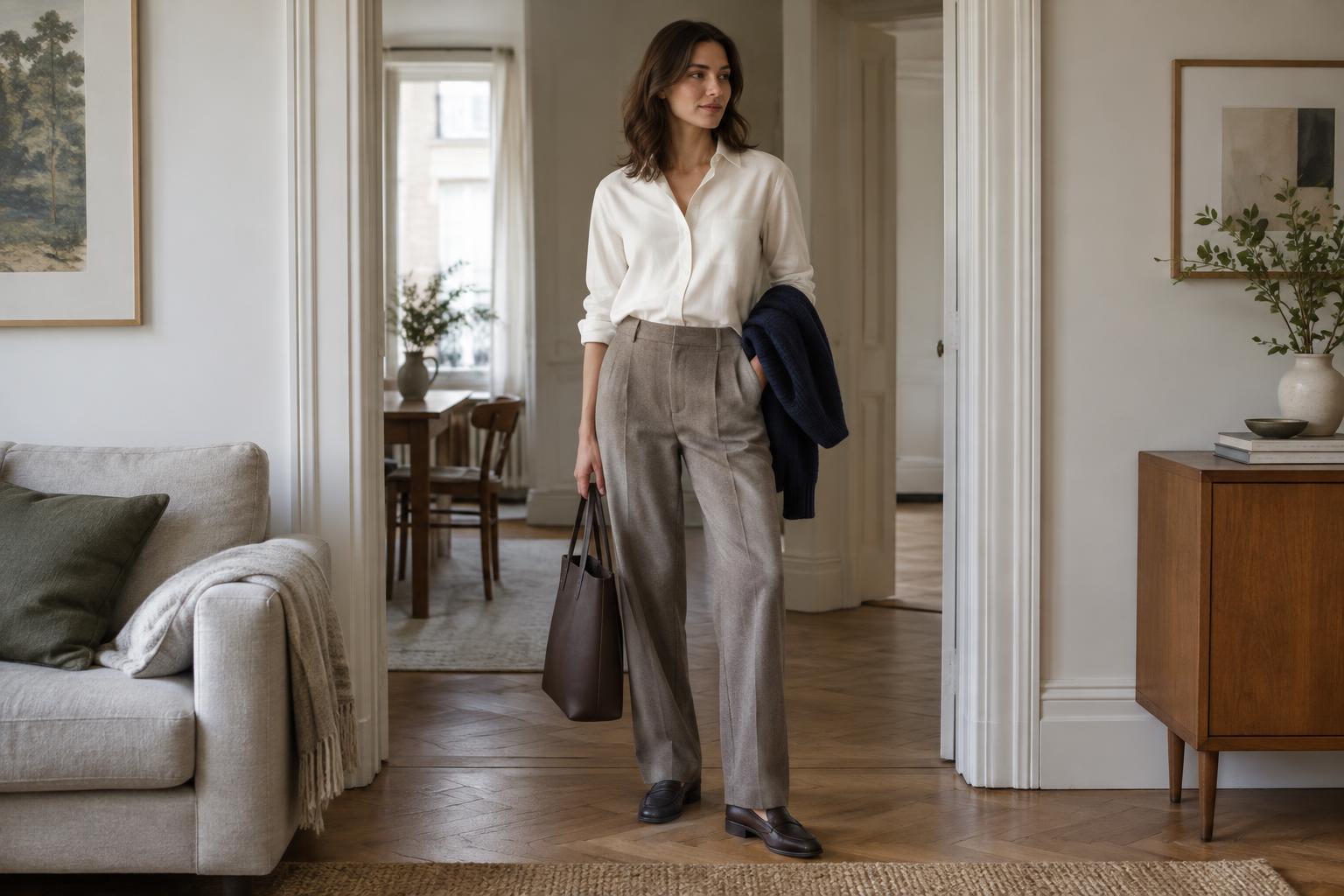
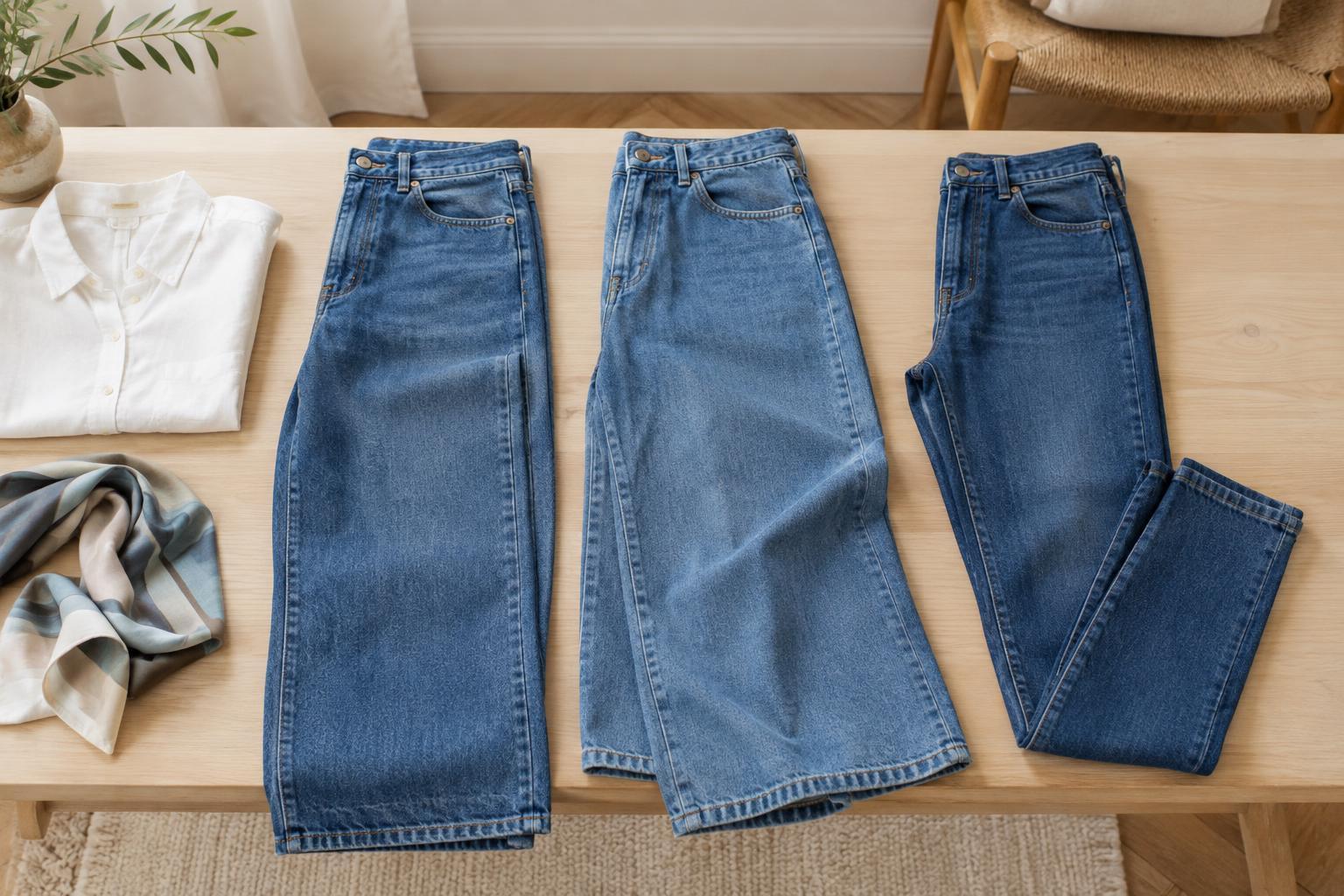
An everyday shirt earns its place through repeat wear. White and pale blue can be easy to combine, but a stripe, soft neutral or deeper color may work better with what you own. In a French-inspired wardrobe, simple combinations can let the shirt's texture and fit do the work: try it with straight-leg trousers and flat shoes, or wear it open over a plain top with jeans. A scarf or small silk accessory can add color without changing the shirt itself.
Before committing, ask whether you like the shirt buttoned, open, tucked and untucked in at least some of the ways you would actually wear it. You do not need to love every variation. You do need a comfortable fit and a few combinations that feel easy. If you keep pulling at the hem, adjusting the collar or checking for button gaps, keep looking. The right everyday shirt should let you get on with your day.