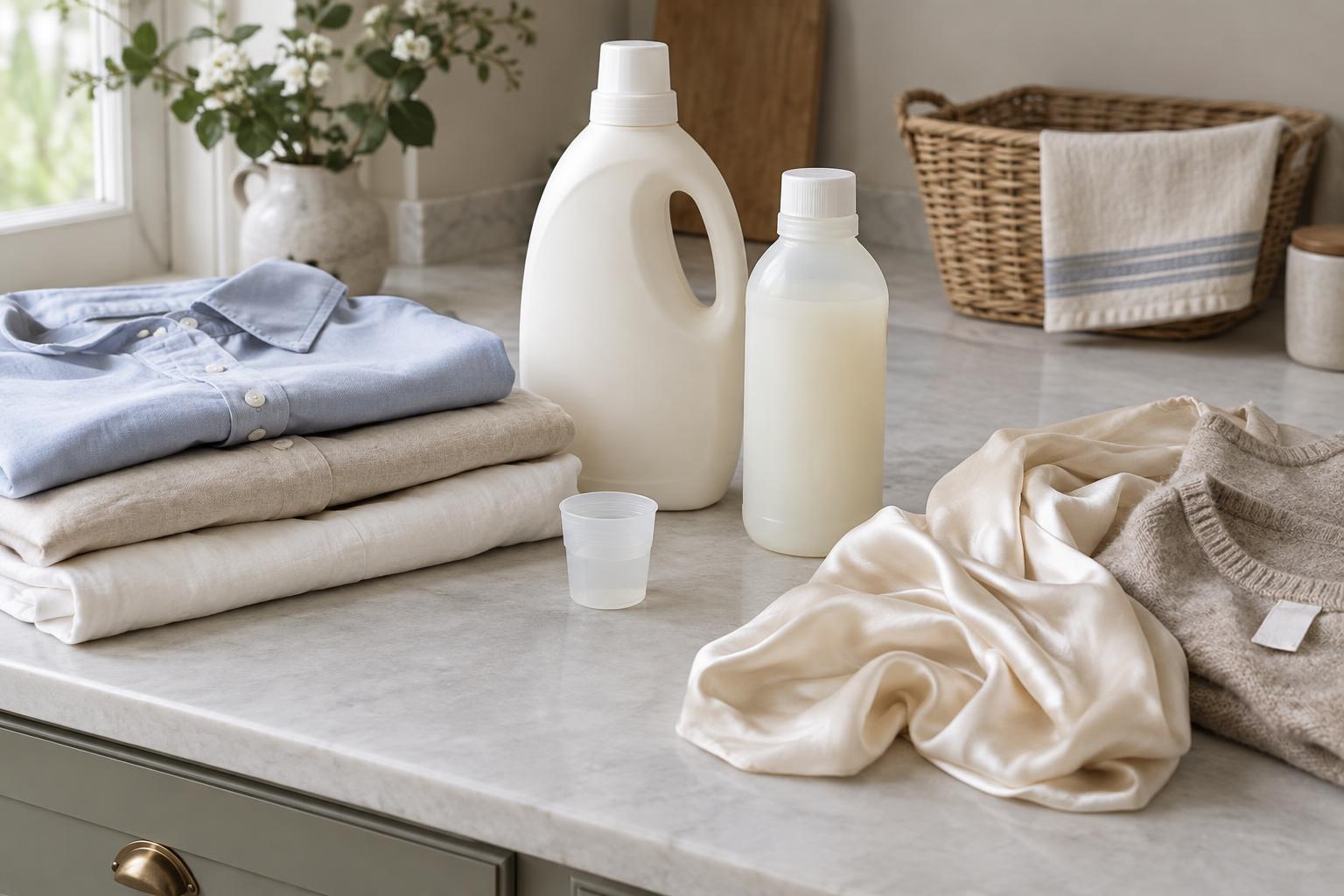
Start with the garment, not the detergent aisle
A useful laundry routine begins with the care label. It tells you whether a garment can be machine-washed, needs hand washing or should not be washed with water. That instruction matters more than a detergent described as gentle. If the label calls for professional cleaning, switching to a delicate detergent does not make a home wash risk-free.
Next, consider the fiber, color and construction. A sturdy cotton shirt and a lined silk blouse may both look like wardrobe staples, but they ask for different handling. Separate darks from pale pieces where dye transfer is a concern, and keep items with hooks, zippers or rough surfaces away from fabrics they might snag. When you are unsure whether a garment will release dye, test an inconspicuous area before washing it with other pieces.
Choose an everyday formula for regular laundry
For washable cotton, linen, many synthetics and durable blends, a standard laundry detergent is usually the practical starting point. Look for a product suited to your machine and the water temperature you plan to use. If you have a high-efficiency washer, follow its guidance on compatible detergent. Liquid formulas are convenient for measured doses and pretreating many washable items; powders can work well too, though they need enough water and agitation to dissolve fully.
An everyday formula is designed to handle common body oils, food marks and general wear. That does not mean more detergent will clean better. Excess product can be difficult to rinse away, leaving clothes feeling stiff or looking dull. Use the package directions as a starting point, then account for load size and how soiled the clothes are. A lightly worn blouse does not need to be treated like a load of muddy towels.
Treat silk, wool and fragile finishes as a separate decision
For washable silk and wool, choose a detergent whose label specifically says it is suitable for those fibers, and follow the garment’s care instructions. Some conventional detergents contain enzymes intended to break down protein-based stains; because silk and wool are protein fibers, a formula made for them is the more cautious choice. Avoid assuming that a product marketed for “delicates” is appropriate for every delicate fabric—check its stated uses.
Construction matters alongside fiber content. Lace, embroidery, loose knits and garments with decorative trims can be vulnerable to stretching or snagging even when their fabric tolerates water. If the care label allows washing, use the gentlest method it specifies, avoid heavy rubbing and support a wet garment when lifting it. A mesh bag can reduce contact with other clothes in a machine, but it cannot override a hand-wash-only instruction or prevent every kind of damage.
Compare ingredients and claims by what you actually need
A fragrance-free detergent may suit someone who prefers clothes without an added scent; “unscented” and “fragrance-free” can mean different things, so read the package if that distinction matters to you. Likewise, brighteners, bleach and fabric softeners are not essential to every load. Before using a whitening or stain-removing product, check both its label and the garment’s care symbols for compatibility. Never assume a pale color means a fabric can be bleached.
A small selection often works better than a shelf of specialized bottles: one compatible detergent for everyday laundry and, if your wardrobe calls for it, one clearly labeled for washable silk and wool. If you rarely wash those fibers at home, there is little reason to buy a specialty product in advance. Choose based on the garments you own and the instructions they carry, rather than on promises of a particular look or feel.
Make the wash method do its share of the work
Detergent is only one part of fabric care. Sort loads so heavier items do not abrade lightweight ones, leave enough room for clothes to move, and use the temperature and cycle allowed by each garment’s label. Pretreat a visible mark promptly when the fabric permits, testing any product on a hidden area first. For a mixed load, the most delicate item should guide your choice—or, better, wash it separately.
After washing, rinse thoroughly, especially when hand washing. Avoid wringing delicate pieces; gently press out water and dry them as their labels direct. Good detergent choices are less about finding one perfect bottle than matching a suitable product, an appropriate dose and a careful wash method to the clothes you want to wear again and again.