Start with the space between hem and shoe
A useful way to choose shoes is to look at the trouser hem first. Where does it end, how wide is its opening, and how much of the shoe will remain visible? A long hem may show only a toe, while a cropped hem reveals the whole shoe and some ankle. Those small differences can change the balance of an outfit more than the shoe’s color.
Try the trousers and shoes on together, then stand and walk in front of a mirror. A combination that looks neat while standing may catch at the heel or bunch over the toe once you move. There is no single correct amount of fabric to show: the aim is to find a line you like that also works for your day.
Give straight-leg trousers a clear finish
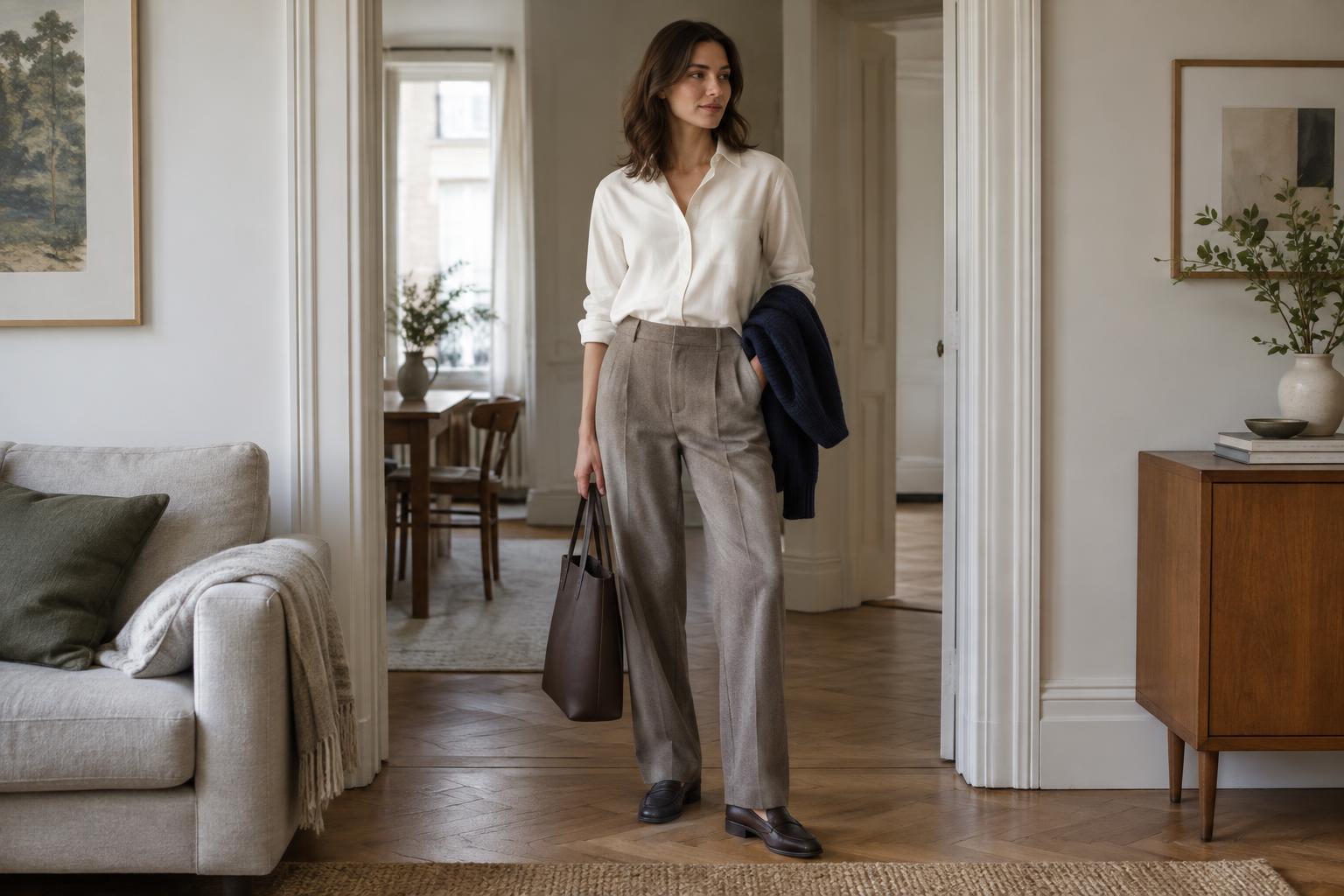
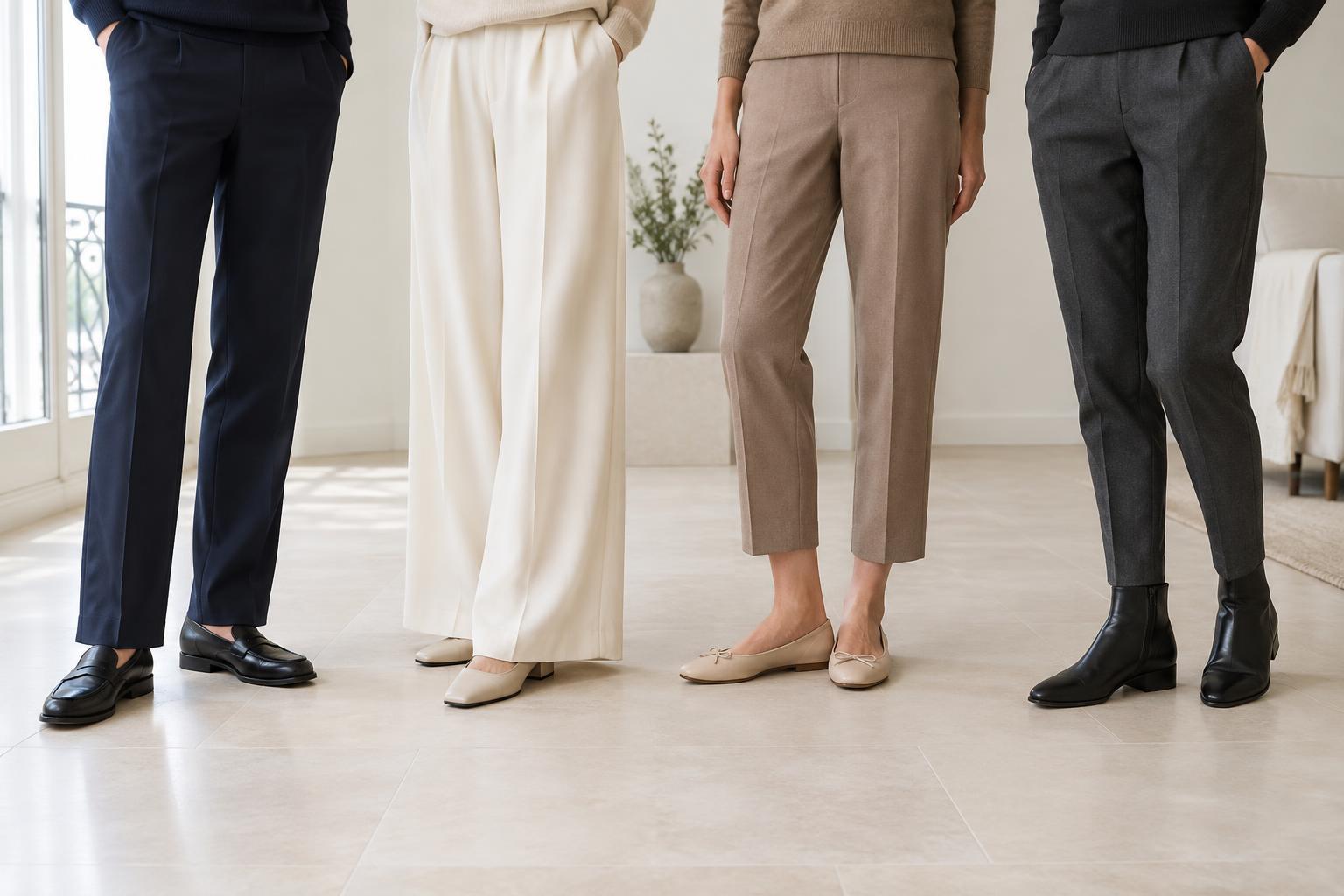
Straight-leg trousers offer room for several shoe shapes because their hem is neither especially narrow nor especially wide. With a full-length pair, a loafer, low-profile trainer or ankle boot can sit comfortably beneath the fabric. If the trousers end near the top of the shoe, a slightly elongated or squared toe can give the visible portion a clear shape without demanding attention.
For a cleaner, French-inspired everyday outfit, try straight dark trousers with a simple flat and a relaxed knit or shirt. If the hem folds heavily over the shoe, consider a shorter trouser length or a shoe with a little more height through the sole. Avoid choosing a heel solely to solve a length problem if you would rather wear flats; adjusting the hem may make the trousers more versatile.
Balance wide legs without hiding the shoe
Wide-leg trousers create a broad column of fabric. A shoe with some visible presence, such as a substantial loafer, rounded ankle boot or sturdy flat, can make that column feel grounded. A pointed toe can also work, especially when it extends just beyond a longer hem. The goal is not necessarily to match a wide leg with a heavy shoe, but to make sure the shoe does not disappear unless that is the look you want.
Hem length matters particularly here. A long wide leg that nearly reaches the floor can look fluid, but it should not drag as you walk. A shorter wide leg exposes more of the shoe, so even a delicate sandal or slim flat becomes an intentional part of the outfit. Try on the trousers with the shoes you expect to wear most often before deciding on a final length.
Use cropped and tapered hems to frame the foot
Cropped trousers leave a visible gap above the shoe, drawing attention to the ankle, sock or boot shaft. Slim flats and loafers keep that transition light; a chunkier trainer or boot makes it more pronounced. Either approach can work. If the gap feels abrupt, try a shoe color close to the trousers, add socks in a related tone, or choose a boot whose shaft meets the hem.
Tapered trousers narrow toward the ankle, so the opening may rest on top of a shoe rather than fall around it. Shoes with a relatively low profile often keep the hem from bunching: think streamlined trainers, loafers or sleek ankle boots. If you prefer a bulkier shoe, check that the trouser opening can sit above it comfortably. A slight crop can give both shapes enough room to be seen.
Make the pairing work for your wardrobe
Before buying shoes for one pair of trousers, test them with several hems you already own. Notice the toe shape, sole thickness and how high the shoe rises over your foot. These details affect whether a hem falls smoothly, catches, or leaves an awkward gap. Comfort matters as much as the outline: you should be able to take your usual steps without guarding the fabric or changing your stride.
For an easy starting point, choose one understated shoe that works with your most-worn trouser length, then add a contrasting shape if you want variety. A slim flat and a more substantial boot, for example, can give the same straight or cropped trousers two different moods. The most useful pairing is not a fixed rule about what goes together; it is one you can put on, move in and repeat.