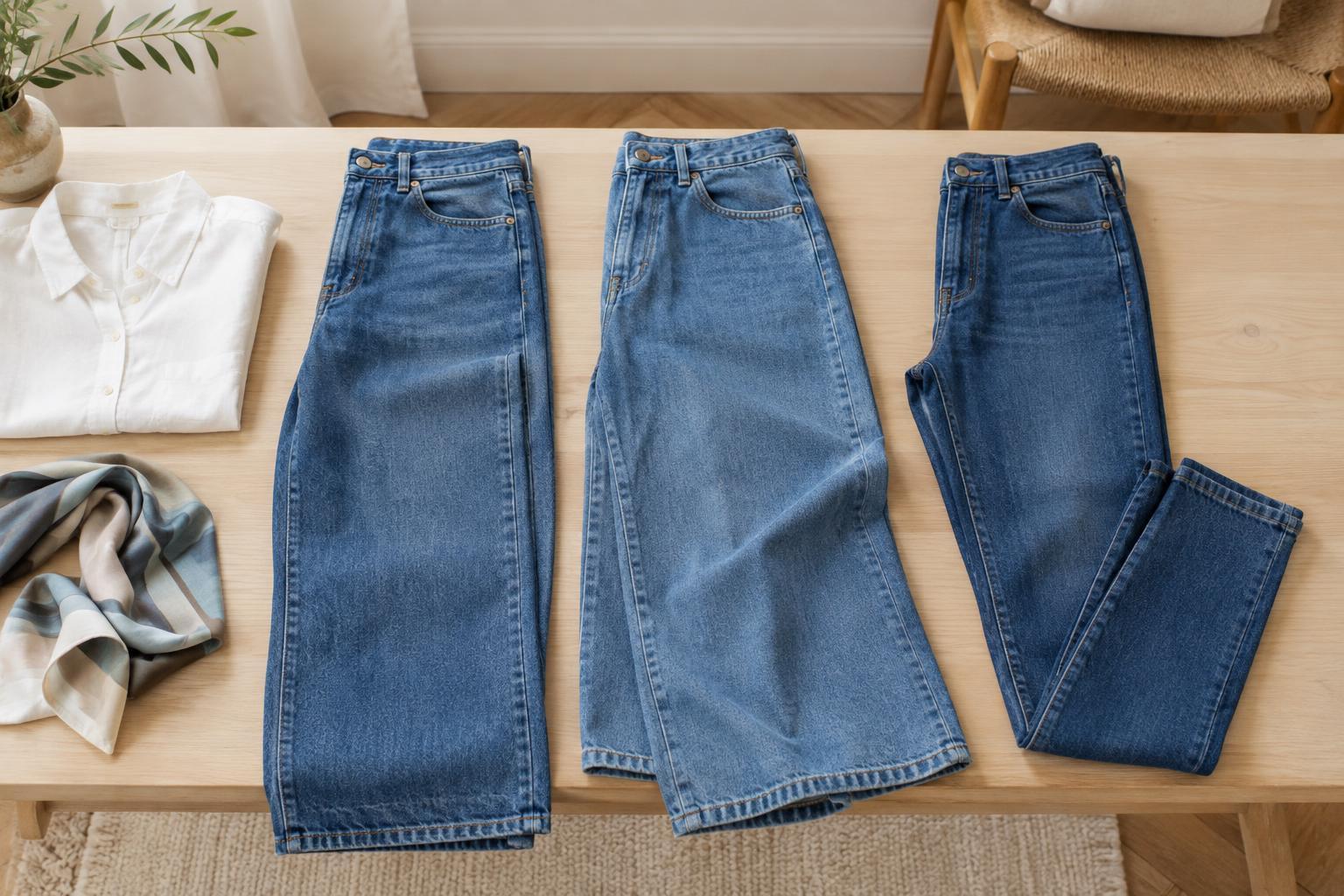
Start with the care label and the condition of the garment
A good denim routine starts with two questions: what does the care label say, and does the garment need a full wash? Denim varies. A sturdy, untreated pair of jeans may tolerate a different routine from a dark jacket with a special finish or jeans containing stretch fibers. Follow the garment’s instructions first, especially if they call for a particular wash temperature or method.
You do not need to wash denim after every wear simply because you wore it. If it is clean and dry, hanging it up between wears can help it air out. Wash it when it is dirty, has an odor that airing will not resolve, or needs cleaning for comfort or hygiene. This avoids unnecessary washing without turning a color-care preference into a rigid rule.
Deal with small marks before washing the whole piece
For a small, fresh mark, try spot cleaning before putting the entire garment through a wash cycle. Blot rather than rub, working gently with a clean cloth and a little cool water. If water alone is not enough, use a small amount of mild detergent diluted in water, then remove the residue with a damp cloth. Test any cleaning method on an inconspicuous area first, particularly on very dark or specially finished denim.
Avoid aggressive scrubbing. It can leave a lighter patch even when the stain comes out, because friction may disturb the surface color. If a mark remains, check the care label before trying a stain treatment, and follow that product’s directions. A stubborn stain is not a reason to repeatedly rub the same spot.
Choose a gentle wash that protects the surface
When a full wash is needed, turn denim inside out and close its buttons or zip. Turning it inside out reduces rubbing on the visible surface, while fastened closures are less likely to catch on other items. Wash dark denim with similar dark colors, especially during its early washes, when loose dye may transfer. Give pieces enough room to move rather than packing the machine tightly.
Use the coolest water permitted by the care label and a gentle cycle if the garment allows machine washing. A measured amount of mild detergent is usually enough; adding extra can make rinsing harder without improving the result. Skip bleach unless the care label specifically permits it and lightening is your goal. Keep the wash practical: a gentle setting, suitable detergent, and sensible sorting matter more than a specialized ritual.
Dry slowly and keep denim out of harsh light
Heat and prolonged exposure to strong sunlight can work against your efforts to preserve a deep color. If the care label permits it, reshape the garment after washing and air-dry it away from direct sun. Hanging jeans by the waistband or laying them flat can help them dry in a natural shape; choose a method that suits the garment’s weight and the space available. Make sure thick seams and pockets are fully dry before storing it.
If you use a tumble dryer, check the label and choose a lower-heat setting where appropriate. Remove the garment when dry rather than leaving it in a hot drum. Stretch denim deserves particular care, as excessive heat can be hard on its elastic fibers. Avoiding heat altogether is not always practical, but using less of it is a straightforward choice when color retention is the priority.
Expect some change, and care for the color you have
Even careful washing cannot guarantee that denim will stay exactly the same shade. Dark dye may gradually soften with wear and cleaning, and friction at knees, pockets, and seams can create lighter areas. Raw or specially finished denim may have its own care instructions and may transfer color to lighter clothing or furnishings. Check the maker’s guidance before assuming the same routine suits every pair.
The most useful approach is consistent rather than elaborate: clean marks promptly, wash when the garment needs it, use a gentle cycle at an appropriate temperature, and dry with care. These habits help a denim piece remain easy to wear alongside the rest of your wardrobe while allowing its appearance to change naturally over time.