Start with what the light does
Matte fabrics absorb or diffuse light, while shiny surfaces reflect it. Put them together and even a simple outfit gains depth. A cotton poplin shirt, wool trousers and polished leather shoes can look more varied than three pieces in the same finish, even if they are all black. This kind of contrast is useful when you want an outfit to feel interesting without adding a print or a bright color.
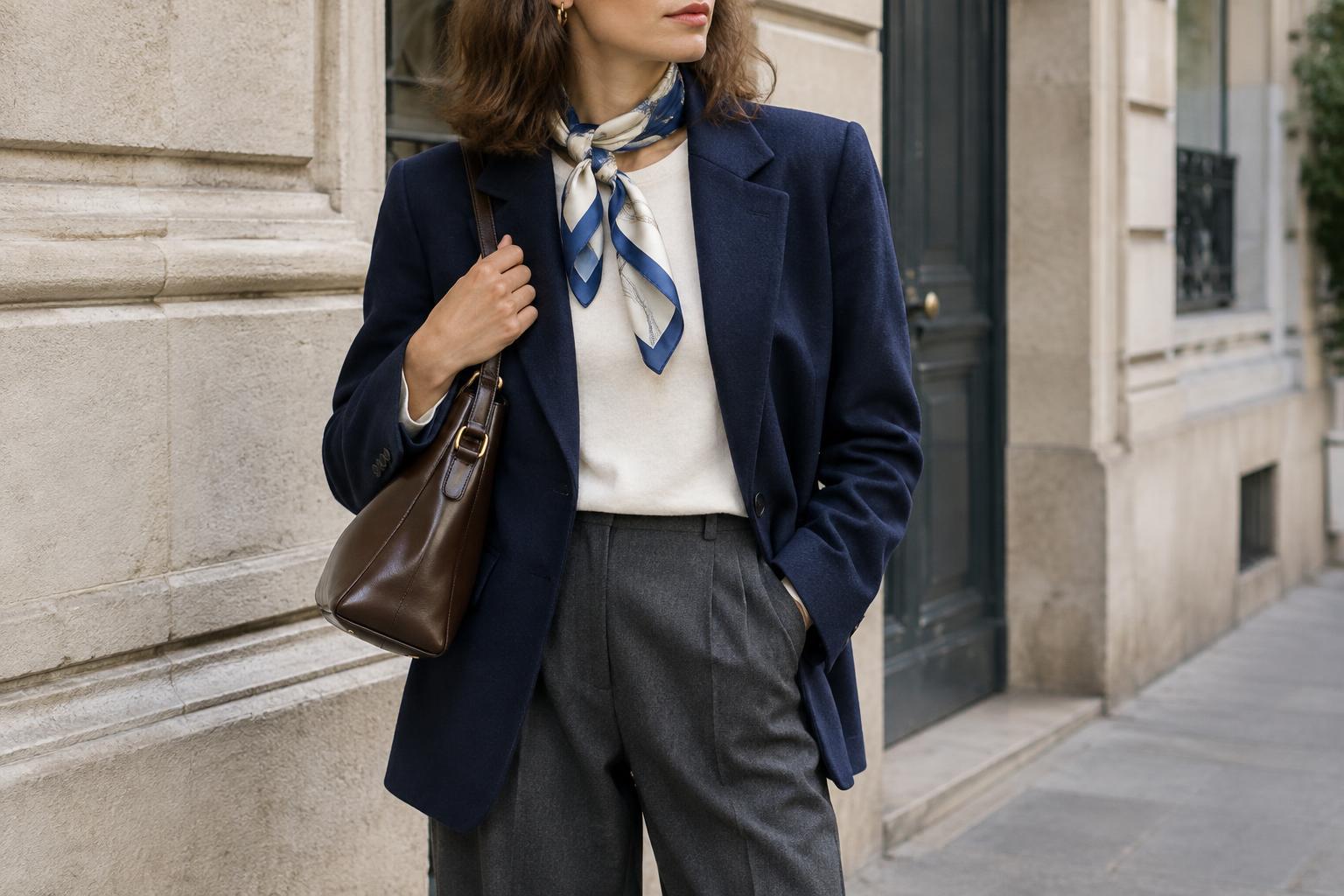
For a restrained, French-inspired look, choose one finish to lead. Let familiar matte pieces form the base, then introduce shine in a smaller area: a silk scarf at the neck, a smooth belt or a satin blouse under a jacket. There is no fixed rule about how much shine is right. The aim is to give the eye one place to land while keeping the rest of the outfit easy to read.
Build outfits from a matte base
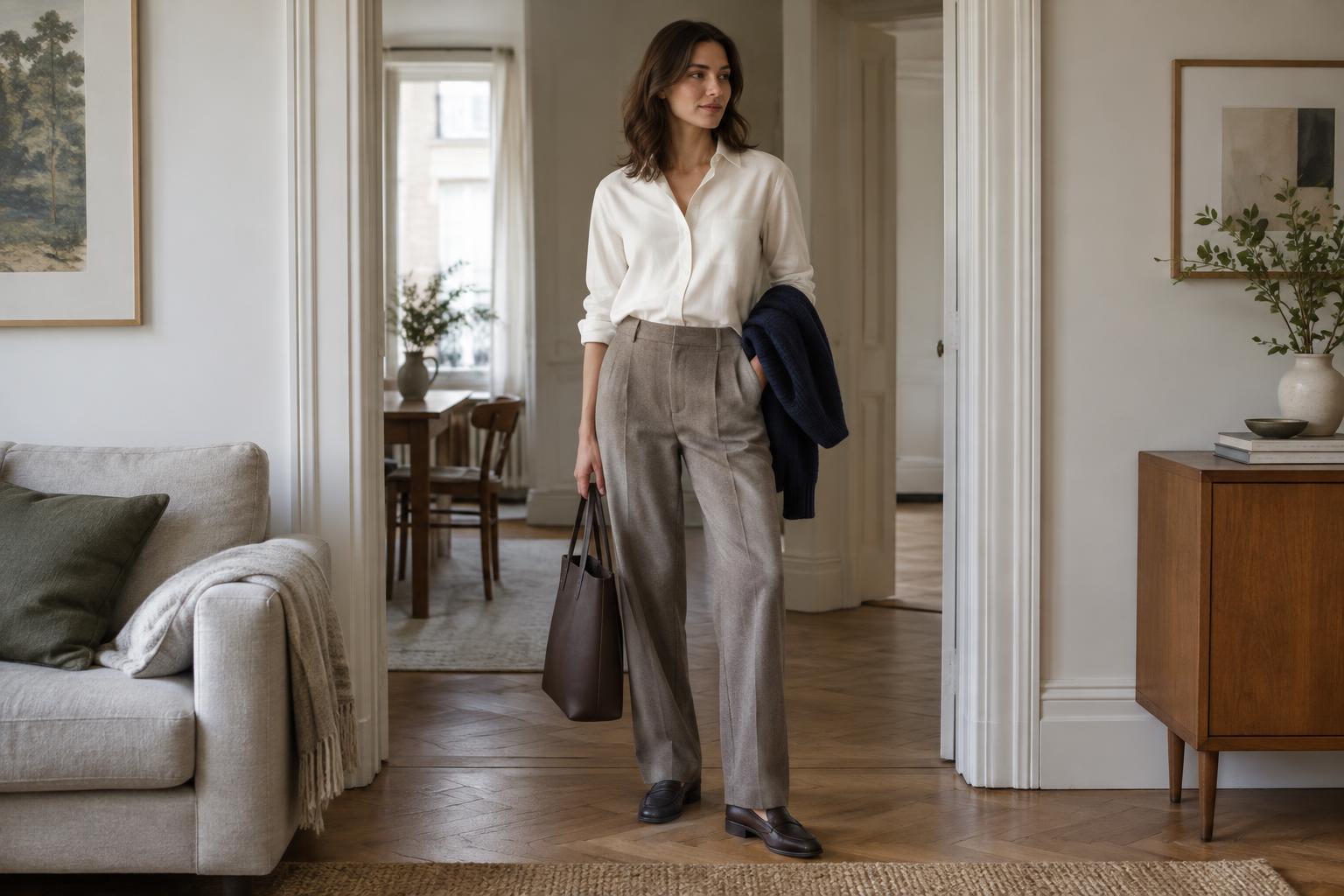
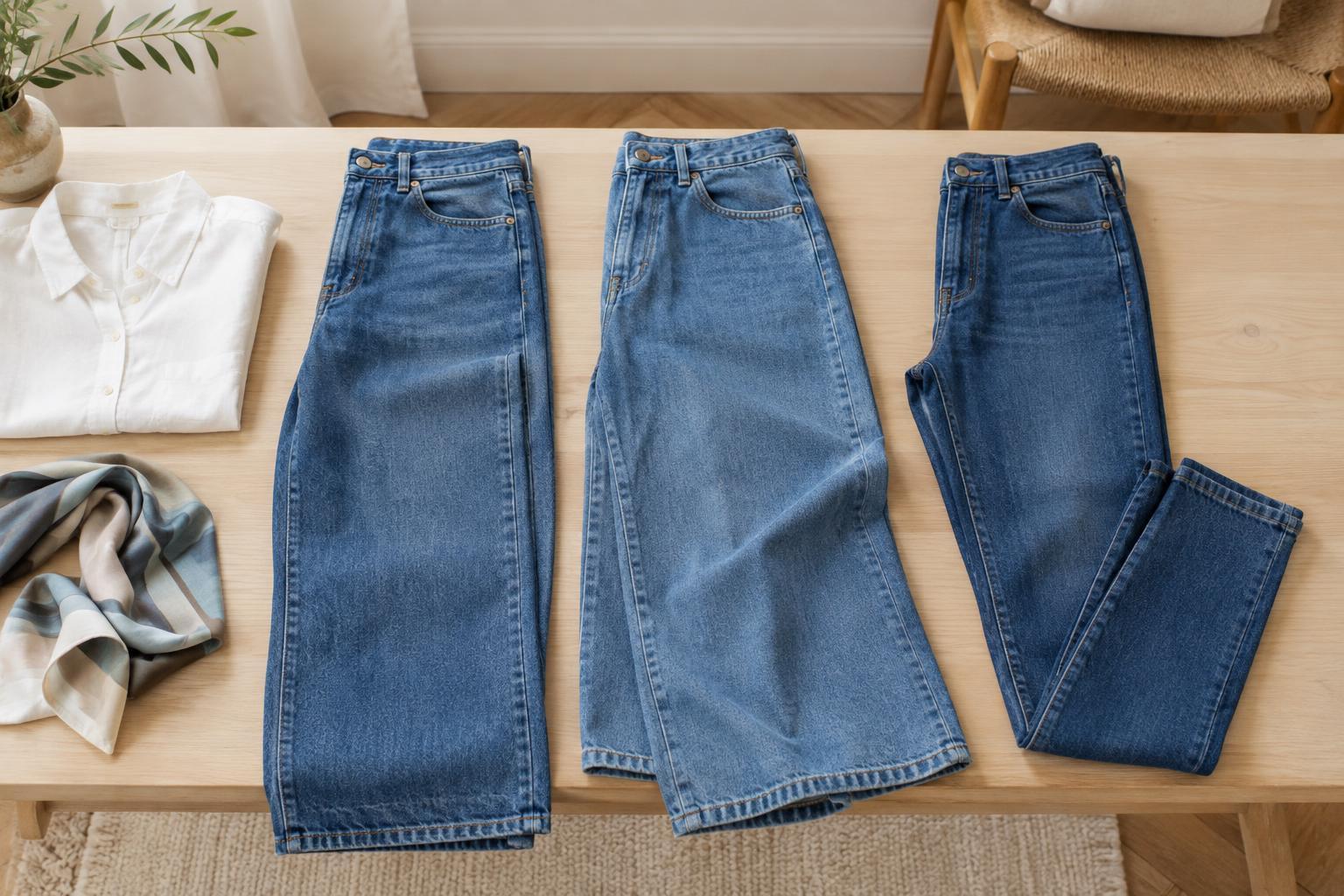
Denim, brushed cotton, linen and many wool fabrics make useful starting points because their surfaces tend to look quiet. Try straight-leg jeans with a fine knit and a silk scarf tied loosely at the neck. Or wear tailored wool trousers with a cotton shirt and polished loafers. In each case, the reflective detail adds definition without changing the relaxed character of the clothes.
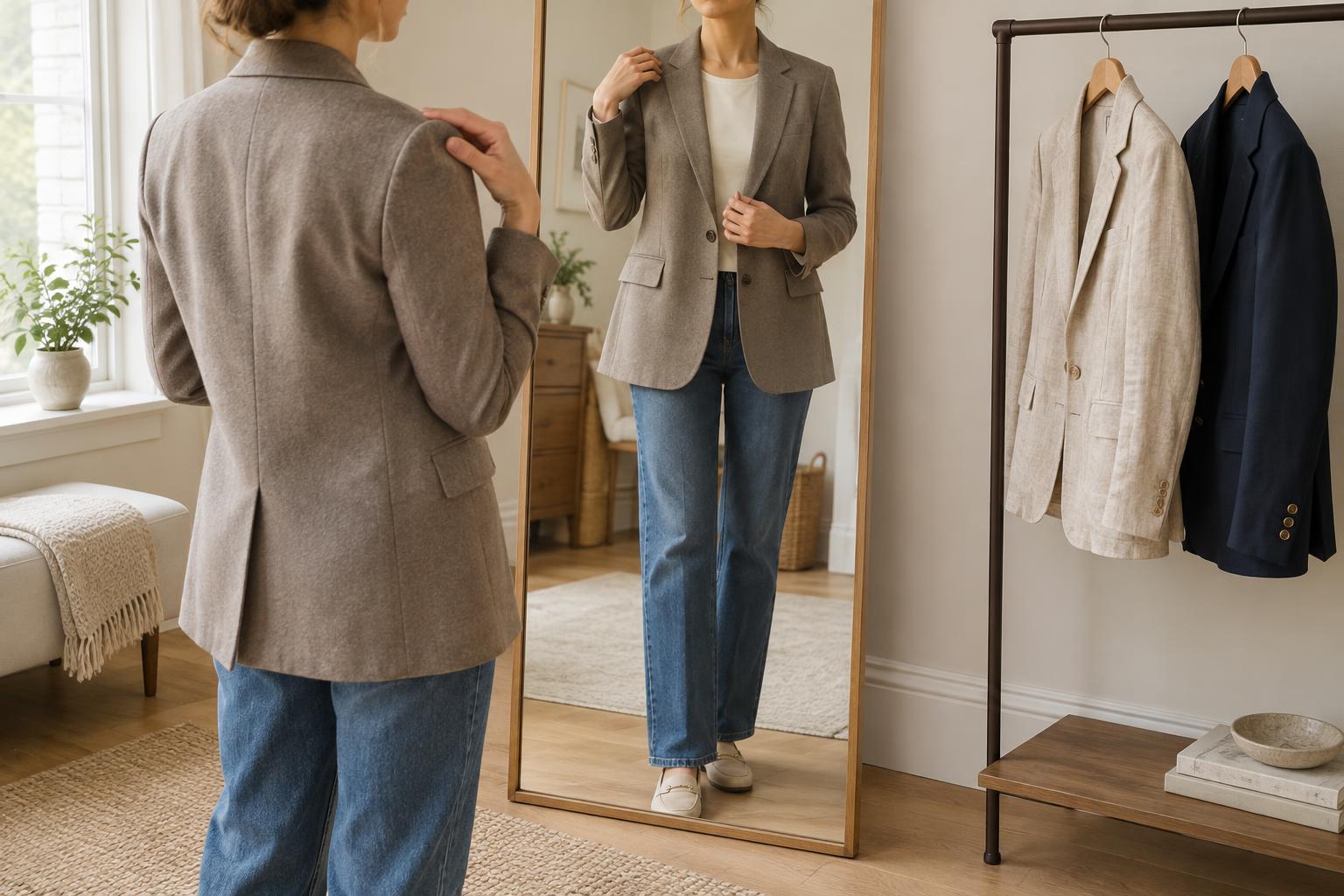
You can also reverse the proportions. A satin skirt may be the main event, but it often feels more wearable beside a matte sweater or a crisp cotton shirt. A shiny blouse can sit comfortably beneath an unstructured wool jacket. If the outfit feels too dressy for the setting, add a piece with a visibly casual texture, such as denim or a sturdy canvas bag, rather than removing the shine altogether.
Use shine to draw attention deliberately
Reflective surfaces naturally catch the eye, so their placement matters. A silk scarf worn near the face brings attention upward. A polished shoe gives a quiet finish to a trouser outfit, while a satin skirt becomes the visual focus below the waist. Think about where you want the emphasis before choosing a shiny piece; this is often easier than trying to balance several eye-catching items after you are dressed.
Scale matters, too. Small accessories can be especially effective with textured clothing. A narrow silk scarf contrasts with a chunky knit, and a smooth leather belt breaks up a matte dress. If you wear earrings, a glossy bag and shiny shoes together, allow the clothing to stay relatively subdued. The pieces need not match exactly, but giving them space keeps the contrast intentional rather than busy.
Keep color simple while experimenting
Texture is easiest to notice when the colors are closely related. Navy wool beside dark blue satin, or an ivory cotton shirt beside a cream silk scarf, creates contrast without a sharp color change. This approach is helpful if you are new to mixing finishes: you can judge the effect of the surfaces themselves before adding other variables.
A limited palette does not have to mean a flat outfit. Compare a matte black knit with a black leather belt and charcoal trousers, or pair a white shirt with a softly lustrous scarf in a similar shade. Check the combination in ordinary daylight if you can. A finish that looks subtle indoors may appear more reflective outside, and some satins look quite different under evening lighting.
Make the contrast work beyond one outfit
You do not need a collection of occasion pieces to use this idea. One silk scarf, a pair of polished shoes or a satin top can change the feel of clothes you already wear. For daytime, try a single shiny accent against denim or a cotton dress. For an evening plan, keep the same matte foundation and swap in a more prominent reflective piece, such as a satin blouse or skirt.
Consider upkeep when choosing where to add shine. Smooth fabrics can show creases, marks or snags more readily than textured ones, while polished leather may need occasional cleaning to keep its finish. Follow each garment’s care label, and store delicate accessories where they will not rub against rough hardware. A contrast looks most effective when both the quiet and reflective pieces are in good condition.