Start with one tailored piece
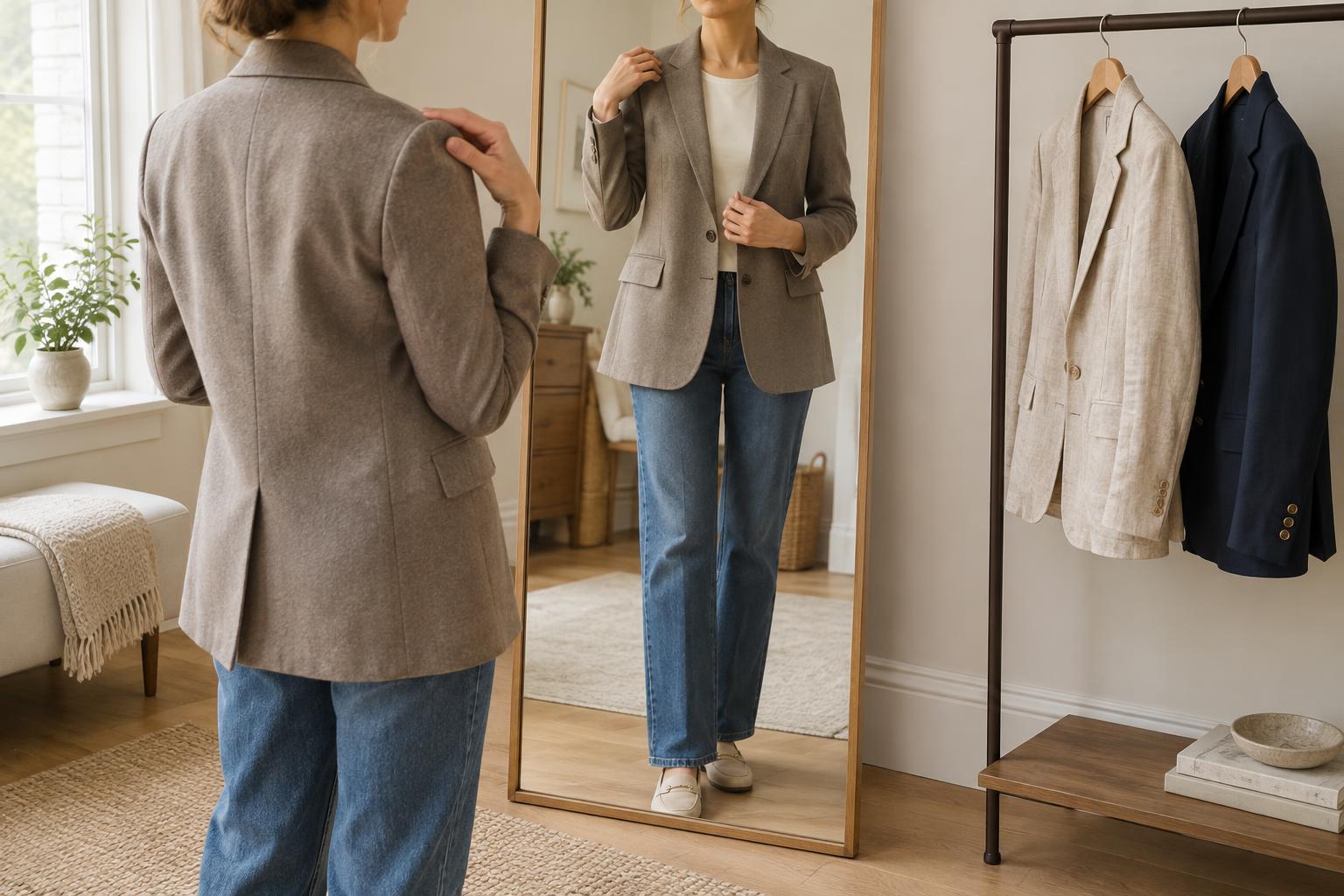
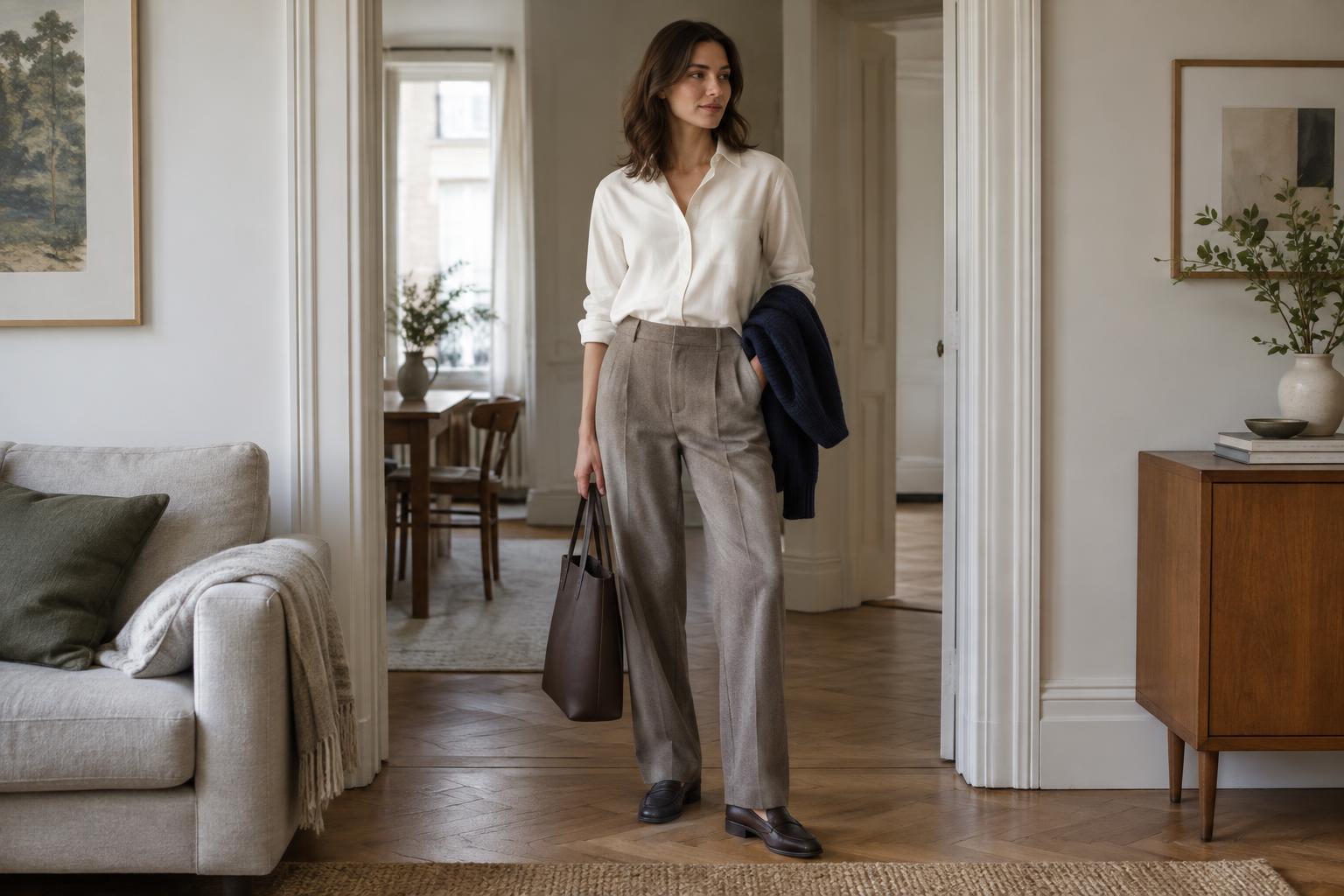
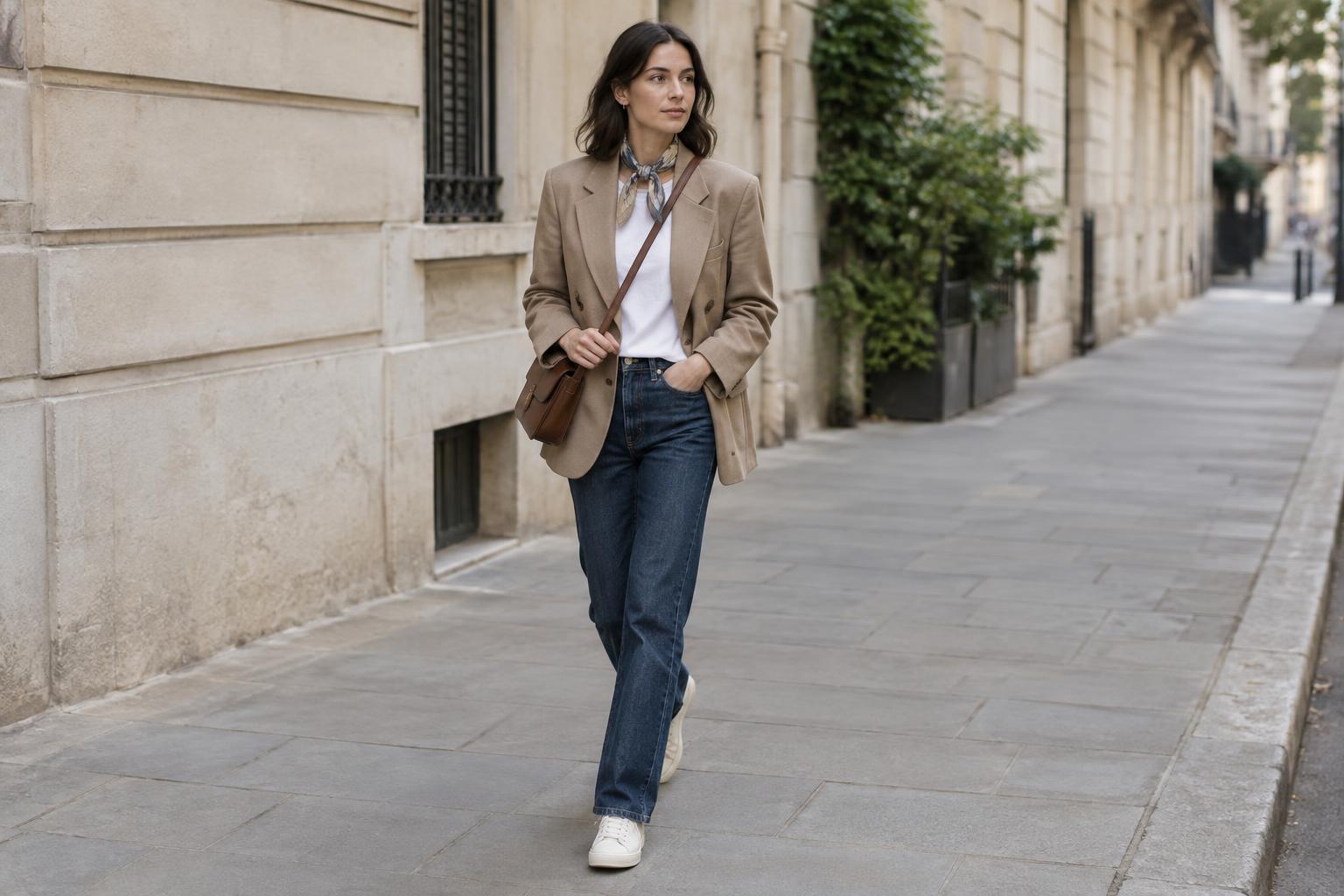
The simplest way to make tailoring feel less formal is to let one structured item lead the outfit. Choose a blazer, tailored trousers or a neat waistcoat, then pair it with clothes you would happily wear on an ordinary day. A blazer with jeans is an easy starting point; tailored trousers can work just as well with a soft knit. You keep the clean lines that make tailoring appealing without looking as though you are on your way to a meeting.
Pay attention to fit before changing anything else. A jacket that lets you move your arms comfortably, or trousers that sit well when you walk and sit, will be easier to wear casually. If a full suit feels too dressed up, separate the pieces and try each one with the clothes already in your wardrobe.
Soften the layers underneath
A crisp shirt can make a blazer feel businesslike, especially when both pieces are sharply pressed. For a quieter look, try a plain T-shirt, fine-gauge knit or relaxed cotton shirt instead. Choose a neckline you like wearing on its own, since you may take the jacket off during the day. A soft layer also gives a structured shoulder or lapel a useful contrast.
You can leave a shirt collar open, push up the sleeves of an unlined jacket if the fabric allows it, or wear a knit loosely tucked into trousers. These small adjustments should look natural rather than carefully undone. If the outfit starts to feel too loose overall, bring back definition with a belt or a tidier tuck.
Use footwear to set the mood
Shoes have a strong effect on how formal tailoring appears. Clean, comfortable trainers can make a blazer and trousers feel ready for a day of errands, while loafers or simple flat shoes keep the look relaxed without taking it too far from its polished roots. For colder or wetter days, understated ankle boots can offer another practical option.
Let the setting guide your choice. A casual workplace may call for different shoes than a long weekend walk, even with the same trousers. Check the trouser hem, too: fabric that pools heavily over a flat shoe can look untidy and may get in the way. A length that works with your most-worn shoes makes the outfit easier to repeat.
Balance shape, colour and accessories
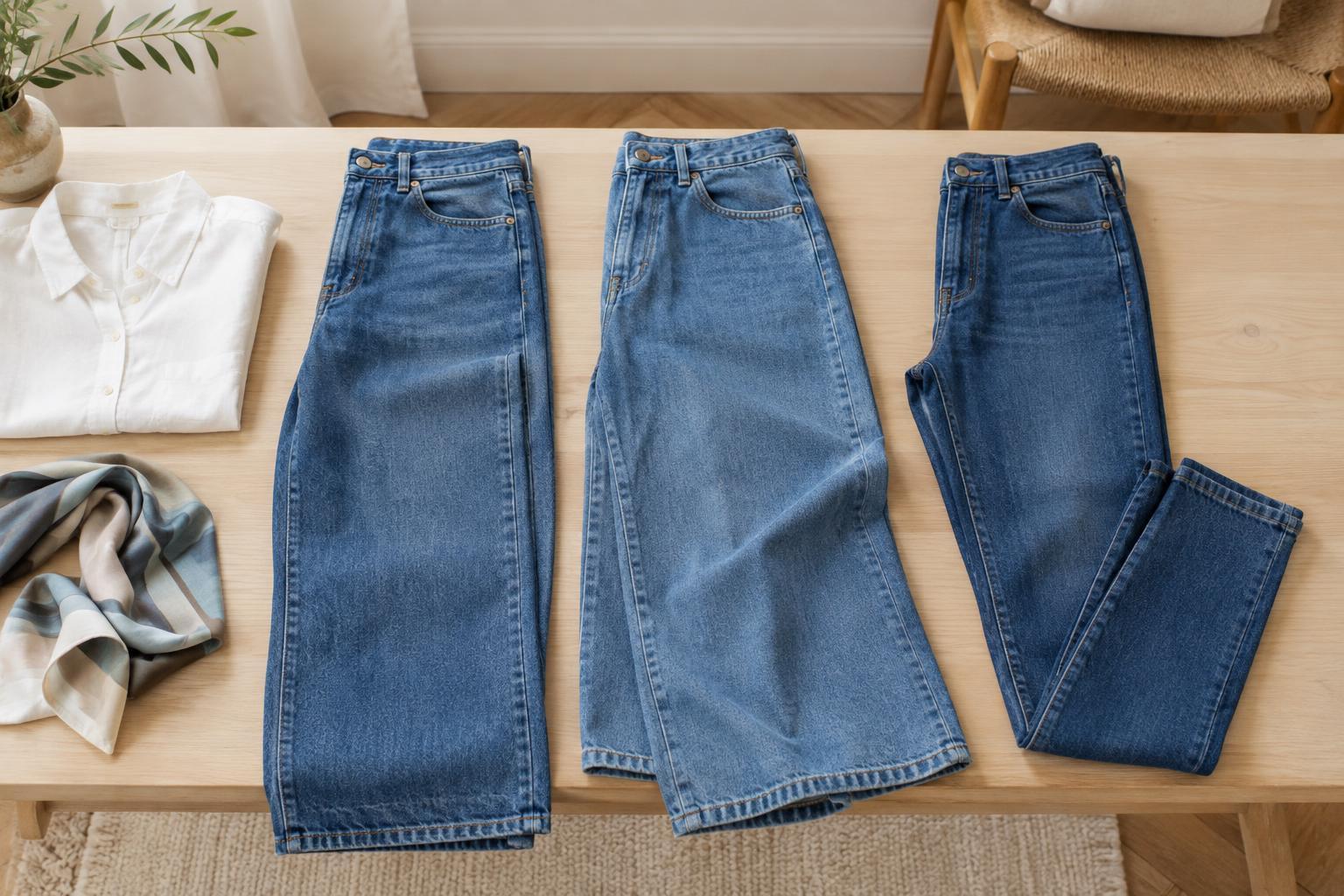
Tailored outfits feel more approachable when their proportions have room to breathe. If your blazer is roomy, try a straighter or slimmer bottom layer; if your trousers are wide, a closer-fitting top can provide balance. These are starting points, not rules. Try the outfit standing and sitting, and notice whether you feel comfortable as well as put together.
A restrained colour palette can help different textures sit together: denim, wool, cotton and leather do not need to match to look considered. Accessories can add personality without making the outfit more formal. A small silk scarf tied loosely at the neck or on a bag, everyday jewellery or a practical crossbody bag may be enough. Choose one detail that feels like yours rather than adding everything at once.
Make the outfit easy to wear again
An everyday outfit earns its place by working more than once. Before buying anything new, try three combinations with a tailored piece you already own. A blazer might go over a T-shirt and jeans one day, a knit and relaxed trousers another, and a simple dress when you want a slightly neater look. Photograph combinations you like if that helps you remember them.
A little care also makes repeat wear simpler. Let jackets air after use, check garment labels before cleaning, and brush off light surface dust where appropriate for the fabric. Keep shoes in good condition and set aside layers that feel pleasant against the skin. The goal is not to make tailoring look careless; it is to make its polish fit comfortably into your routine.