Start with the invitation, not an assumed dress code
Religious ceremonies vary widely, even within the same tradition. The venue, the occasion, and the hosts’ preferences may all affect what feels appropriate. Read the invitation for dress guidance first. If it says “formal,” “modest,” or “festive,” use that as your starting point rather than treating any one style of dress as a universal rule.
When the guidance is unclear, a short question to the host or organizer is considerate: “Is there anything guests should know about clothing or footwear at the venue?” You can also ask whether a head covering is expected, whether shoes will be removed, or whether part of the ceremony takes place outdoors. Asking in advance is usually easier than trying to adjust an outfit at the door.
Choose coverage you can adapt
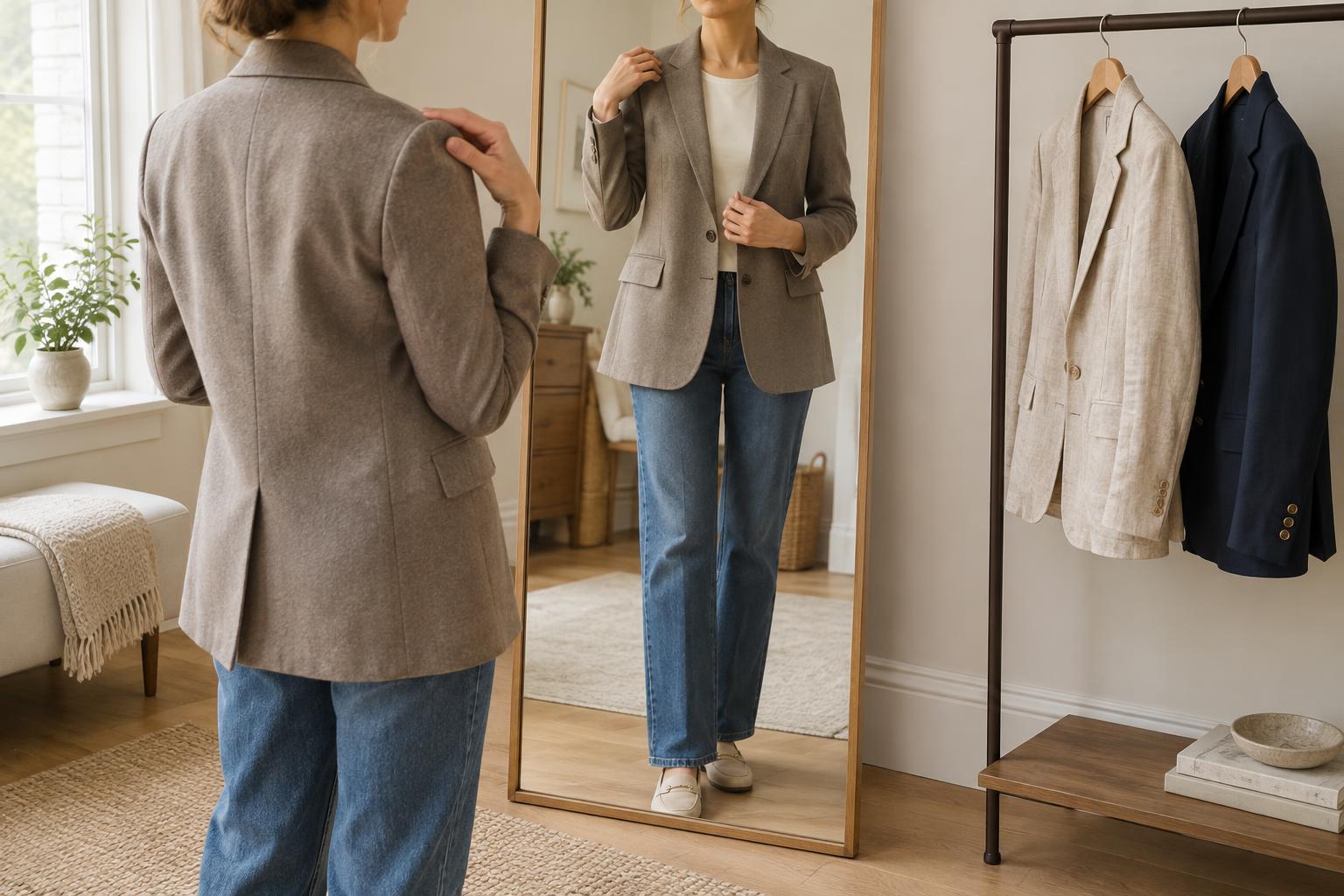
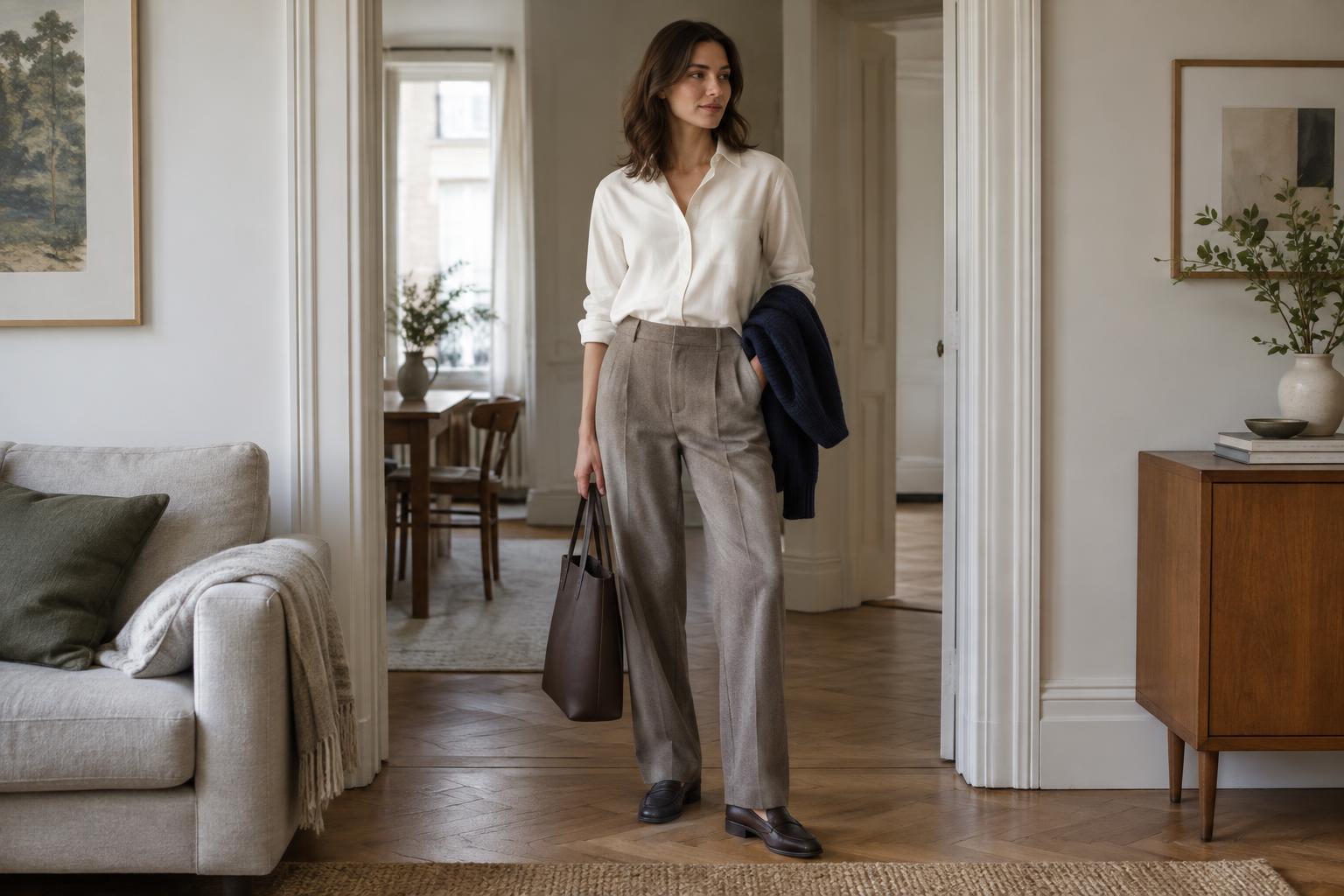
If you do not yet know the expectations, an outfit with adaptable coverage is a useful choice. A dress or skirt that stays comfortable when seated, tailored trousers, or a coordinated set can all work, depending on the stated dress code. Pair a sleeveless top with a jacket or cardigan that you are happy to keep on throughout the ceremony. Check the outfit while sitting and bending, not only while standing in front of a mirror.
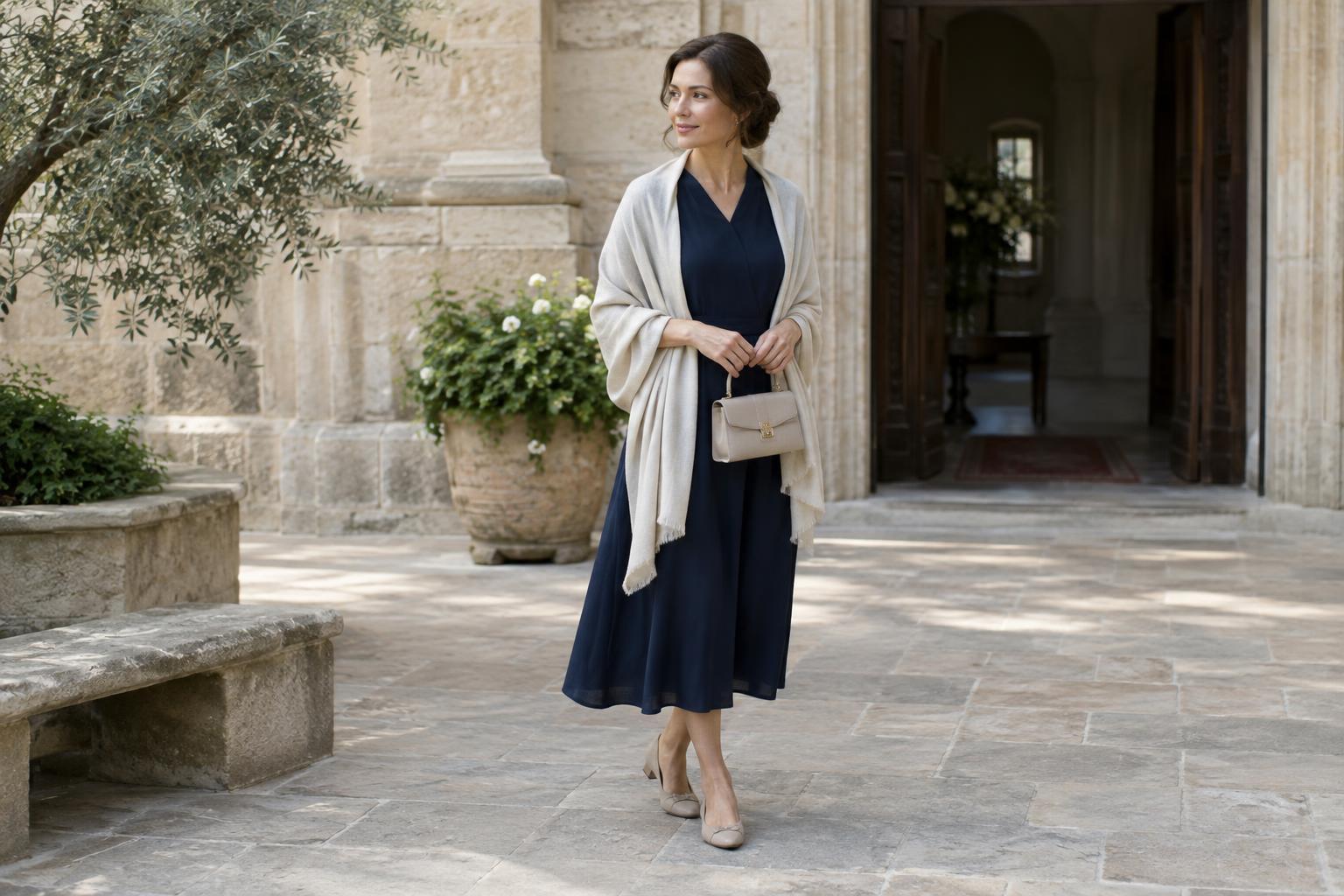
A scarf can add coverage at the shoulders or neckline without requiring a complete outfit change. Choose one that stays in place without constant adjustment, and avoid relying on a delicate silk scarf as your only warm layer. If a head covering is requested, ask what kind is suitable rather than assuming that any scarf will meet the expectation. The goal is to arrive prepared while following the hosts’ guidance.
Plan for the movements of the day
A ceremony may involve standing, sitting, walking, or moving between spaces. Clothing that pulls, slips, or needs frequent rearranging can become distracting. Try the full outfit at home: sit down, stand up, reach for a bag, and walk a short distance. If a jacket is part of your coverage, make sure it closes or sits comfortably when you move.
Shoes deserve the same attention. A polished flat, low heel, or other comfortable dress shoe may serve you better than a pair you can wear only briefly. If footwear might be removed, consider socks or hosiery you feel comfortable wearing indoors and shoes that are easy to take off and put back on. For an outdoor portion of the event, check whether your shoes and outer layer suit the likely ground and weather conditions.
Keep the details considerate and practical
A restrained palette and simple accessories can make an outfit feel composed without drawing attention away from the ceremony. That does not mean color or personal style is unwelcome; follow any guidance on celebratory or subdued dress. If you are attending both a ceremony and a reception, one versatile outfit can often serve for both. You might remove a jacket or change an accessory afterward, provided your ceremony outfit meets the venue’s expectations.
Consider the small details that affect other guests. Jewelry that makes noise when you move may be better saved for another occasion, and a light hand with fragrance is courteous in a shared indoor space. A compact bag leaves your hands free for greetings or printed programs. If you bring an extra scarf or layer, pack it neatly so it is ready when needed rather than something to manage throughout the event.
Make respect the guiding principle
Dressing respectfully does not require you to guess every custom correctly. It means taking the occasion seriously, checking what you can, and choosing clothes that let you participate comfortably. If you receive specific guidance from the host or venue, let it take precedence over general outfit advice.
When in doubt, favor an ensemble that is neat, adaptable, and easy to wear for the full ceremony. Once you have prepared, you can turn your attention from your clothes to the reason you are there: supporting the people who invited you.