Treat inspiration as a starting point, not a dress code
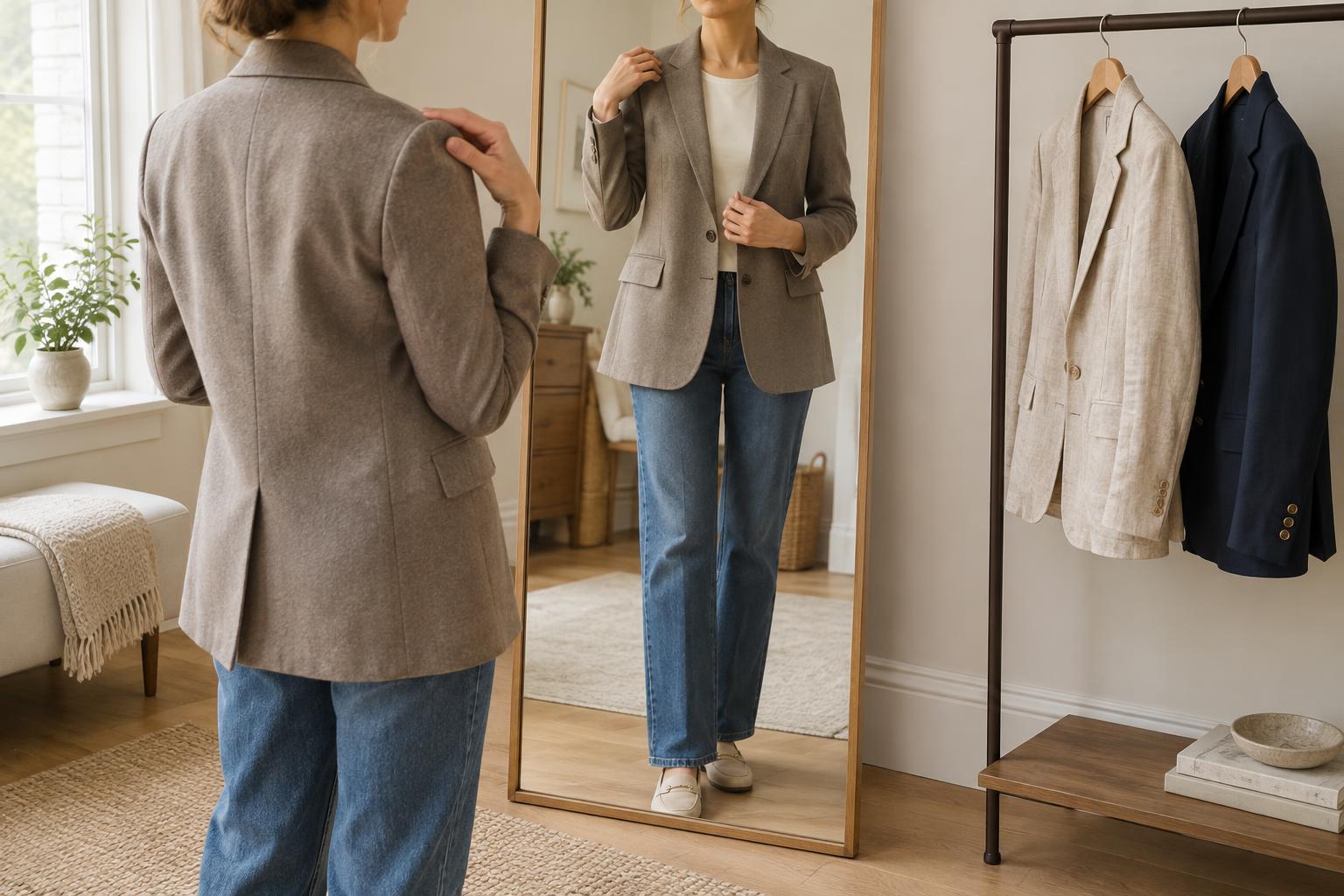
A French-inspired outfit is often described through a short list of items: a striped top, a blazer, a silk scarf and a pair of flats. Those pieces can be useful, but none is essential. If a blazer feels too formal for your day or stripes never feel like you, there is no reason to make room for them. A more helpful approach is to notice what appeals to you about an outfit: its relaxed shape, limited color palette, mix of textures or combination of practical and polished details.
Choose two or three qualities you want your clothes to express, such as ease, structure or a little playfulness. Use those words to guide decisions rather than trying to reproduce someone else’s look. A loose shirt and tailored trousers might feel balanced to one person; a simple dress and worn-in jacket might do the same for another. The aim is not to look as though you followed a formula, but to feel comfortable with the choices you made.
Begin with the clothes you already reach for
Before adding anything new, look at the pieces you wear on ordinary days. Which trousers fit well enough that you do not think about them? Which shoes work with several outfits and still suit your routine? These favorites reveal more about your style than an idealized shopping list. Put a few of them together, then consider what would make each combination feel more intentional: a different layer, a cleaner line at the waist or a color that ties two pieces together.
Pay attention to the clothes that stay unworn, too. A beautiful silk blouse may not be useful if it demands care you cannot easily give it. A fitted jacket may be less versatile for you than a soft cardigan. Your wardrobe should accommodate your climate, schedule and preferences. Working with those realities makes it easier to build outfits you will actually repeat.
Use contrast to create balance
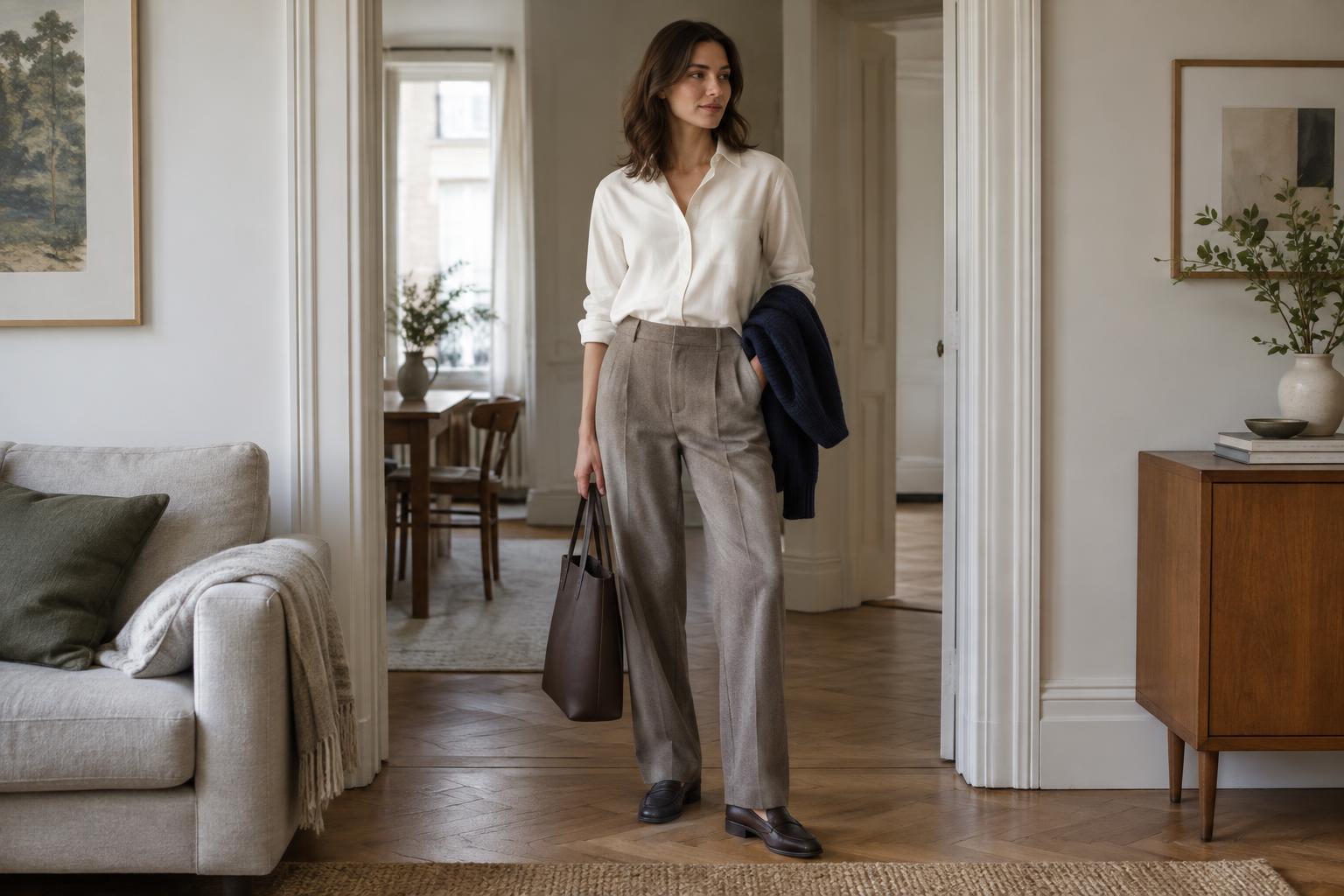
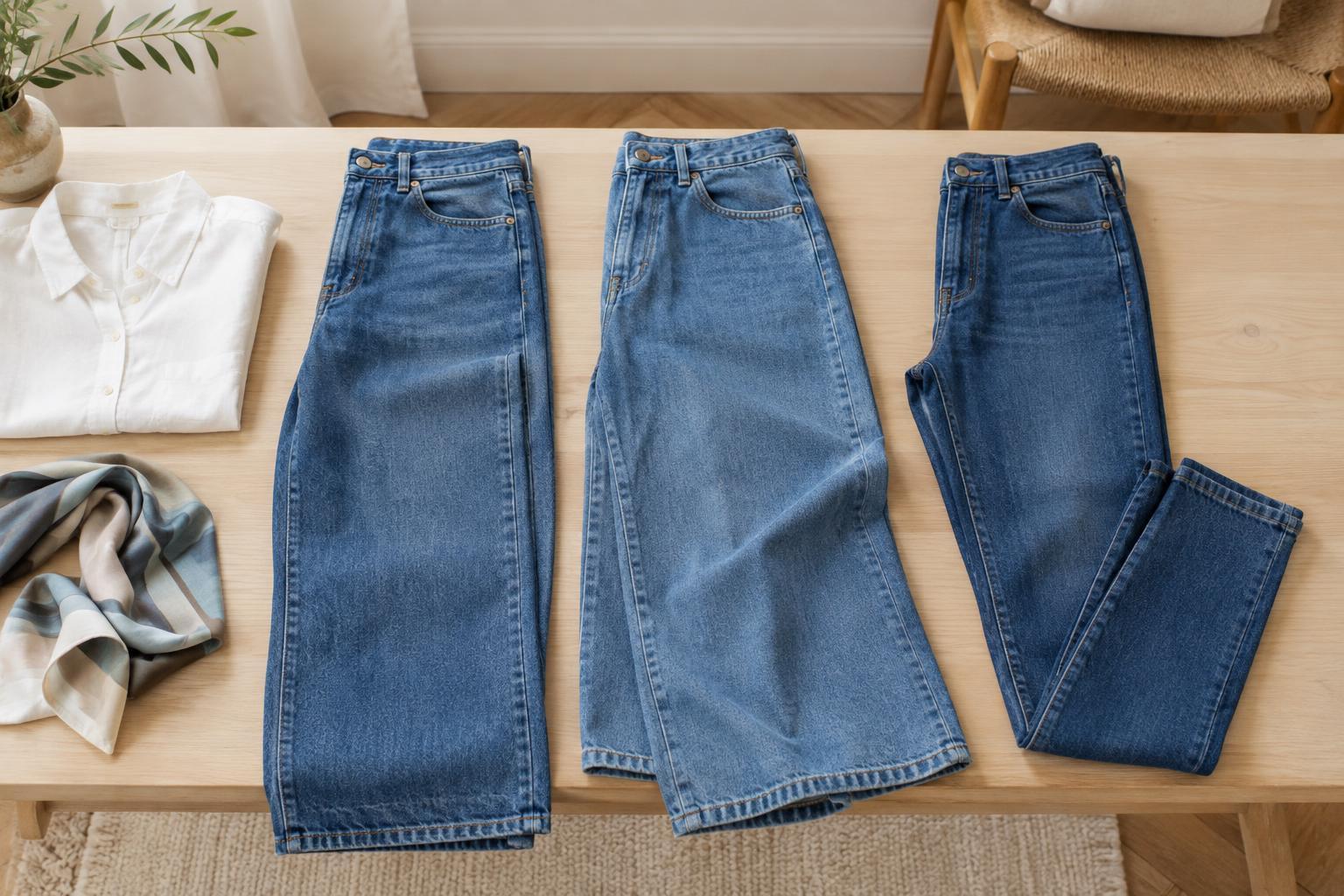
One practical way to put together an outfit is to contrast shapes. If your trousers are wide, try a closer-fitting top or tuck in a relaxed shirt to give the outfit definition. If your top is roomy, a straighter skirt or trouser can offer a quieter base. These are options, not rules: an oversized outfit can work beautifully when you like its proportions. Looking at the overall outline helps you decide whether a combination feels deliberate to you.
Contrast can also come from texture and mood. Try a crisp cotton shirt with soft denim, a fine knit with structured trousers, or a dress with a casual jacket. Keeping one element straightforward gives a more expressive piece room to stand out. If an outfit feels too formal, change one component before starting over: swap dress shoes for comfortable flats or replace a tailored layer with a knit. Small adjustments often do more than a complete overhaul.
Let accessories carry your point of view
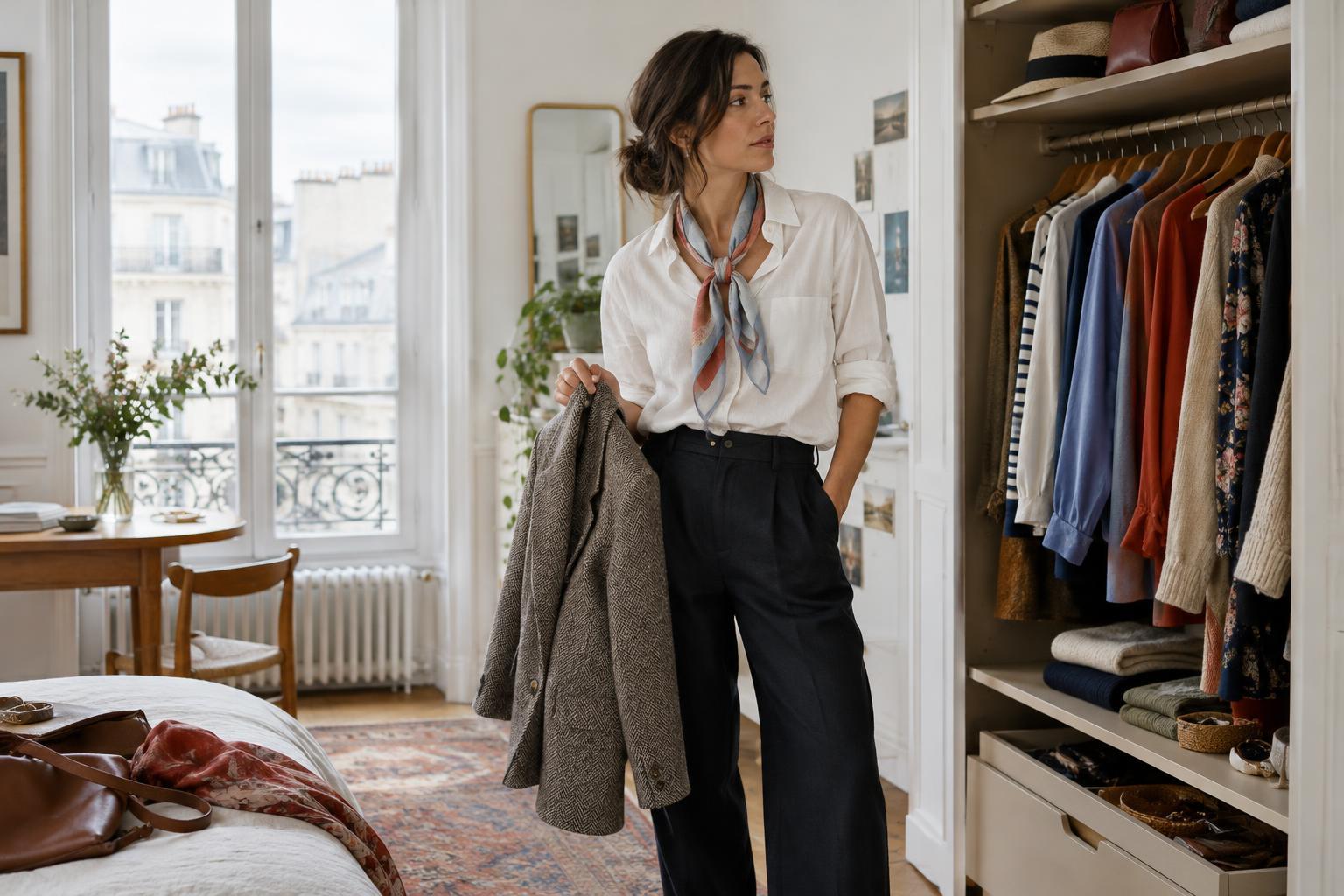
Accessories are an easy place to experiment because they can change an outfit without changing its foundation. A scarf can add color near your face, soften the line of a jacket or bring pattern to a plain top. Try folding one into a narrow band, tying it loosely at the neck or attaching it to a bag handle. If silk feels too precious for everyday use, choose a material and finish you will be happy to wear often.
You do not need several distinctive accessories at once. One considered choice—a scarf, a belt, a pair of earrings or a bag in a color you love—may be enough. Notice whether you prefer neat knots or relaxed drapes, subtle accents or visible contrast. Those preferences are part of your personal style, not details you need to correct to fit an imagined ideal.
Build a style you can repeat and adapt
An outfit you enjoy wearing twice is more useful than one that works only in a photograph. When a combination feels right, note what made it successful. Perhaps the shoes were comfortable, the layers suited the weather and the proportions felt natural. Keep that structure in mind, then vary one element: change the scarf, switch the top or choose another texture in a similar shape. Repetition gives you a dependable starting point without making every day look the same.
Allow your choices to change over time. A new job, season or preference may call for different clothes, and an old favorite may stop earning its place. French-inspired dressing can be a way to practice choosing with care, wearing what serves you and leaving room for personality. There is no uniform to complete; there is only a wardrobe that becomes more recognizably yours as you use it.