Why these fabrics need a gentler routine
Rayon is a broad name for regenerated cellulose fibers; viscose is one common type. A viscose blouse or rayon dress may feel fluid and light, but its fabric can change dimensions during laundering. Water, agitation and heat can all contribute to shrinkage or distortion. Some garments also lose their original shape because they are pulled while wet. The fiber name alone cannot tell you exactly how an item will behave: the weave, finish, lining and construction matter too.
The most useful starting point is the garment’s care label. If it says dry clean only, home washing carries a risk even when the fabric feels sturdy. A lining, trim or structured detail may respond differently from the outer fabric. If the label permits washing, follow its temperature and drying instructions rather than relying on a general rule for rayon. When a favorite piece has no readable label, a professional cleaner can help you choose a cautious approach.
Wash with as little stress as possible
When the label allows hand washing, use cool water and a small amount of mild detergent. Move the garment gently through the water instead of rubbing or scrubbing it, and avoid a long soak. Rinse at a similar temperature, then support the whole garment as you lift it out. Wet viscose can be particularly vulnerable to pulling and abrasion, so resist the urge to wring out sleeves, twist a skirt or squeeze one section tightly.
If machine washing is permitted, choose the label’s recommended cycle, often a gentle one, and keep the load light enough that clothes can move without being compressed. A mesh laundry bag may help limit snagging and friction, especially for a delicate top. Fasten closures first, and separate the item from heavy jeans or garments with rough hardware. A gentle cycle reduces stress; it does not make a machine-washable label unnecessary.
Remove water and dry without heat
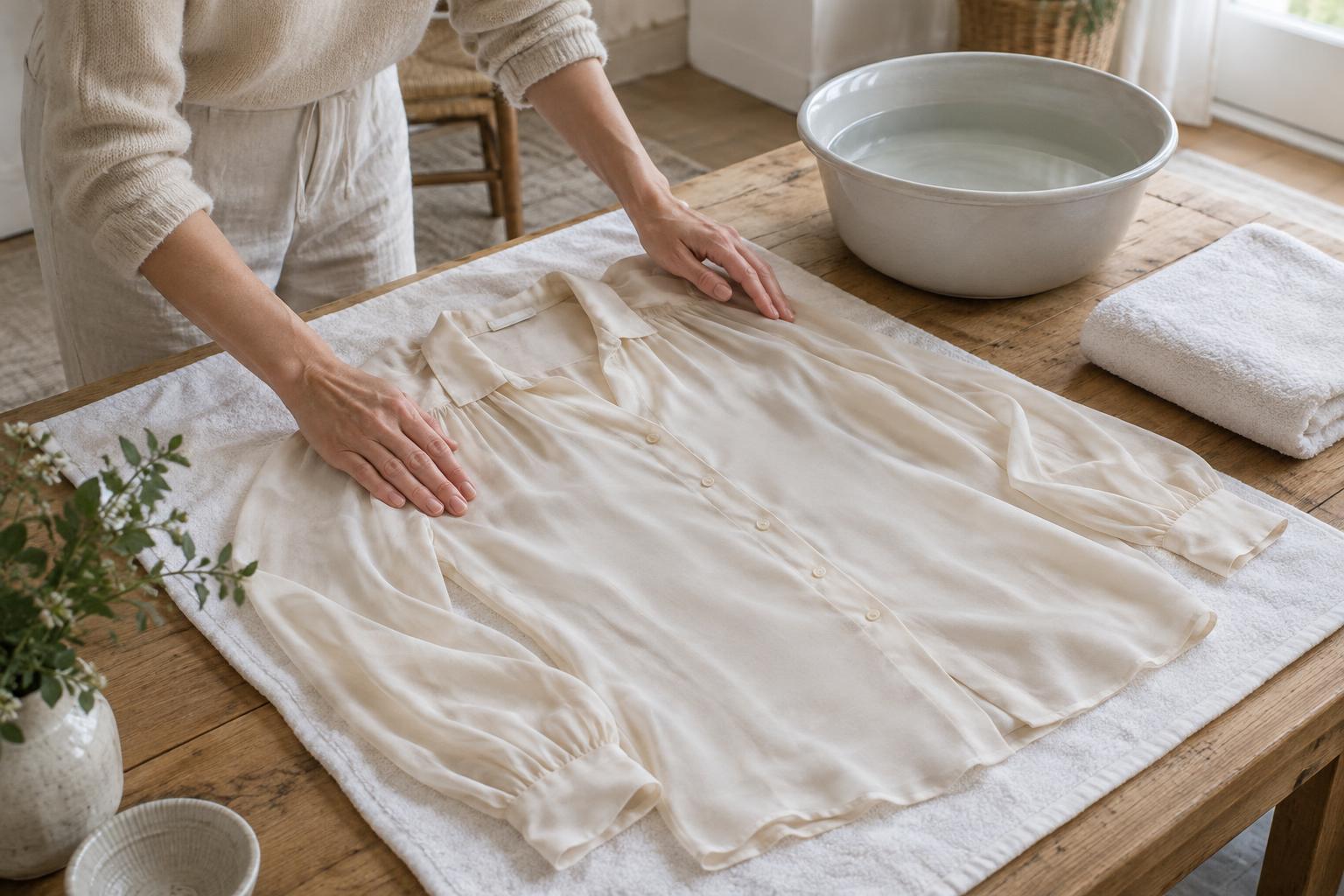
After washing, press out excess water gently. You can lay the garment on a clean towel, roll the towel up and press it to absorb moisture. Unroll it promptly, then ease the garment back toward its intended shape without tugging at seams. Smooth the collar, cuffs and hem while the fabric is still damp. This small step can help prevent an uneven edge from setting as the item dries.
Follow the care label’s drying directions. For a delicate viscose piece, flat drying on a clean, dry surface often avoids the weight of wet fabric pulling it out of shape. If the label permits hanging, use a suitable hanger and check that the shoulders are supported. Keep the garment away from radiators, strong direct sunlight and tumble-dryer heat unless the label specifically allows that method. Drying may take longer, but high heat can make unwanted size changes harder to avoid.
Finish and store the garment thoughtfully
Once the garment is dry, check the label before ironing or steaming. If ironing is allowed, use the indicated setting, work on the reverse side when practical and consider a clean pressing cloth to protect the surface. Test an inconspicuous area first if you are unsure how a finish will react. Do not try to force a shrunken garment back to size with a hot iron: heat and pressure can cause further damage.
Store the piece only when it is fully dry. Fold heavier or easily stretched knits so their own weight does not pull at the shoulders; hang lighter woven garments if that suits their construction. Give them room in the wardrobe rather than packing them tightly. For an outfit you plan to wear soon, checking the hem and fit a day ahead leaves time to press minor creases without rushing the fabric.
What if a piece has already shrunk?
First, let it dry fully before judging the fit. If it is still smaller, check its care label before attempting another wash or dampening it. Some fabrics may relax slightly when carefully rewet and reshaped, but there is no dependable home method for restoring every viscose or rayon garment to its original measurements. Pulling hard can distort the weave, seams or neckline instead.
For a valued dress, tailored blouse or lined item, ask a professional cleaner whether anything can be done before experimenting. Prevention is the more reliable plan: treat each garment according to its label, limit agitation while it is wet and dry it in a way that supports its shape. That routine helps a fluid everyday piece remain easy to wear, whether you style it simply or make it the focus of an outfit.