Start with the layer closest to your body
A streamlined outfit begins underneath the pieces everyone sees. Choose a base layer that sits comfortably against the body rather than bunching beneath a shirt or sweater. A fine-knit top, close-fitting cotton tee or lightweight long-sleeved shirt can provide coverage without taking up much room. The goal is not to make every garment tight; it is to leave enough space for the next layer to fall naturally.
Pay attention to necklines, cuffs and hems. A base layer that peeks out at several points can look intentional, but one that twists or extends unevenly may make the outfit feel busy. If you plan to wear a button-up shirt, try a smooth base layer beneath it and move your arms before leaving home. That quick check reveals whether the combination feels comfortable in motion, not just in the mirror.
Give each layer a different job
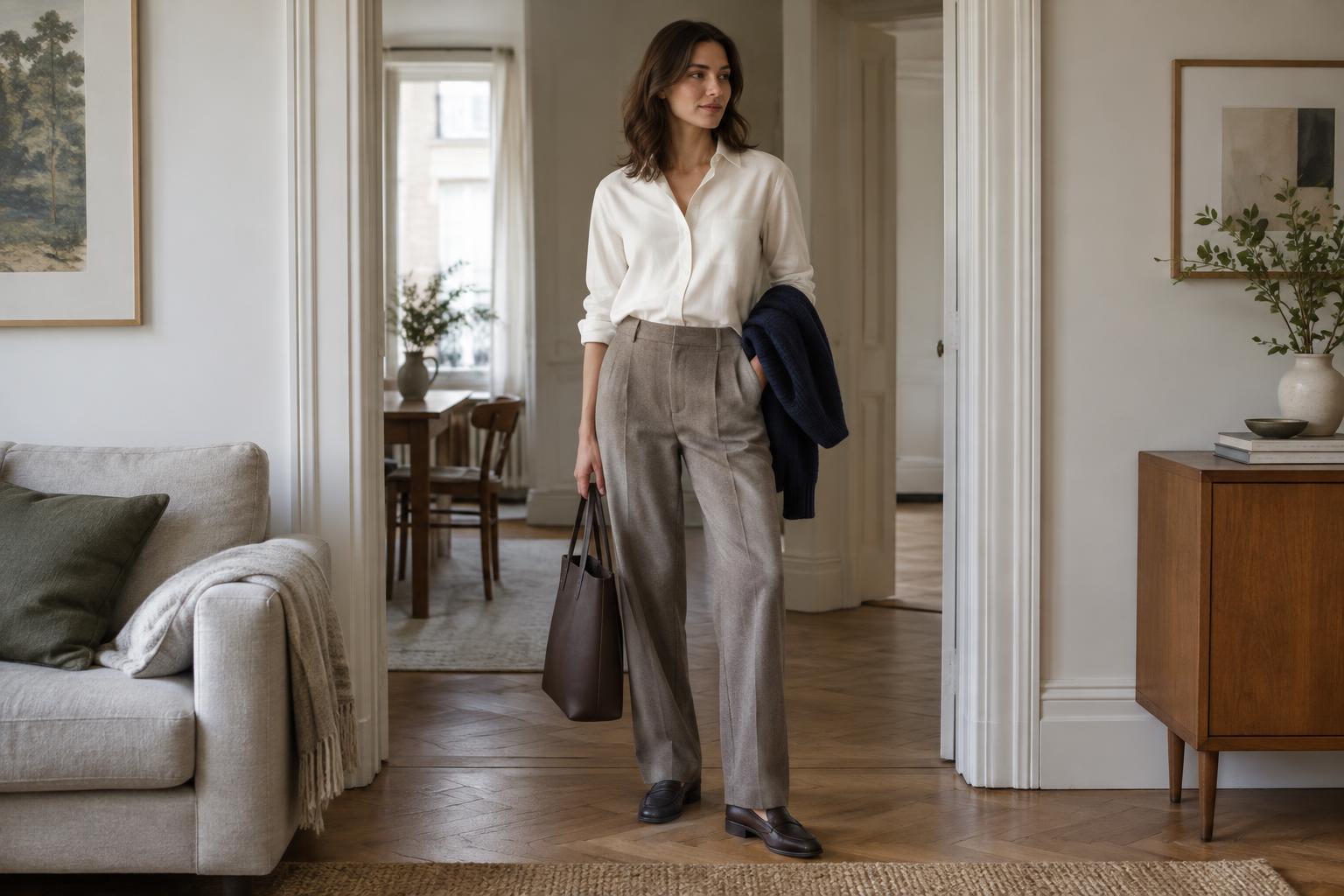
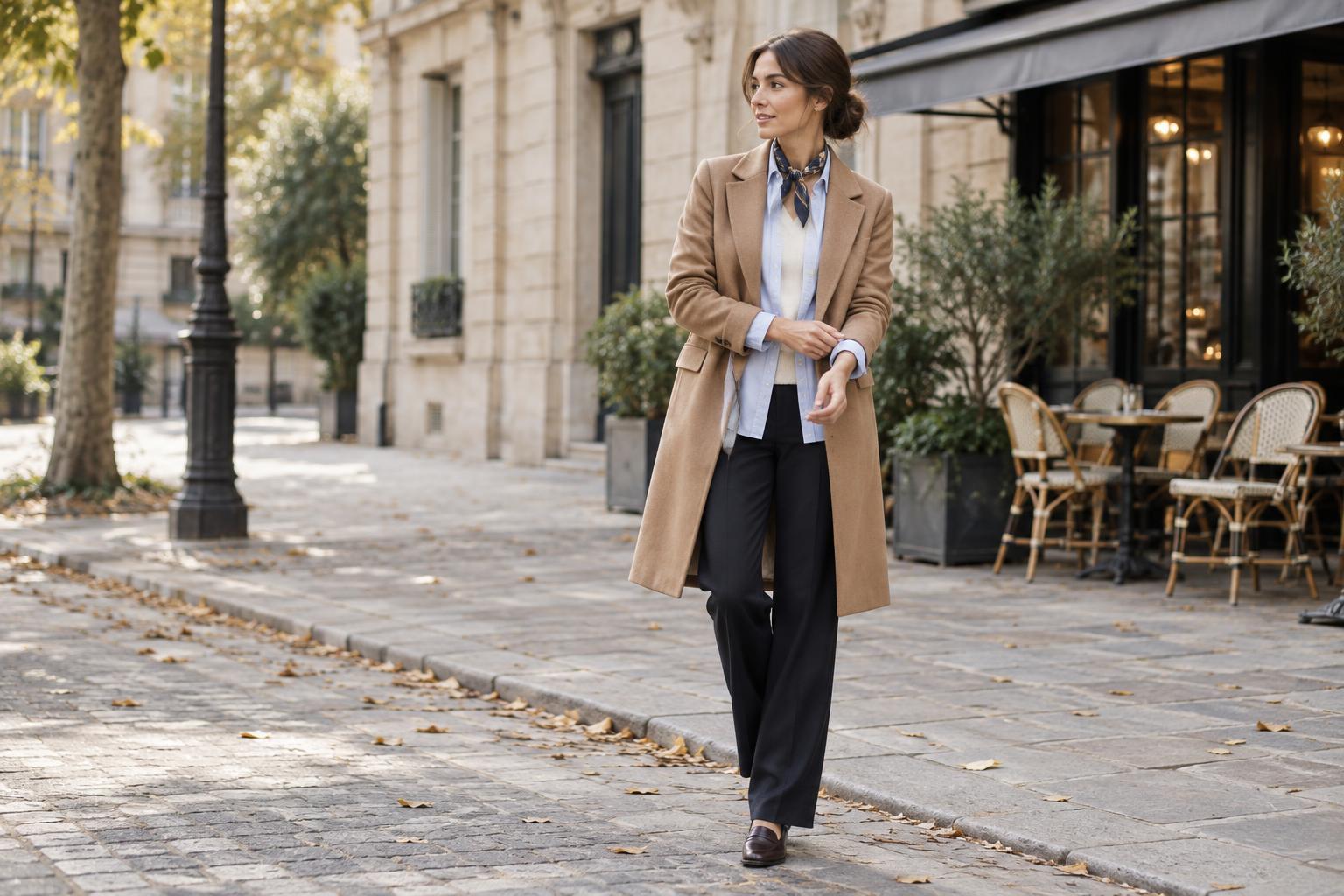
Adding several garments of similar weight can create thickness without adding much to the outfit. Instead, assign each piece a purpose: a light layer for comfort, a middle layer for warmth or texture, and an outer layer for coverage and shape. For example, a fine top under a relaxed cardigan and a straight-cut coat gives each piece room to work. You can remove one layer indoors without losing the outfit’s structure.
This approach suits a French-inspired wardrobe built around versatile pieces rather than a complicated formula. A crisp shirt can add a visible collar beneath a sweater; a soft cardigan can make a simple dress easier to wear across changing temperatures. Before adding another item, ask what it contributes. If the answer is only “more fabric,” consider swapping an existing layer for one that better meets your needs.
Balance volume rather than avoiding it
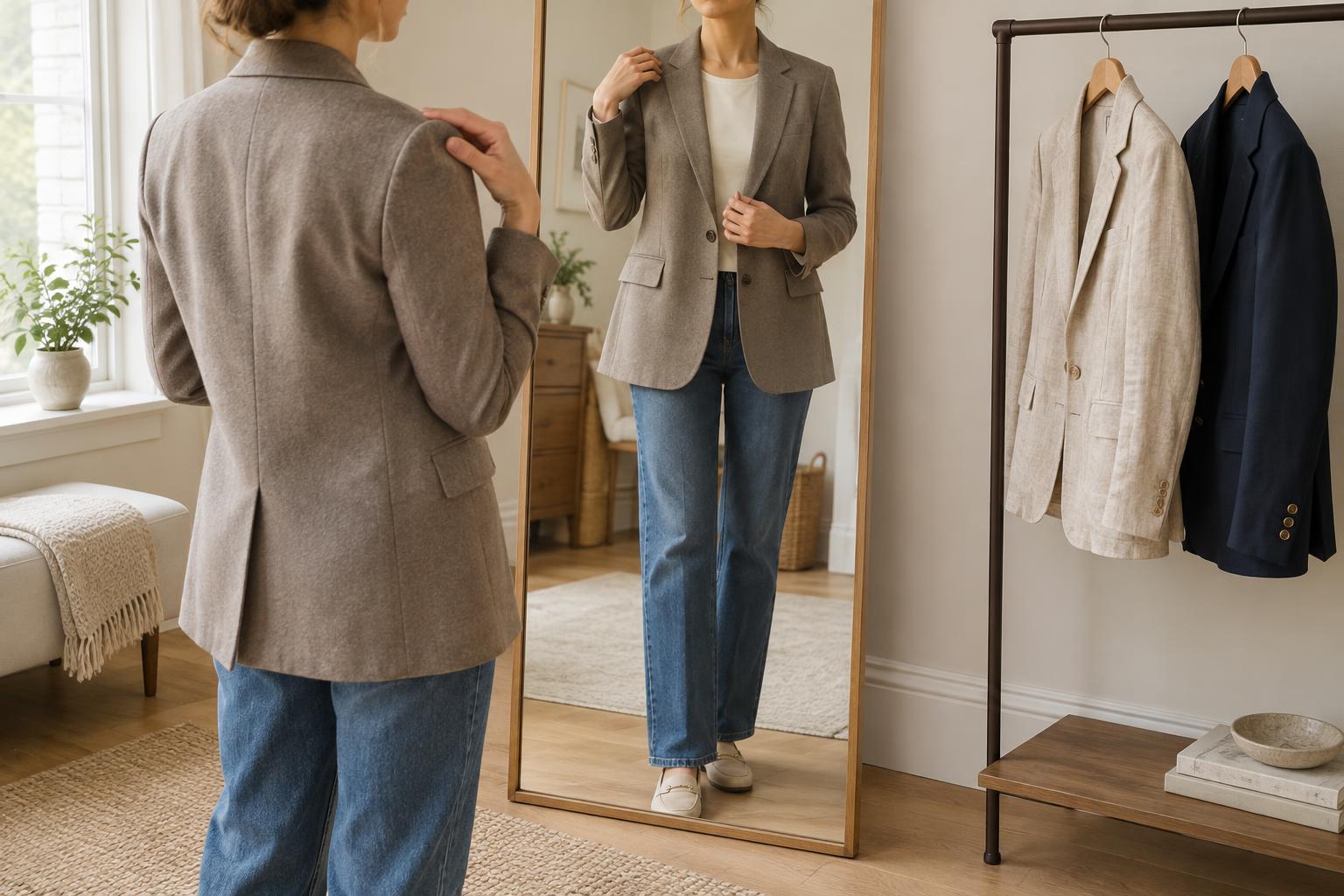
Loose pieces are not the enemy of neat layering. The key is deciding where you want volume and giving it space. An oversized blazer, for instance, often works best over a relatively smooth shirt or fine knit. A fuller skirt can look balanced with a shorter cardigan or a sweater that ends near the waist. These are options, not rules: the most useful test is whether the outfit’s shape looks clear to you.
Try leaving a small break between the proportions of your layers. A shirt hem visible below a cropped sweater can add definition, while a longer coat can bring a roomy outfit together. If every layer ends at the same point, the fabric may gather into a thick band. Adjusting a hem with a partial tuck, or choosing a different length, can often solve the problem without changing the whole outfit.
Choose fabrics with movement in mind
Fabric affects bulk as much as fit does. A pliable shirt may sit more smoothly beneath a jacket than a stiff one, while a fine-gauge sweater usually slips under a coat more easily than a chunky knit. Texture can still be part of the outfit: try giving one substantial fabric, such as a ribbed cardigan or wool coat, the main role and keeping the pieces beneath it lighter.
Check how fabrics behave together before committing to an outfit for the day. Some combinations cling, catch or ride up when you walk, sit or lift your arms. If that happens, changing one layer may be more effective than sizing up everything. Leave a little ease at the shoulders and upper arms, especially when your outer layer needs to close comfortably. A streamlined silhouette should never depend on feeling restricted.
Finish with small, useful adjustments
Accessories can add interest without requiring another full garment. A scarf tied loosely at the neck can bring color near the face; worn inside a coat, it can also fill the open space at the collar. Choose a tie that suits the scarf’s fabric and the neckline beneath it. If the scarf and collar compete for space, let one take the lead rather than arranging both into a bulky knot.
Finally, look at the outfit from the side as well as the front. Smooth a tucked shirt, check that a cardigan has not folded beneath the coat, and make sure pockets are not overfilled. Then consider the practical question: can you sit, walk and remove your outer layer with ease? Thoughtful layering is less about hiding every fold than about creating an outfit that feels balanced and remains comfortable throughout the day.