Start with the outfit you already want to wear
Polish is not the opposite of comfort. A familiar outfit of jeans, a T-shirt and flats can look considered without becoming formal. The useful question is not “What would a stylish person wear?” but “What would make this combination feel more intentional?” That shift keeps the focus on pieces you actually enjoy wearing and on the demands of your day.
Begin with one comfortable base, then identify a single point of refinement. You might exchange a stretched-out tee for one with a cleaner neckline, add a structured jacket over a soft knit, or choose shoes that are in good condition. You do not need to make every element dressy. The contrast between relaxed and tailored pieces often gives a casual outfit its appeal.
Pay attention to fit and proportion
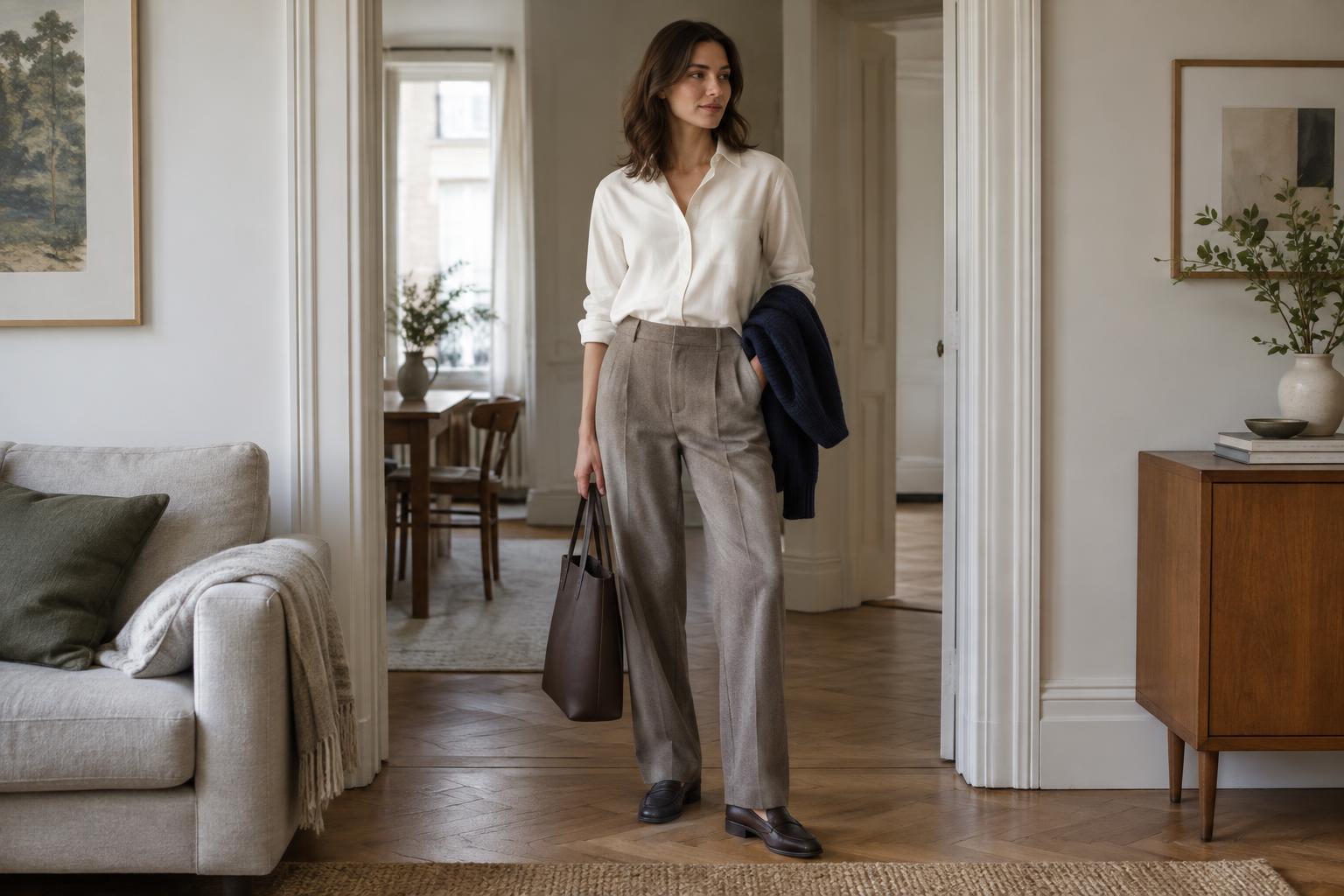
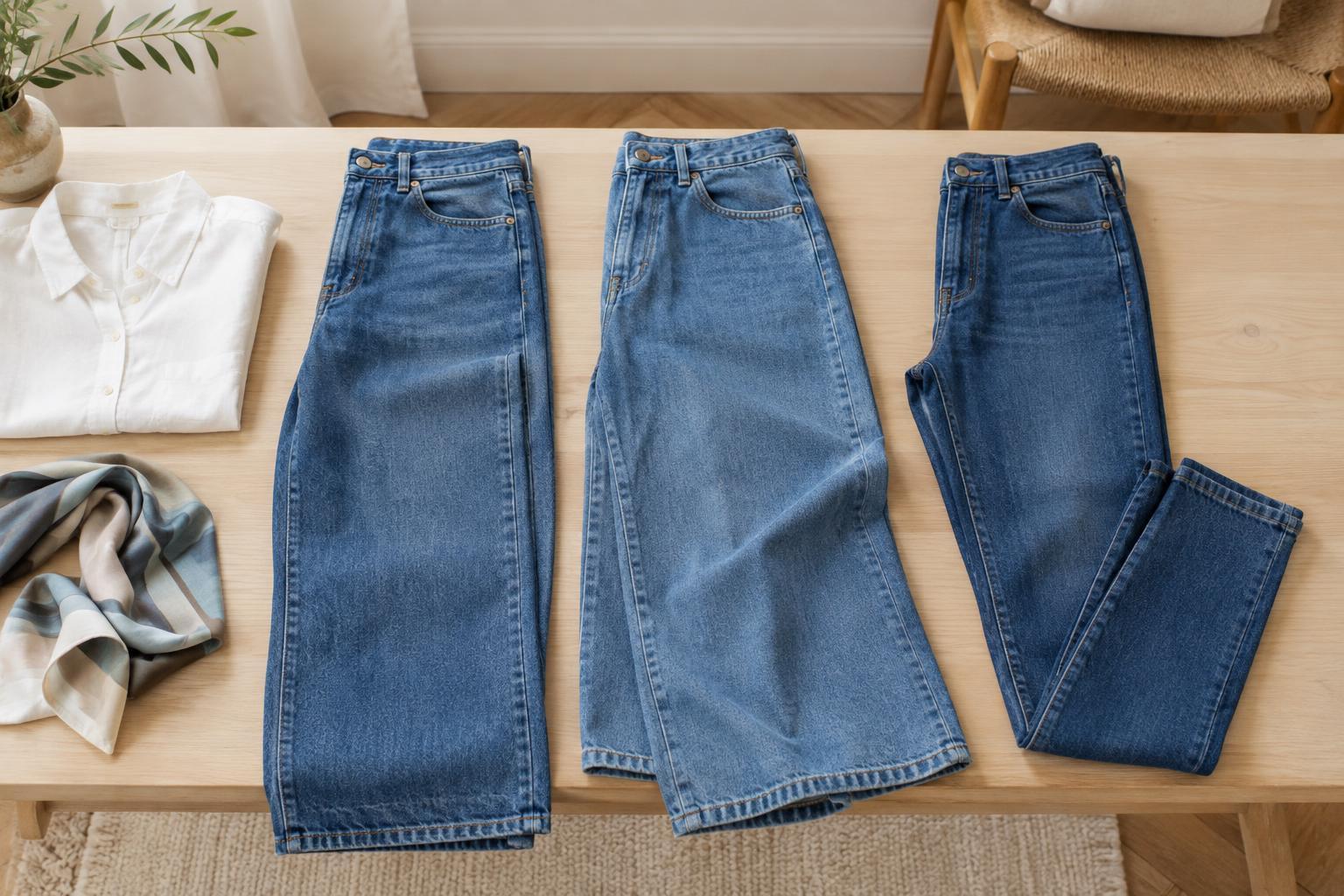
An outfit can feel untidy when every piece has the same loose shape, even if each item looks good on its own. Try giving the eye a little structure: pair wide-leg trousers with a top that ends near the waist, or wear a roomy shirt with straighter bottoms. If you prefer an oversized silhouette throughout, show a small point of definition at the wrist, ankle or neckline. These are options, not rules; the aim is to make the proportions feel deliberate.
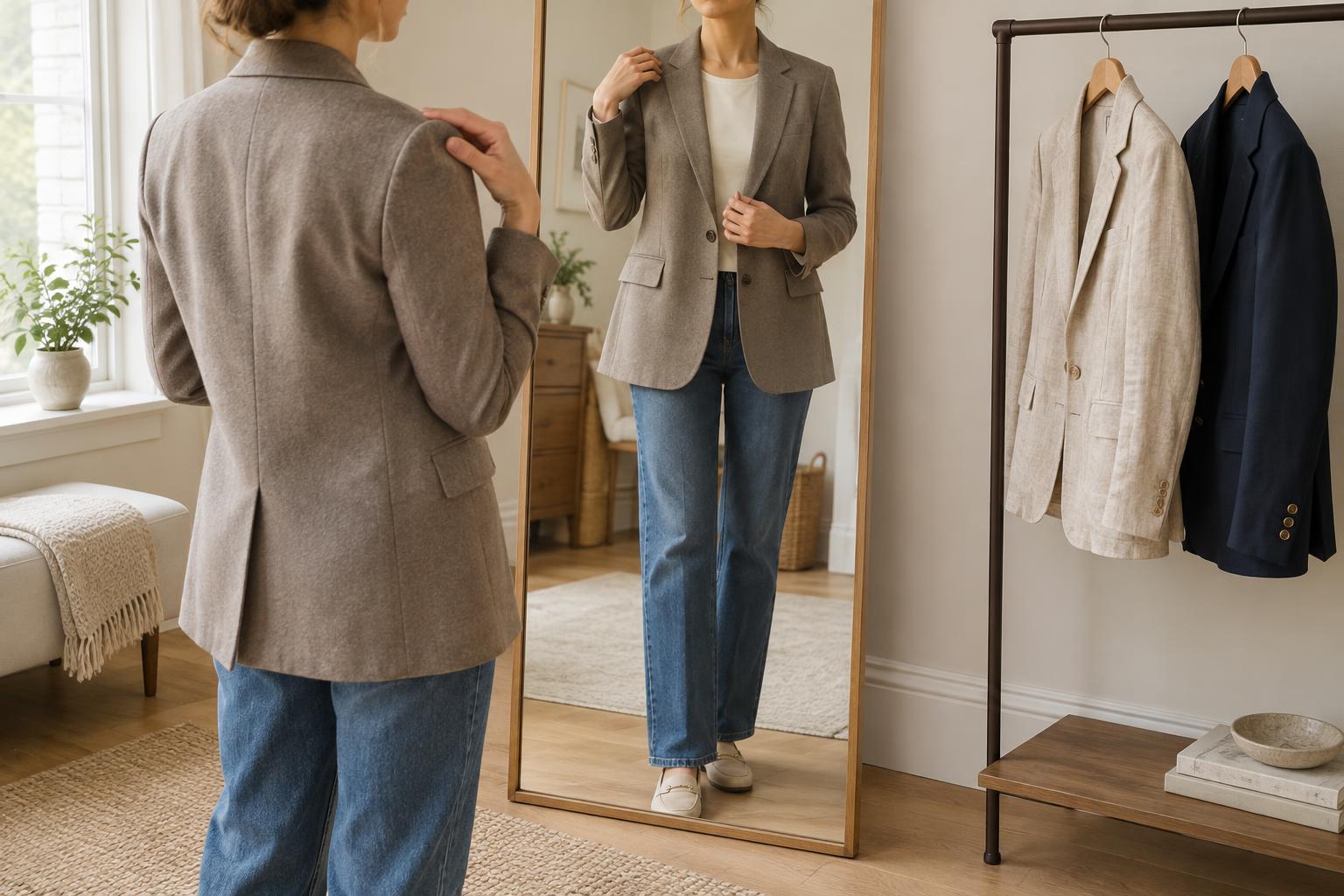
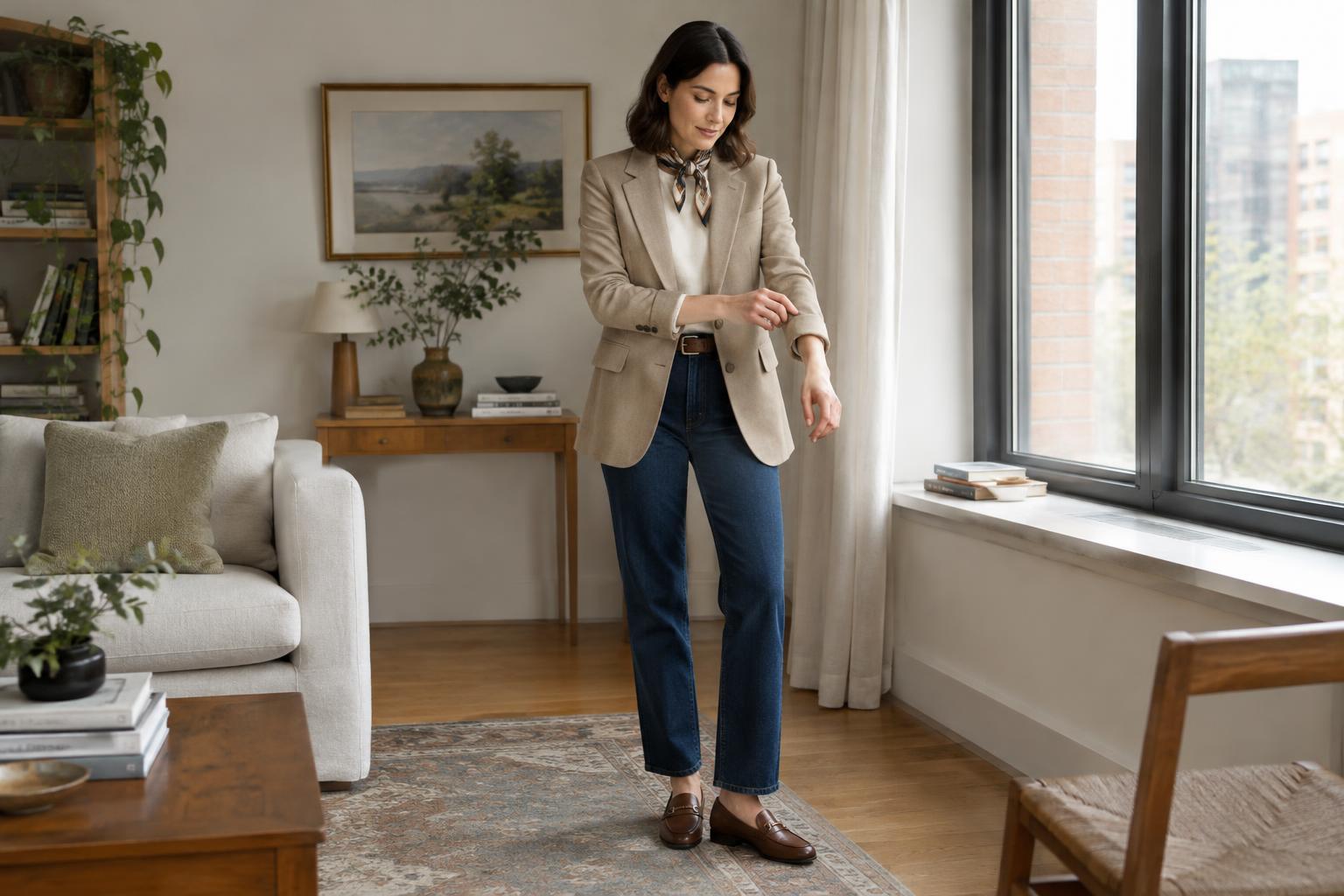
Small adjustments are often enough. Roll a sleeve so a cuff does not cover your hand, check where a trouser hem meets your shoes, or try a partial tuck if it improves the line of a shirt. Before leaving, look at the outfit from the side as well as the front. If you keep pulling at a piece, it may not be the right choice for that day, however appealing it looks on a hanger.
Use a layer to bring the pieces together
A layer can connect otherwise simple clothes. A cardigan softens a crisp shirt; a blazer gives jeans and a plain top a sharper outline; an open overshirt adds shape without feeling too formal. Choose a layer that suits the weather and your plans rather than adding one solely for appearance. You should be able to sit, walk and carry what you need comfortably.
For an easy French-inspired approach, keep the base uncomplicated and let the outer layer do some of the work. For example, try dark jeans, a light knit and a relaxed jacket in a colour you wear often. Repeating one colour in the shoes or bag can make the combination feel connected, but matching everything is unnecessary. A mix of textures, such as denim with a smooth cotton shirt, can add interest while remaining understated.
Choose accessories with a purpose
Accessories can give a casual outfit a focal point without overwhelming it. A scarf tied loosely at the neck, tucked into a jacket or carried on a bag introduces colour near a simple base. A belt can define the waist of trousers or help an open layer sit more neatly. Earrings, a watch or a bag can serve the same purpose when they suit your preferences and routine.
Try adding one accessory, then pause. Does it add something the outfit needs, such as contrast, texture or a touch of colour? If not, leave it out. This is especially useful when working with prints: a patterned silk scarf may stand out more against a plain knit than beside several other busy details. There is no need for an accessory to look expensive. Its scale, placement and condition matter more to the overall effect.
Finish with care, not perfection
The quickest improvements are often practical. Brush lint from a dark coat, smooth a twisted collar, clean visible marks from shoes and make sure a bag closes comfortably. If a garment is creased in a way that bothers you, follow its care label before steaming or ironing it. These checks take little time and can make well-worn favourites feel ready to wear again.
Finally, consider where you are going. A crisp shirt might be ideal for lunch but less useful for a long walk; a soft sweater may be the better choice if you will spend hours outdoors. A polished outfit should still let you move and feel at ease. Keep what works, adjust what does not, and let the result reflect your life rather than an imagined dress code.