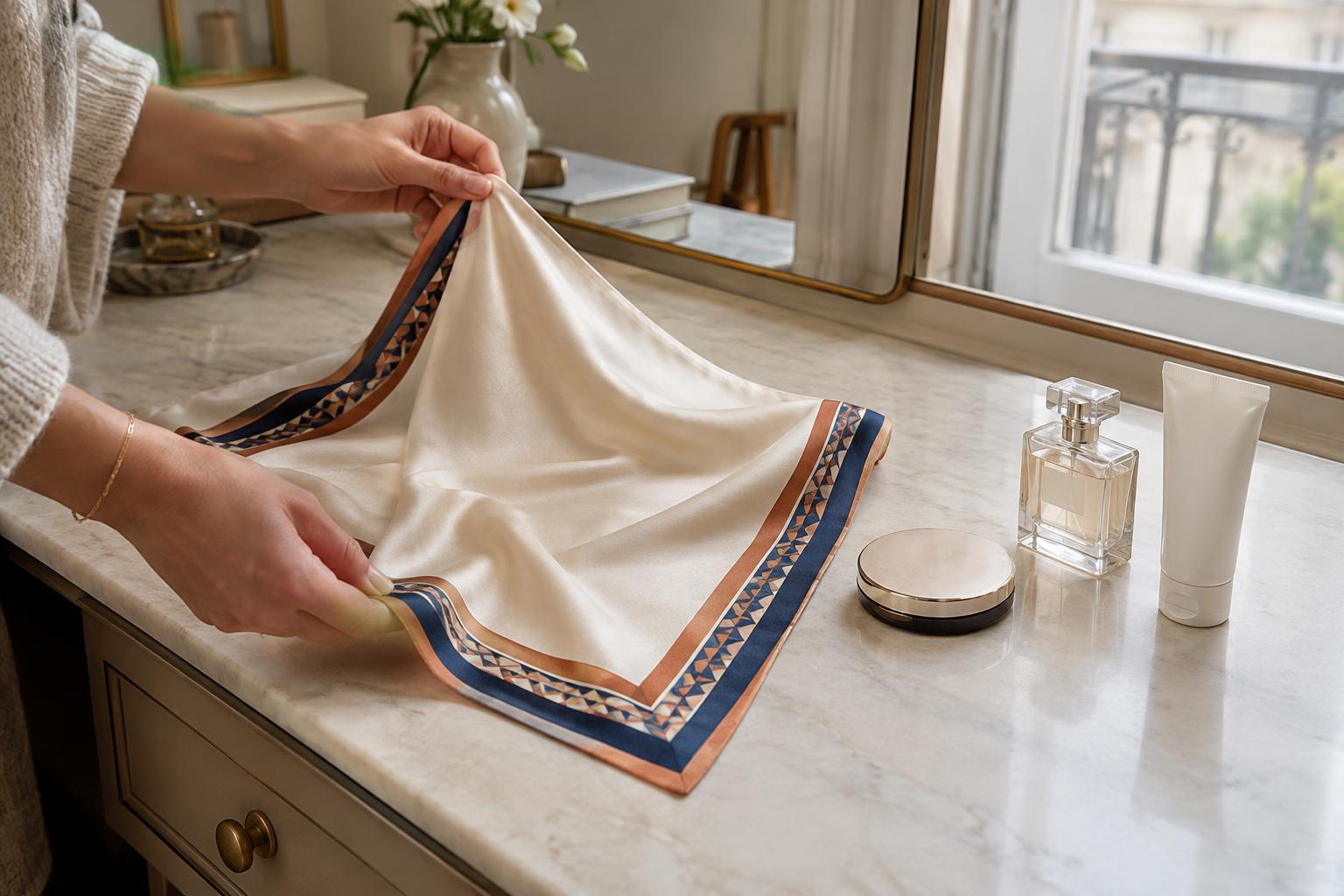
Start with the care label
A silk scarf often sits close to the places where you apply foundation, fragrance and sun protection. Those products can transfer onto the fabric, and a tightly tied scarf may rub against them throughout the day. The simplest way to reduce marks is to put the scarf on last, after getting ready, and remove it before washing your face or reapplying products.
Before treating any mark, read the scarf’s care label. Silk dyes, finishes and printed details can respond differently to water and cleaning products. A method that seems gentle on one scarf may leave a water ring or disturb the color on another. If the label calls for professional cleaning, follow that guidance rather than testing a home remedy on a visible area.
Give makeup less opportunity to transfer
Finish your makeup before tying the scarf. Pay particular attention to foundation or tinted moisturizer along the jaw and neck, where a knot or folded edge might touch your skin. Let products settle, then check for excess with a clean tissue before bringing the fabric near your face. This will not make makeup transfer-proof, but it can reduce the amount available to rub off.
Placement matters as much as timing. A loose knot below the collarbone, a scarf tucked under a jacket lapel, or a tie on a bag handle keeps silk farther from a made-up jawline. If you prefer a close neck tie, notice where the fabric sits when you turn your head—not just when you first arrange it in the mirror. Avoid using the scarf to wipe away makeup or handle it with product-covered fingers.
Apply perfume before you dress
Perfume should go on before the scarf, not over it. Fragrance can leave a visible mark on silk, and even a fine mist may reach more fabric than intended. Apply it to skin away from the area the scarf will cover, allow it to dry, and wash or wipe any fragrance from your hands before handling the silk.
If you refresh your perfume later, take the scarf off and set it well away from the spray. Give the mist time to settle before putting the scarf back on. Spraying a scarf to scent it may be tempting, but avoiding direct contact is the more cautious choice, especially with a light-colored or delicate print.
Keep sunscreen on your skin and off the silk
Sun protection belongs in your routine; protecting a scarf is a matter of managing contact, not skipping sunscreen. Apply it as directed, including on areas that will remain exposed, and let it settle before tying the scarf. Some formulas can leave oily or tinted residue, so check your hands and the skin where a folded edge will rest.
If you need to reapply during the day, remove the scarf first and place it on a clean surface or in a pouch. Reapply your sunscreen, clean your hands if needed, and wait until your skin no longer feels wet or slippery before putting the scarf back on. A knot worn a little lower on the chest can also help keep the scarf away from freshly treated areas of the neck.
Respond gently to marks and store the scarf clean
If a product lands on the scarf, avoid rubbing it into the weave. For fresh residue, gently lift away any excess with a clean, dry, absorbent cloth or tissue; do not scrub or spread the mark. Check the care label before doing anything further. Avoid applying stain removers, alcohol or perfume to the spot, and be cautious with water unless the label permits washing. For a persistent or conspicuous stain, a cleaner experienced with silk may be the safer option.
After wearing, inspect the folds and knot area before putting the scarf away. Let it air out away from direct sunlight, then store it clean and dry, loosely folded or rolled rather than compressed under other accessories. A quick check makes it easier to notice a mark before the next wear—and a small adjustment to your routine may prevent the same mark from returning.