Start with the whole label, not just the wash symbol
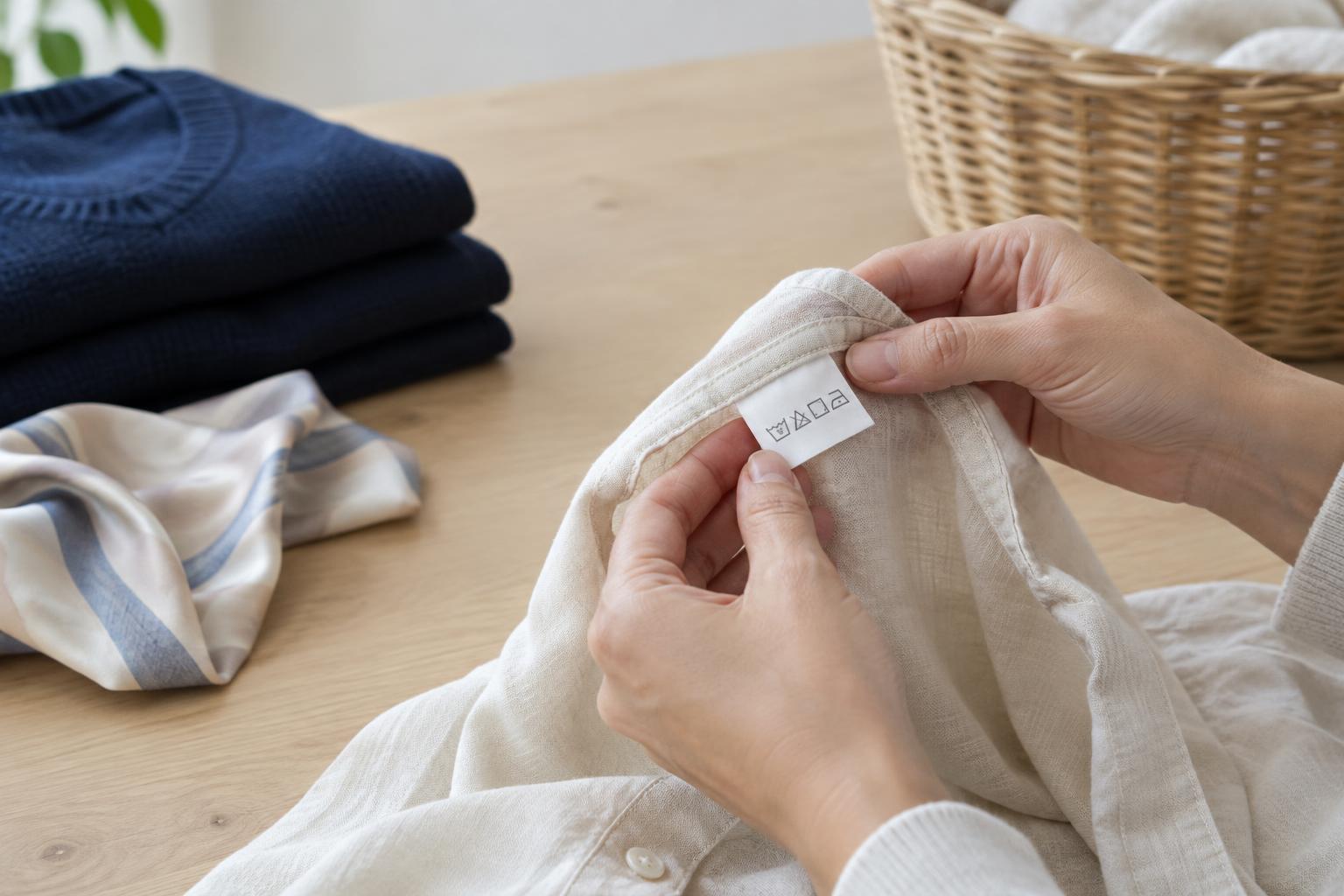
The care label is a useful first stop before washing a new garment or returning a favorite piece to the laundry basket. Look for it along an inside seam or near the neckline, then read any written instructions as well as the symbols. Labels can vary by country and manufacturer, so the words on your particular garment matter more than a rule you remember from another one.
Check the fiber composition too, but do not use it as a substitute for the care instructions. A shirt described as cotton may also have a delicate lining, embroidery, a print or a structured finish. Likewise, two silk scarves may have different care directions. If a garment has a removable belt or other separate piece with its own label, check that piece before cleaning it.
If the label has faded or been cut out, pause rather than guessing from appearance alone. You can begin with the least disruptive option, such as airing the garment or gently addressing a small mark, while considering the fabric, construction and any likely risk of color transfer.
Decode the washing and bleaching instructions
A tub-shaped symbol covers washing. A number inside the tub usually gives a maximum water temperature; in some labeling systems, dots indicate temperature instead. A hand in the tub means hand washing, while a crossed-out tub means the garment should not be washed in water. One or more lines beneath the tub call for a gentler machine cycle. When you are unsure how a particular label uses these marks, follow its accompanying text or check a reliable symbol guide before washing.
Think of a listed temperature as a ceiling, not a target you must reach. For a machine-washable piece, a lower temperature may be a sensible choice when the item is lightly worn, provided the detergent and cleaning method are suitable. Gentle-cycle instructions also call for care beyond the setting on the machine: a crowded drum can rub or twist clothes even on a delicate program.
The triangle refers to bleach. An empty triangle generally permits bleaching, a crossed-out triangle rules it out, and a triangle with markings inside can limit the type of bleach permitted. Do not assume that a white garment can be bleached or that every stain remover is appropriate. Check the product label as well as the garment label, especially on colored fabric, prints and trims.
Give drying instructions equal attention
Many laundry mishaps happen after washing. A square containing a circle is the tumble-drying symbol. Dots inside generally indicate the permitted heat level, and a cross through the symbol means do not tumble dry. A plain square with other marks refers to natural drying methods; depending on the marks, the label may call for line drying, drying flat or drying in the shade.
Follow a flat-dry instruction by supporting the garment’s weight on a suitable surface rather than hanging it by the shoulders. This can be especially helpful for pieces that might stretch when wet. If the label allows line drying, smooth the garment first and use a hanger or line that will not leave obvious creases. Keep strongly colored items away from prolonged direct sun if fading is a concern.
Avoid treating air drying as an automatic workaround for every item that cannot go in the dryer. A structured jacket, for example, may need professional cleaning rather than a home wash followed by air drying. Read the washing and drying symbols together before choosing a method.
Check the iron and professional-cleaning symbols
The iron symbol tells you whether pressing is permitted. Dots usually indicate a heat range, with more dots allowing a hotter setting; a crossed-out iron means do not iron. Some labels also restrict steam. Start with a lower setting when pressing is allowed but the fabric’s response is uncertain, and test an inconspicuous area before working across a visible panel. Pressing from the reverse side or through a clean cloth may help protect a sensitive surface, but it does not override a no-iron instruction.
A circle refers to professional cleaning. Letters or lines inside it give the cleaner more specific information about the process; a crossed-out circle rules that process out. If the label says “dry clean only,” do not interpret it as permission to run a gentle home-wash cycle. For a garment with an elaborate lining, pleats, beadwork or multiple fabrics, a professional cleaner can also help you interpret the label before treatment.
Make the label check part of your laundry routine
Before each load, separate items by care requirements rather than by color alone. A pale silk accessory and a pale cotton shirt may not belong in the same wash. Empty pockets, fasten closures that could snag other clothes, and turn pieces inside out when appropriate to reduce friction on visible surfaces. If a new item might release dye, keep it separate until you understand how it behaves in washing.
When directions conflict with your usual routine, choose the method that respects the garment’s restrictions. Do not wash an item simply because its fiber sounds washable, and do not apply high heat to speed up drying when the label prohibits it. For a stain, resist vigorous rubbing or applying an unfamiliar product across a large area; a cautious spot test can reveal color change or surface damage before you proceed.
The goal is not to memorize every symbol. It is to take a moment before washing to answer four questions: Can this go in water? What temperature and cycle are allowed? How should it dry? Can it be pressed? That small pause makes it easier to care for everyday wardrobe pieces and more delicate accessories alike.