Why polyester can smell clean at first, then not
A polyester blouse or workout top may seem fresh straight from the wash, only for an old smell to return once you wear it. Polyester does not absorb water as readily as some natural fibers, but body oils and product residue can cling to its fibers. If a wash leaves that buildup behind, warmth and moisture can make the odor noticeable again.
Start by identifying where the smell is strongest. Underarms, collars and waistbands often need more attention than the rest of a garment. Also check whether the item was put away slightly damp or left in a laundry basket after wear. Those habits can contribute to musty smells, even when your washing routine is otherwise sound.
Read the label before treating the odor
Check the care label for the permitted water temperature, wash cycle and drying method. A garment described as polyester may also contain elastane, have a delicate lining or carry a special finish. Follow the most restrictive care instruction rather than assuming every polyester piece can take the same treatment.
For a washable garment, turn it inside out so wash water can reach the areas closest to your skin. If you plan to use a stain remover or laundry pretreatment, test it on an inconspicuous area first and follow its directions. Avoid using chlorine bleach unless the care label and product instructions specifically allow it. Never mix bleach with vinegar or other cleaners.
Pretreat the areas that hold odor
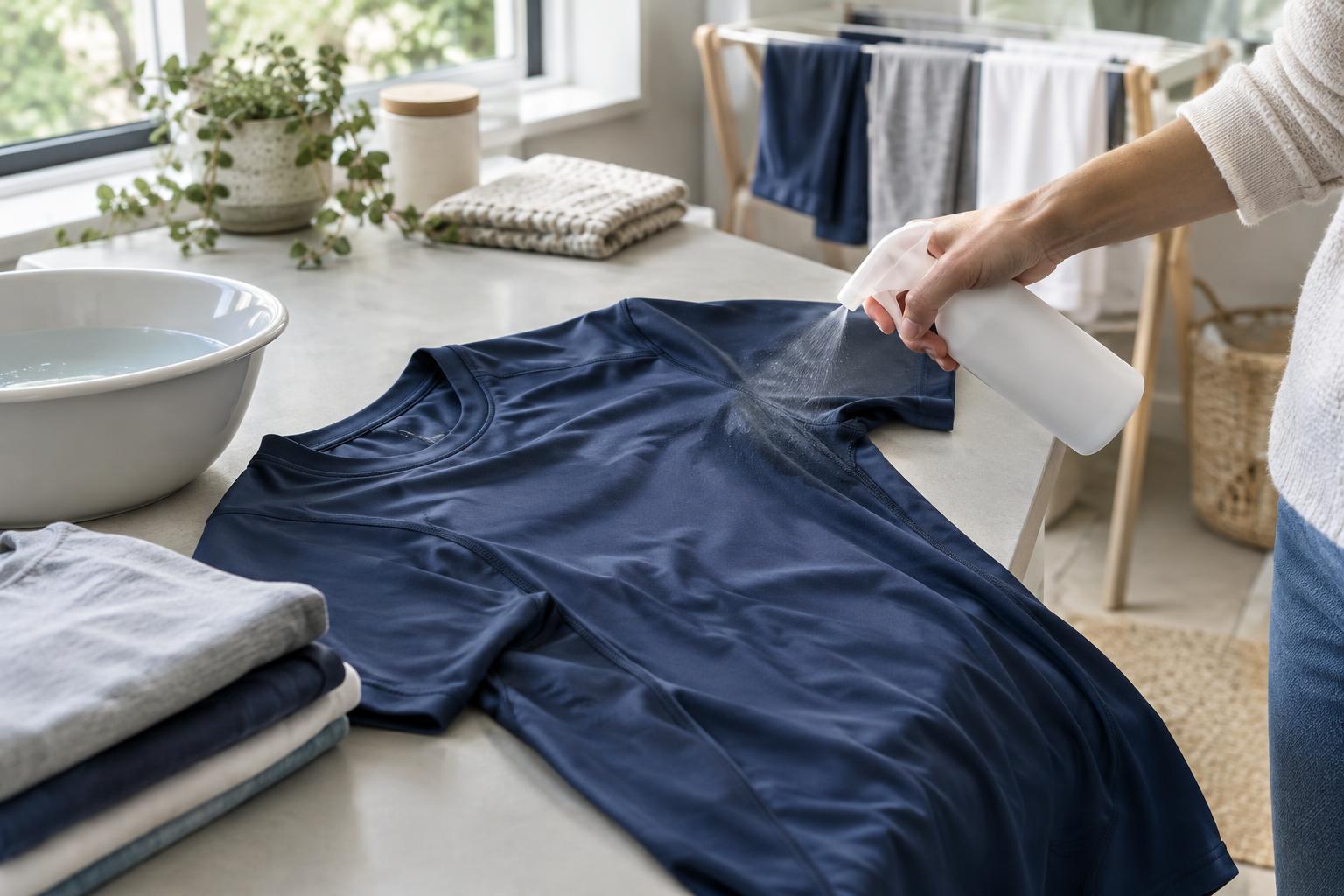
Apply a small amount of liquid laundry detergent to the odor-prone areas and gently work it into the fabric with your fingers. Let it sit for the time recommended on the detergent label, then wash the garment. An enzyme-based laundry detergent can be useful for body-related soils when the product instructions say it is suitable for the fabric. More detergent is not necessarily better: excess product can be difficult to rinse away.
If the smell affects the whole item, a short presoak in water and a laundry product intended for soaking may help. Use the dilution and timing on the product label, and skip soaking if the garment label advises against it. For delicate trims, uncertain dyes or a cherished piece, begin with the mildest label-approved approach rather than an improvised household remedy.
Wash thoroughly, then dry completely
Give clothes room to move in the washer. A tightly packed drum can limit the water and agitation needed to lift away oils and rinse out detergent. Choose the warmest water the care label permits, measure detergent for the load and soil level, and consider an extra rinse if items feel slippery or retain a strong fragrance after washing. Fabric softener and heavily scented products may mask an odor without removing its cause, so try washing without them when troubleshooting.
Smell the garment before drying it. If an odor is still obvious, repeat the wash or pretreatment rather than relying on dryer heat. Once it smells fresh, dry it promptly and completely according to the label. Air-drying can be a gentle choice; spread the garment out where air can circulate rather than leaving it folded over a rail. If tumble drying is allowed, avoid higher heat than the label recommends, particularly for pieces with stretch fibers.
Keep the smell from returning
Let worn polyester dry before placing it in a hamper, especially after exercise or a warm commute. Wash odor-prone pieces reasonably soon, and avoid storing them until they are fully dry. Keeping oily items from sitting in a damp pile is often easier than removing a deeply established smell later.
If several loads emerge with the same musty odor, check the washing machine as well as the clothes. Follow the machine maker’s cleaning guidance, and leave the door or lid open when appropriate so the interior can dry between uses. For an individual garment that still smells after careful, label-approved cleaning, try another cycle focused on the affected areas. Persistent odor may not always be removable, but a measured approach protects the fabric while giving it the best chance of returning to your regular wardrobe.