Understand what you are removing
Pills are small tangles of fibers that collect on a fabric’s surface. On cashmere, they often appear where the knit rubs against itself or another surface: under the arms, along the sides, or where a bag strap rests. Their presence does not automatically mean a sweater is poor quality. Friction and wear can cause even a well-cared-for knit to pill.
The aim is to lift away the surface tangle without pulling on the yarns that form the garment. Work only on pills you can see, rather than repeatedly combing the whole sweater to make it look uniformly smooth. Some surface fuzz is part of the knit’s texture; removing too much of it can leave a thin or uneven patch.
Prepare the sweater and choose a tool
Start with a dry sweater laid flat on a clean table. Smooth out wrinkles with your hands, but do not stretch the knit. Good light helps you distinguish a raised pill from a loose stitch. Check the care label before using any tool, particularly if the garment has a delicate finish, embroidery, or a loosely constructed knit.
A fine-toothed comb made for knitwear is a useful first choice for small areas of pilling. A fabric shaver can cover a larger area, but its blades may catch a stitch if pressed into the fabric. If you use one, choose a model with a protective guard and follow its instructions. Test either tool on a small, less visible area before treating the front of the garment. Avoid razors and vigorous brushing: both make it difficult to control how much fiber you remove.
Remove pills with short, gentle passes
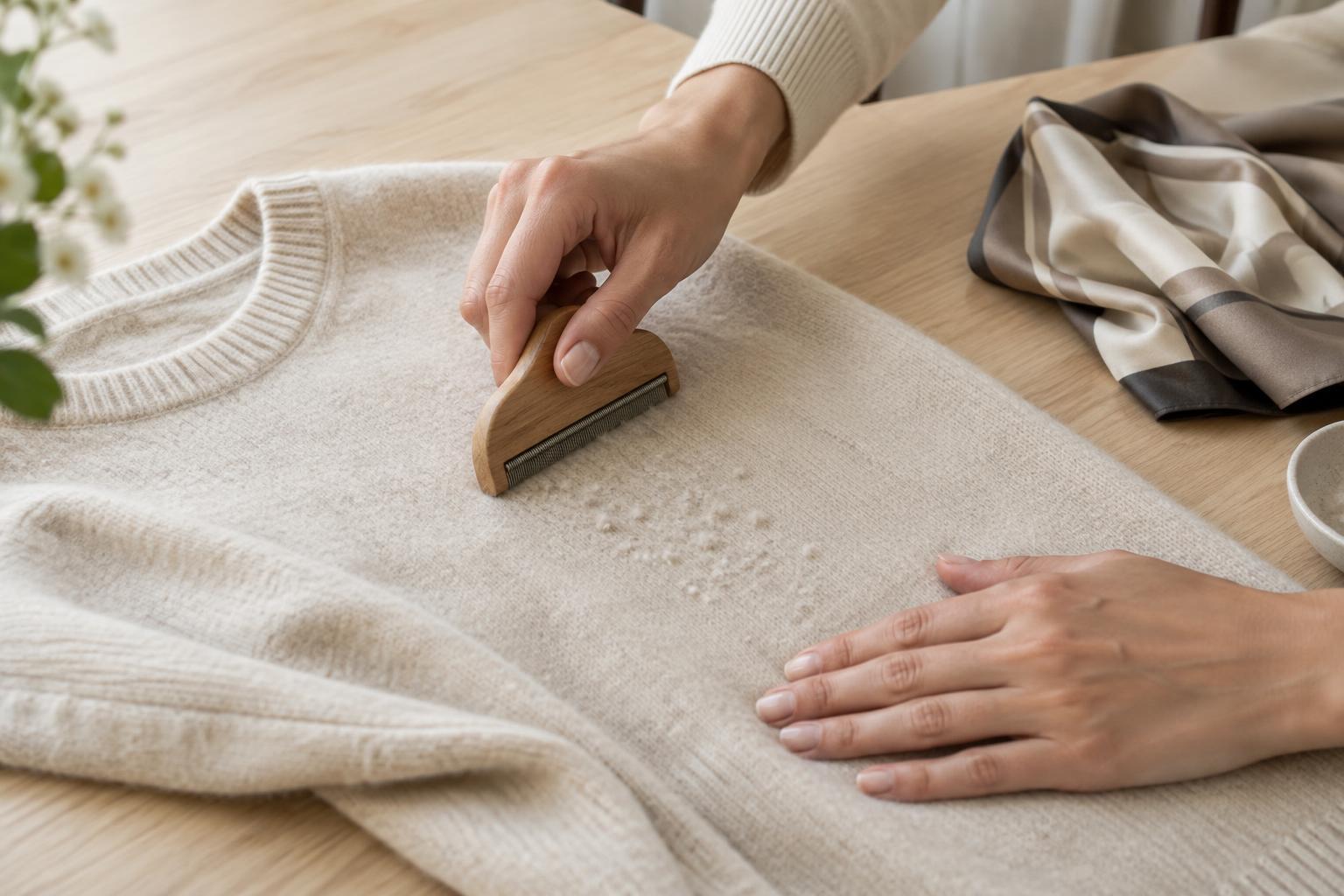
For a knit comb, hold a small section of fabric steady with one hand, keeping it flat without pulling it tight. With the other hand, move the comb lightly over the pilled surface in short strokes. Lift it between passes and clear away collected fibers so they do not drag across the knit. Stop once the visible pills have lifted, even if a little natural fuzz remains.
If you prefer a fabric shaver, keep the guarded head flat against a smooth section and use minimal pressure. Move slowly, checking your progress after each pass. Be especially cautious near seams, cuffs, hems, and raised details, where the surface is less even. Never try to shave over a loose loop or snag. Set the tool aside and have that area repaired or secured separately; pulling at it may make the problem worse.
Whichever tool you choose, treat a small area at a time. Working slowly makes it easier to notice if the fabric begins to look thin or a stitch starts to catch. When finished, lift away loose fibers by hand or with a gentle lint brush.
Care for the knit after de-pilling
De-pilling improves the surface, but it cannot prevent new pills from forming. To limit friction, consider where the sweater rubs during wear. A bag strap may be unavoidable, but changing its position occasionally can keep one spot from taking all the wear. Letting a sweater rest between wears also gives you a chance to check for new pills before they build up.
Wash only as the care label directs. If hand washing is permitted, handle the wet garment gently rather than rubbing or wringing it, and dry it flat in its intended shape. Store cashmere folded, not hung, to avoid stretching the shoulders. A quick inspection before putting it away is usually enough to spot any small areas that need attention later.