Start with the care label
Sorting laundry is less about creating a perfect set of piles than about keeping incompatible items apart. Before considering color, check each garment’s care label. Set aside anything marked for hand washing, dry cleaning or a specific wash method that does not suit the rest of the load. Check for instructions on water temperature, bleach and drying, too. A white blouse and a white towel may look like natural companions, but their care requirements and fabric weights can be quite different.
Empty pockets, close zippers and turn embellished or printed garments inside out if their labels allow machine washing. These small checks make the sort more useful: a pen left in a pocket or an open zipper can cause trouble regardless of how carefully the colors were grouped.
Sort by color and watch for dye transfer
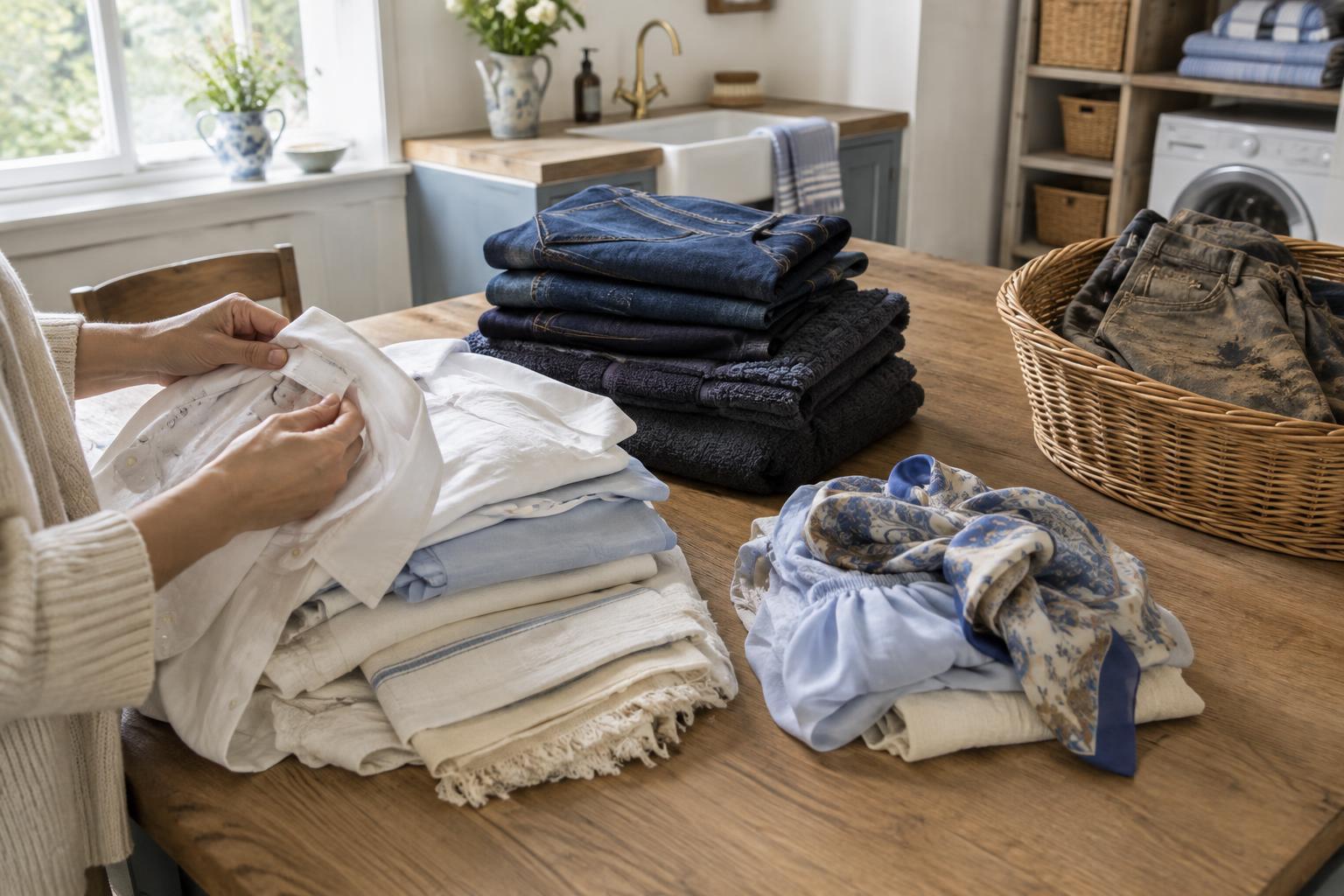
A practical color sort has three broad groups: whites, light colors and dark or saturated colors. Whites are easiest to keep bright when washed away from colored pieces. Pale blue, beige and other light shades can usually share a load when their care instructions agree. Black, navy and deep greens generally belong with darks. Bright reds and other strongly colored garments deserve extra caution, especially when new.
Dye transfer is most likely to matter when a dark or vivid piece shares water with a much lighter one. If you are unsure whether a new item will release dye, wash it separately the first time and check the result before including it in a mixed load. Do not rely on color alone, though: a dark silk scarf does not belong in a sturdy load of dark jeans simply because the shades match.
Keep heavy fabrics away from delicate ones
Fabric weight affects how clothes move against one another in the washer. Towels, denim and heavy cotton can rub against lighter materials, while hooks and rough seams may catch fine fabrics. Group sturdy items with other sturdy items, and wash lightweight shirts, fine knits and delicate accessories according to their labels. A mesh laundry bag may help protect a machine-washable delicate from snagging, but it does not make an unsuitable wash cycle safe.
Also consider lint. Towels and some fleecy fabrics may shed fibers that cling to smooth dark clothing. Keeping likely lint producers apart from items that show lint easily can save time after washing. When the load is too small for an ideal match, it is usually better to wait than to add a delicate item to a heavy load just to fill the machine.
Separate lightly worn clothes from heavily soiled items
Soil level is the third part of the sort. A shirt worn briefly is not in the same condition as a muddy pair of trousers or a towel used for cleaning. Washing heavily soiled items with lightly worn clothes can leave dirt in the load and may call for settings that the cleaner items do not need. Keep noticeably dirty pieces together only when their fabric care instructions are compatible.
Treat visible stains before washing, following the garment label and the stain-treatment product’s directions. Test a treatment on an inconspicuous area when you are unsure how the fabric or dye will respond. Avoid rubbing a delicate fabric hard in an effort to remove a mark. After washing, check that the stain is gone before tumble drying, since heat can make some stains harder to remove.
Use a simple decision order when categories overlap
A garment can fit several descriptions at once: a pale, lightweight blouse might be lightly soiled, while a dark cotton towel might be heavily soiled and lint-producing. Resolve these overlaps in order. First, follow the care label and set aside special-care items. Next, separate anything likely to bleed dye or damage other fabrics. Then group the remaining clothes by color, weight and soil level as closely as practical.
You do not need a separate load for every shade or garment type. Aim for loads whose pieces can tolerate the same wash settings without rubbing, shedding or staining one another. Leave enough room for clothes to move as your machine’s guidance recommends, and choose drying methods from the labels rather than assuming everything in a wash load should dry together. That routine keeps sorting manageable while giving versatile wardrobe pieces a little more care.