Start with a clean, dry wardrobe
The most useful storage step happens before anything goes into a box or garment bag. Empty pockets, brush off loose dirt, and check each piece for stains, loose buttons and small holes. Perspiration, food residue and body oils can become harder to remove during storage and may attract fabric pests. Follow the care label when washing or cleaning; a garment that looks clean may still benefit from attention around its collar, cuffs or underarms.
Let every item dry completely before packing it away. Even a little trapped moisture can leave an unpleasant smell or encourage mildew. If you have had clothes moths before, inspect wool, cashmere, silk and other animal fibres closely, including seams, folds and the undersides of collars. Set aside anything with suspicious holes or signs of insects rather than placing it among clean clothes. Cleaning the storage area and dealing with an active infestation are more important than adding a scented sachet.
Choose a storage place and container that suit the clothes
Look for a clean, dry, reasonably stable spot away from direct sunlight. A shelf inside a bedroom wardrobe is often a better choice than a damp basement or a space that becomes very hot. Wipe shelves and drawers, then let them dry before refilling them. Avoid packing clothes so tightly that you have to force the lid shut or crush hangers together.
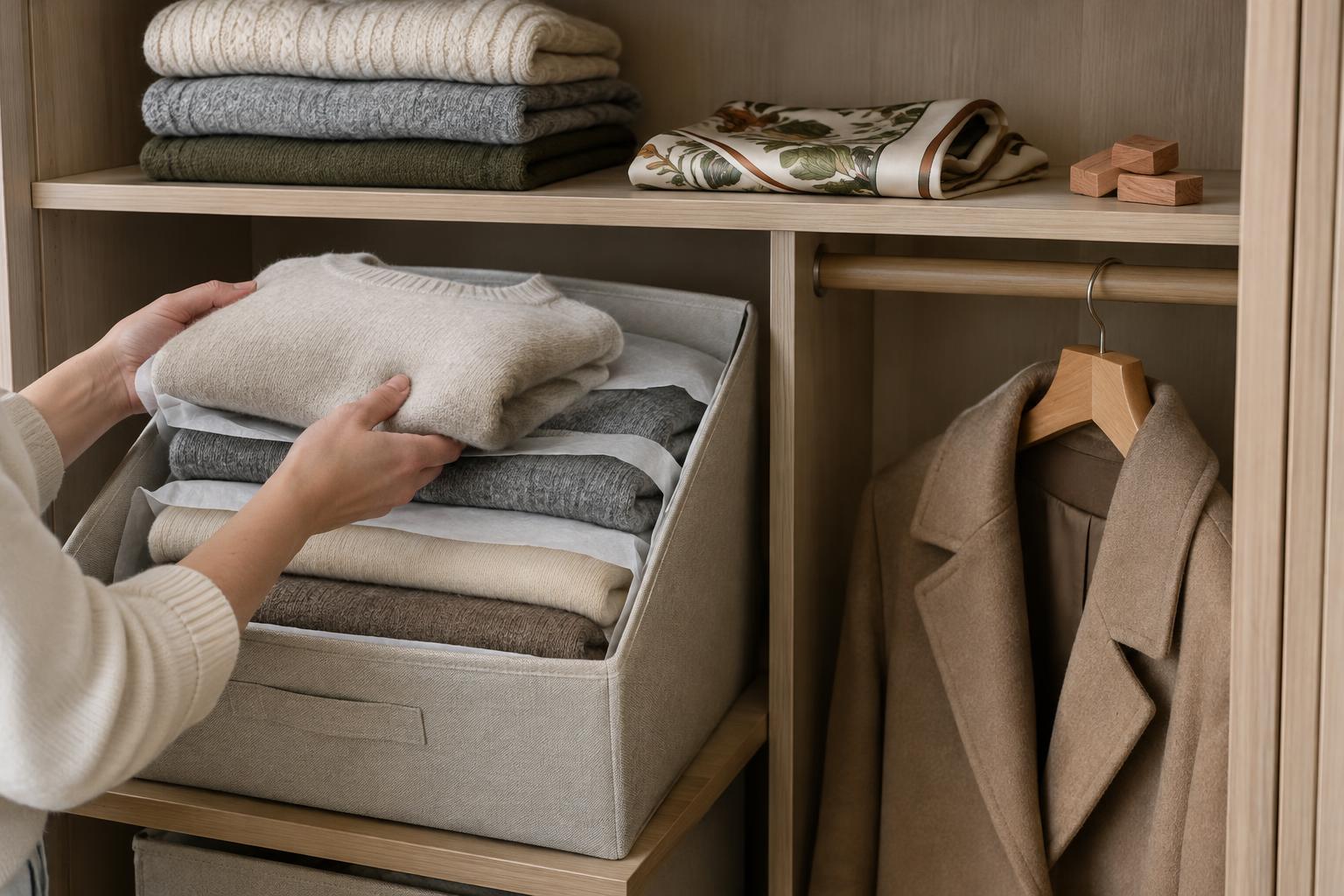
For folded knitwear, sturdy boxes or lidded containers can protect against dust and give you a chance to spot signs of pests when you reopen them. Use only completely dry garments and containers. For coats, jackets and delicate dresses that need to hang, choose a roomy, breathable garment cover rather than a thin dry-cleaning bag left on indefinitely. A cover should keep off dust without pressing against sleeves or hems. Whatever container you choose, label it clearly so you can find an item without repeatedly unpacking everything.
Fold knits, support shoulders and leave room for fabric
Heavy sweaters are usually better folded than hung: their weight can stretch the shoulders and lengthen the body. Fold them loosely along existing seams and make stacks low enough that the bottom pieces are not compressed. If a garment is especially prone to creasing, place clean, acid-free tissue between folds or use a larger box that allows a gentler fold. Tissue is a cushion, not a substitute for removing stains first.
Hang structured coats and jackets on broad hangers that support the shoulders. Leave a little space between garments so sleeves are not trapped in sharp folds. Lightweight shirts and dresses may be folded or hung depending on their fabric and construction; check whether a hanger leaves marks before committing to months of storage. Fasten a few buttons or closures to help a piece keep its shape, but do not pull them under tension. Roll scarves loosely or fold them with soft tissue, keeping embellishments away from delicate silk that could snag.
Make moth prevention a routine, not a fragrance choice
Clothes moth larvae, rather than the flying adults, are the stage that damages susceptible fibres. Good prevention starts with clean garments, a clean storage area and regular inspection. Vacuum the wardrobe floor, corners, shelf joints and nearby rugs before storing clothes; dispose of the vacuum contents promptly if you suspect pests. Keep vulnerable pieces together where you can check them without disturbing your entire wardrobe.
Cedar and lavender may give a box a pleasant scent, but they are not reliable substitutes for cleaning and monitoring. Moth traps can help you notice activity, yet a trap alone will not protect every garment or resolve an infestation. If you find larvae, webbing or fresh damage, isolate affected pieces and follow their care labels for cleaning. Inspect nearby clothing and the storage space as well. For a persistent problem, seek appropriate pest-control guidance rather than relying on increasingly strong fragrances near delicate fabrics.
Check stored pieces and unpack them gently
Seasonal storage need not mean forgetting clothes until the weather changes. An occasional check lets you catch moisture, a shifted lid or possible pest activity early. It also gives you a chance to lift a compressed stack and make sure a heavy coat is still sitting properly on its hanger. Keep the inspection brief and use clean, dry hands, especially when handling pale fabrics or silk.
When it is time to bring clothes back into rotation, open boxes, inspect each item and let garments air in a clean room. Minor fold lines may relax on a hanger; for stubborn creases, use only the ironing or steaming method permitted by the care label. Give the empty containers and shelves a clean before filling them with the next season’s clothes. This simple cycle makes storage part of wardrobe care, rather than a last-minute attempt to fit everything out of sight.