Start by deciding where the outfit should divide
A belt draws attention to a horizontal line. Move that line, and the same clothes can take on a different shape. A belt at the natural waist emphasizes the middle of the body and can make a long dress or untucked shirt look more defined. A belt worn lower, near the hips, keeps the torso looking longer and gives a looser outfit a more relaxed finish. Neither placement is inherently better; the useful one is the one that makes the whole outfit feel balanced to you.
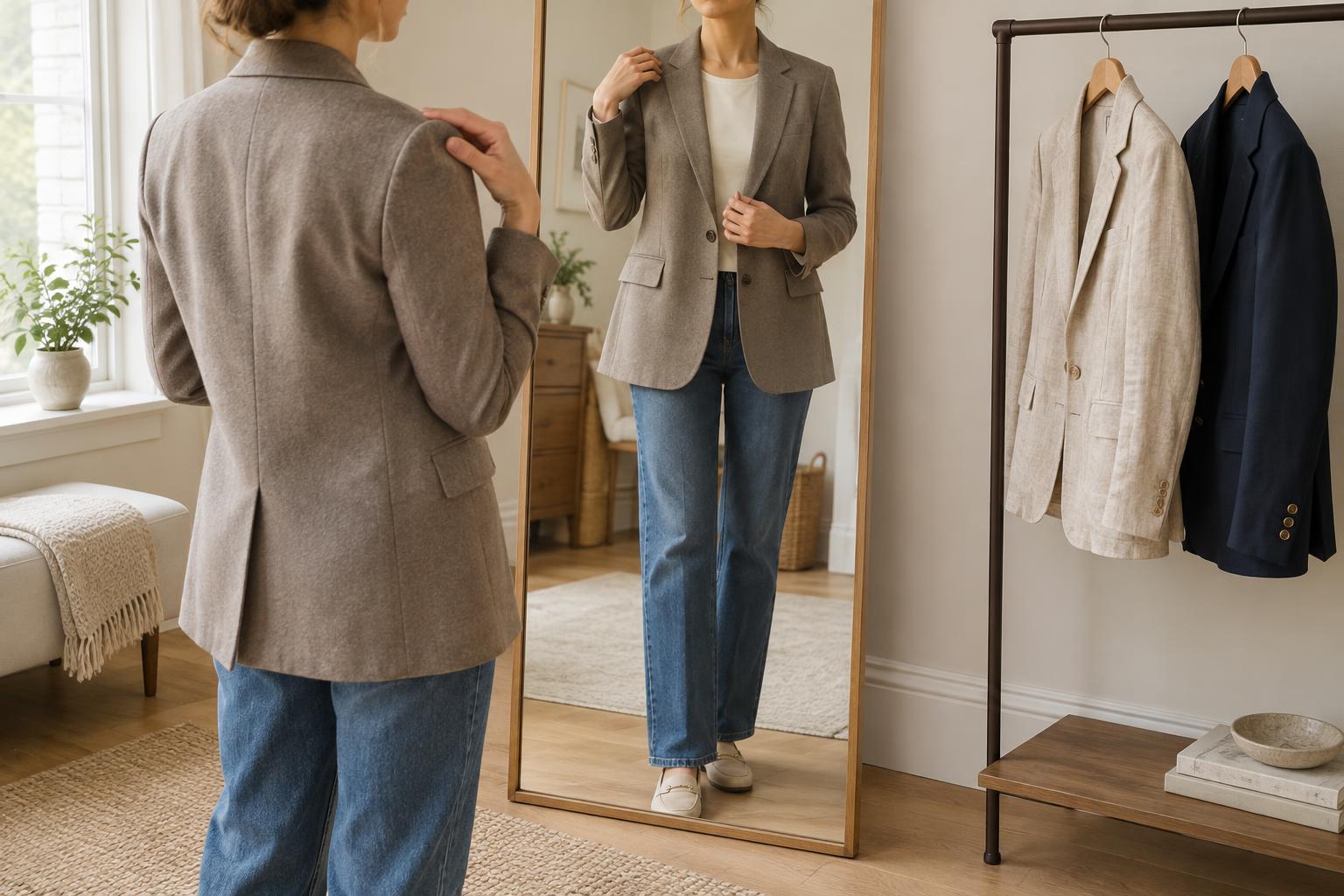
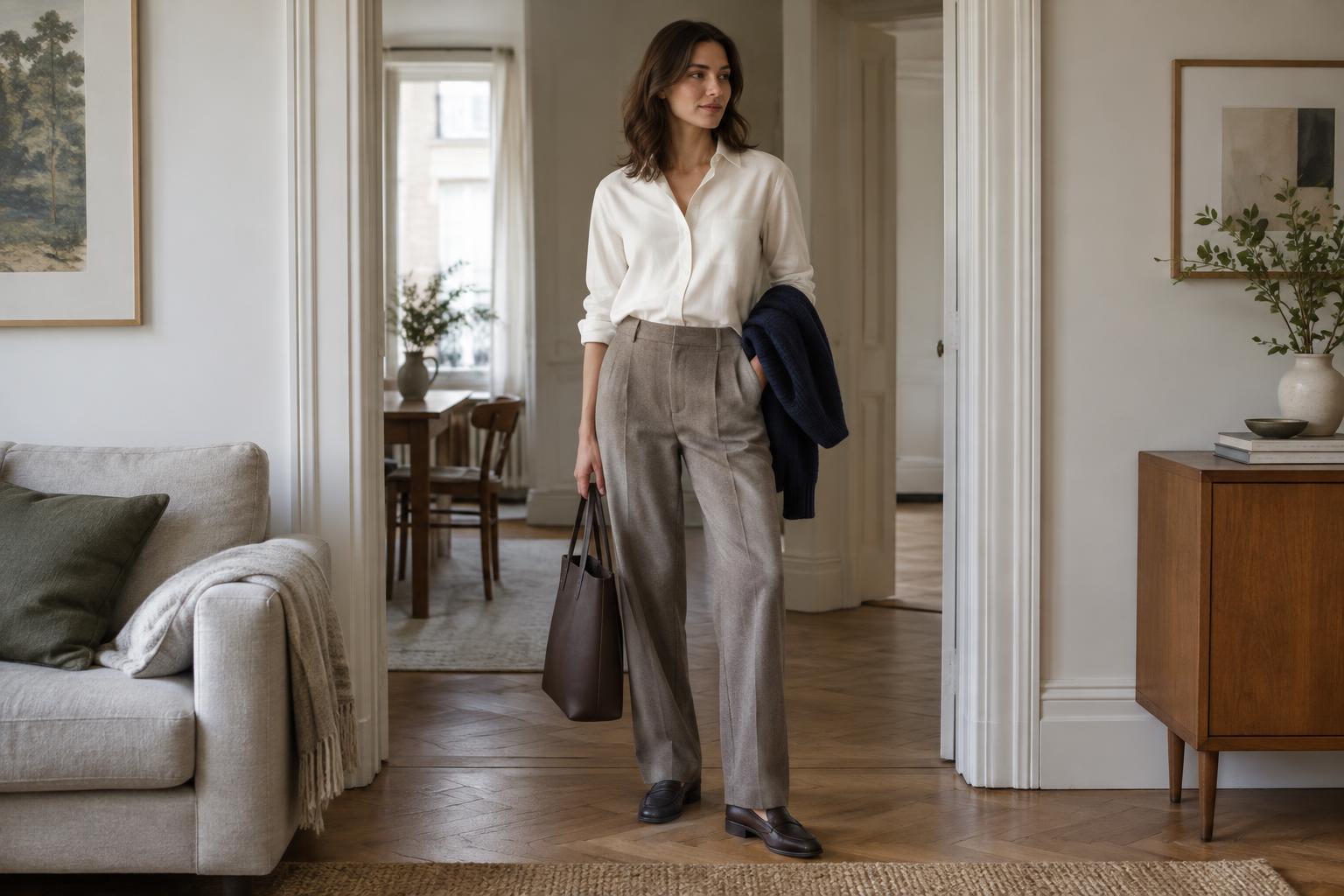
Before adding a belt, look at where the existing lines fall: the hem of a jacket, the waistband of trousers, the point where a shirt is tucked. If several strong lines cluster together, another contrasting line may make the outfit feel busy. Try the belt with the jacket open or the shirt partly tucked, then step back and assess the full silhouette rather than the belt alone.
Use placement to change the shape
With a dress or long shirt, try belting at three points: slightly above the natural waist, at the waist and loosely at the hips. A higher position can give the lower half of the outfit more visual length, especially when there is plenty of fabric below the belt. Waist placement creates a clearer top-and-bottom division. A lower, looser belt lets the fabric fall more freely and often suits an intentionally relaxed look.
The fabric matters as much as the position. A soft dress may gather neatly under a belt; a stiff shirt may bunch at the sides. Smooth excess fabric toward the back or allow a little volume above the belt for a bloused effect. If the garment pulls across the front, loosen the belt or leave it off. Definition should not come at the expense of comfortable movement.
Choose width and contrast with intention
A slim belt creates a quiet dividing line. It works well when a tuck or tailored waistband already gives the outfit structure. A wider belt makes more of a statement and can help shape an unstructured dress or generous layer, though it may cover useful details such as pockets or seams. Try the belt with the garment before deciding: the same width can look subtle on a substantial coat and dominant on a light blouse.
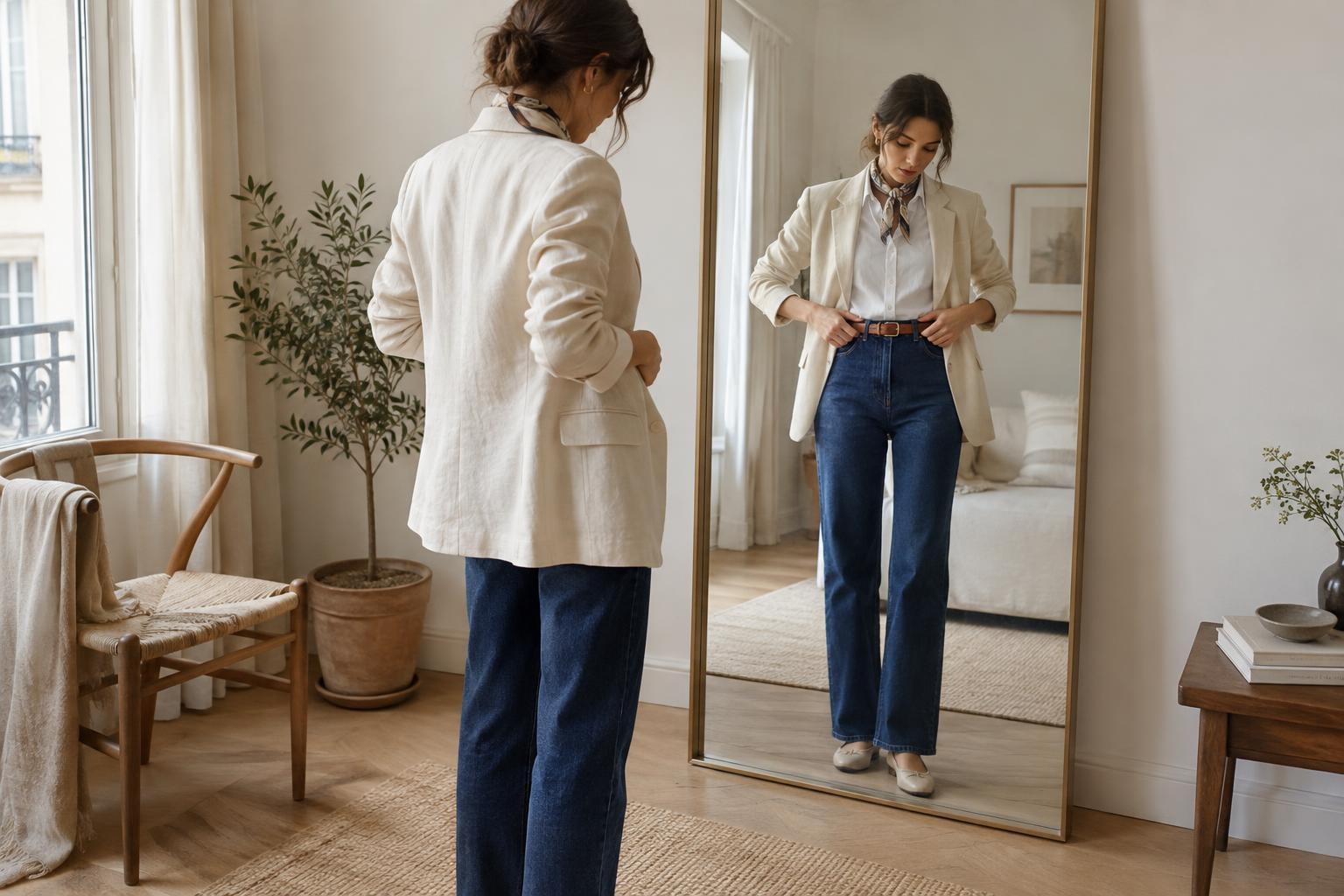
Color changes the effect, too. A belt close in color to your trousers or dress keeps the outline relatively continuous, while a contrasting belt marks the waist more clearly. For a restrained French-inspired outfit, consider repeating a color already present in your shoes, bag or scarf. The pieces need not match exactly; a small visual connection can make the belt look considered without turning it into the focus.
Work with the layers you already own
A belt can make familiar separates feel different. With high-waisted trousers and a tucked shirt, it reinforces a clean waistline. With a half-tucked knit, it is visible only in part, adding structure without making the outfit look too precise. Over an open cardigan, it can gather the front edges into a new shape; under a jacket, it can define the waist while the jacket keeps the silhouette easy.
Belting over outer layers calls for a little more care. A soft, unstructured jacket may fold comfortably around a belt, while a fitted blazer may wrinkle or pull. If you want to try a belt over a jacket, fasten the jacket first and check that you can sit and move comfortably. You can also let the belt sit beneath the jacket and leave only its center visible.
Test the outfit from head to toe
Proportions are easier to judge when you can see the entire outfit, including shoes. A belt that looks prominent up close may feel balanced once a longer hem or substantial footwear enters the picture. Try one adjustment at a time: move the belt, change the tuck or swap a contrasting belt for a quieter one. This makes it easier to tell which change helped.
As a final check, make sure the belt stays where you placed it and does not pinch, twist or cause the fabric to ride up. The aim is not to force every outfit into an hourglass shape. A belt is simply a tool for choosing where the eye pauses and how the clothing falls. Sometimes the most effective styling decision is to remove it and let a relaxed silhouette stand on its own.