What the rule of thirds means for an outfit
In dressing, the rule of thirds is a way to think about the visual space between your shoulders and feet. Rather than dividing an outfit into two roughly equal blocks, try placing a noticeable break about one-third or two-thirds of the way down. A waistband, hem, belt or change of color can create that break. The result often feels more deliberate because one part of the outfit takes the lead while the other supports it.
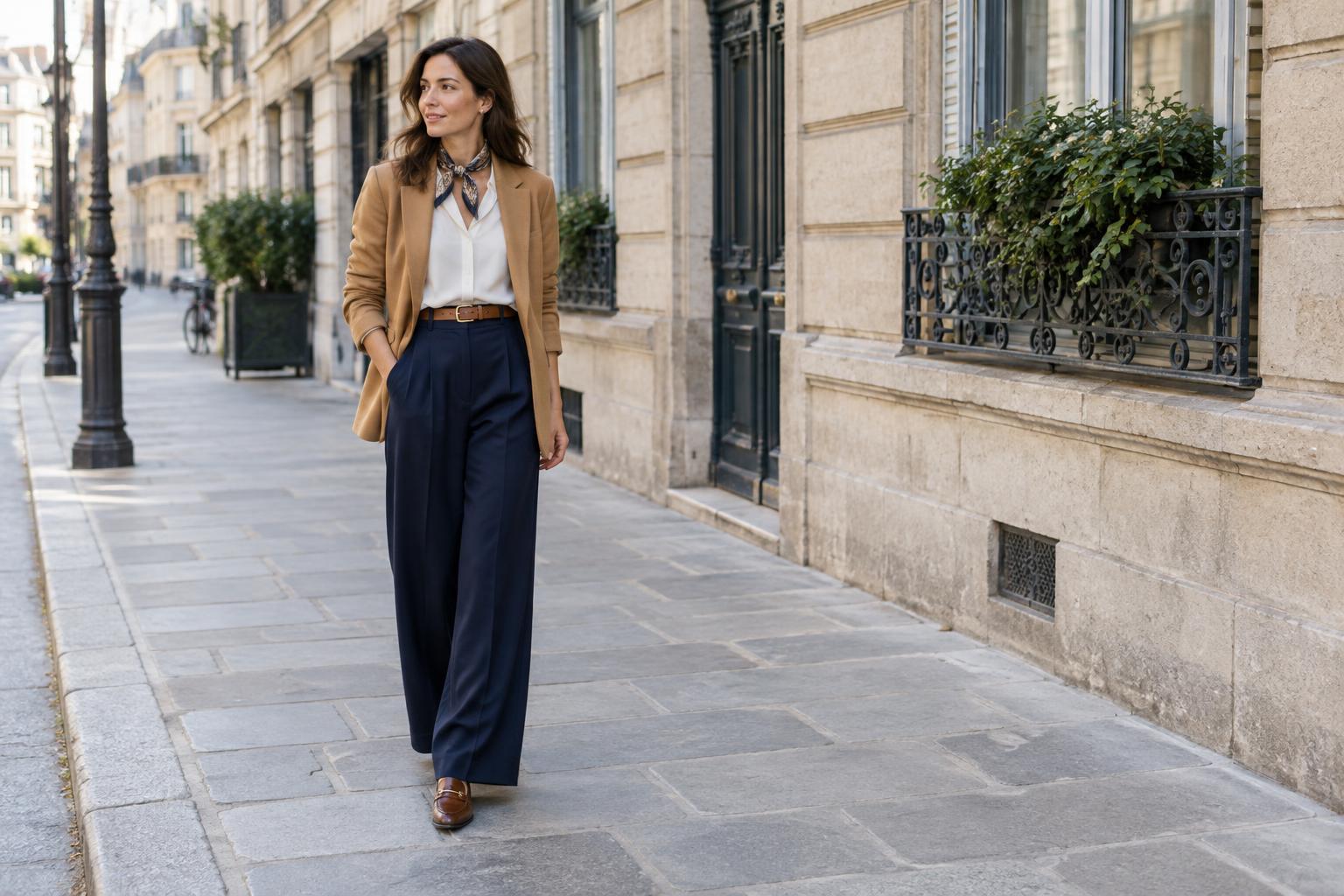
Imagine a top that ends near the waist worn with high-waisted trousers. The top occupies a shorter section, and the trousers occupy a longer one. Reverse the arrangement with a long tunic over a shorter visible length of skirt or trousers, and you have another interpretation. Neither is a measurement you need to perfect. The idea is to notice where your eye pauses when you look at the whole outfit.
French-inspired everyday dressing often benefits from this sort of small adjustment: a familiar shirt, knit or pair of trousers can look different when you change how the pieces meet. Use the rule as a styling prompt, not as a test your clothes must pass.
Start with the top-and-bottom break
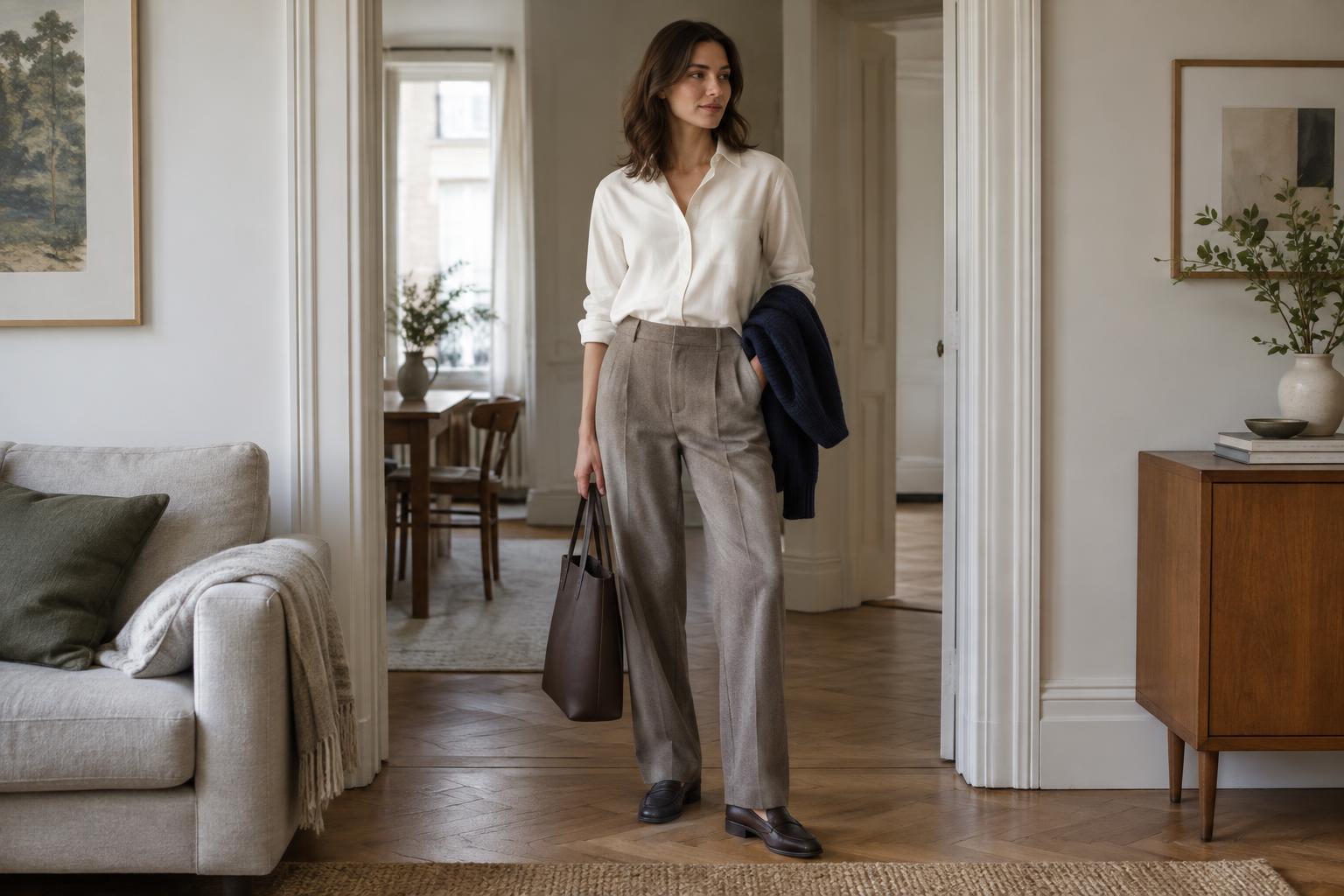
The easiest place to experiment is at the waist. Put on a shirt and trousers, then compare three versions in a mirror: the shirt untucked, fully tucked and lightly tucked at the front. Notice how each version changes the apparent length of the top and bottom. A front tuck can suggest a shorter upper section while leaving the sides and back relaxed. A full tuck makes the waistband a clearer dividing line.
If tucking feels bulky or uncomfortable, choose a top with a shorter hem, or wear an open shirt over a fitted layer. You can also create the break with a belt or a jacket that ends near the waist. The aim is not to force every garment into the same shape; it is to find a dividing point that works with the clothes you already own.
Color affects the result, too. A contrasting top and bottom make the boundary easy to see, while similar shades create a quieter, more continuous line. Try both before deciding an outfit needs a different piece. Sometimes the change you want is simply a less obvious break.
Use layers and longer garments to shift the balance
A dress does not have to show a waistband for the rule of thirds to be useful. A cropped cardigan over a longer dress creates a short upper layer and a longer visible section below. A longer coat over a short dress or skirt creates a different balance, especially when the coat is left open. Look at the outermost layer as well as the garments beneath it: both contribute to the shape you see.
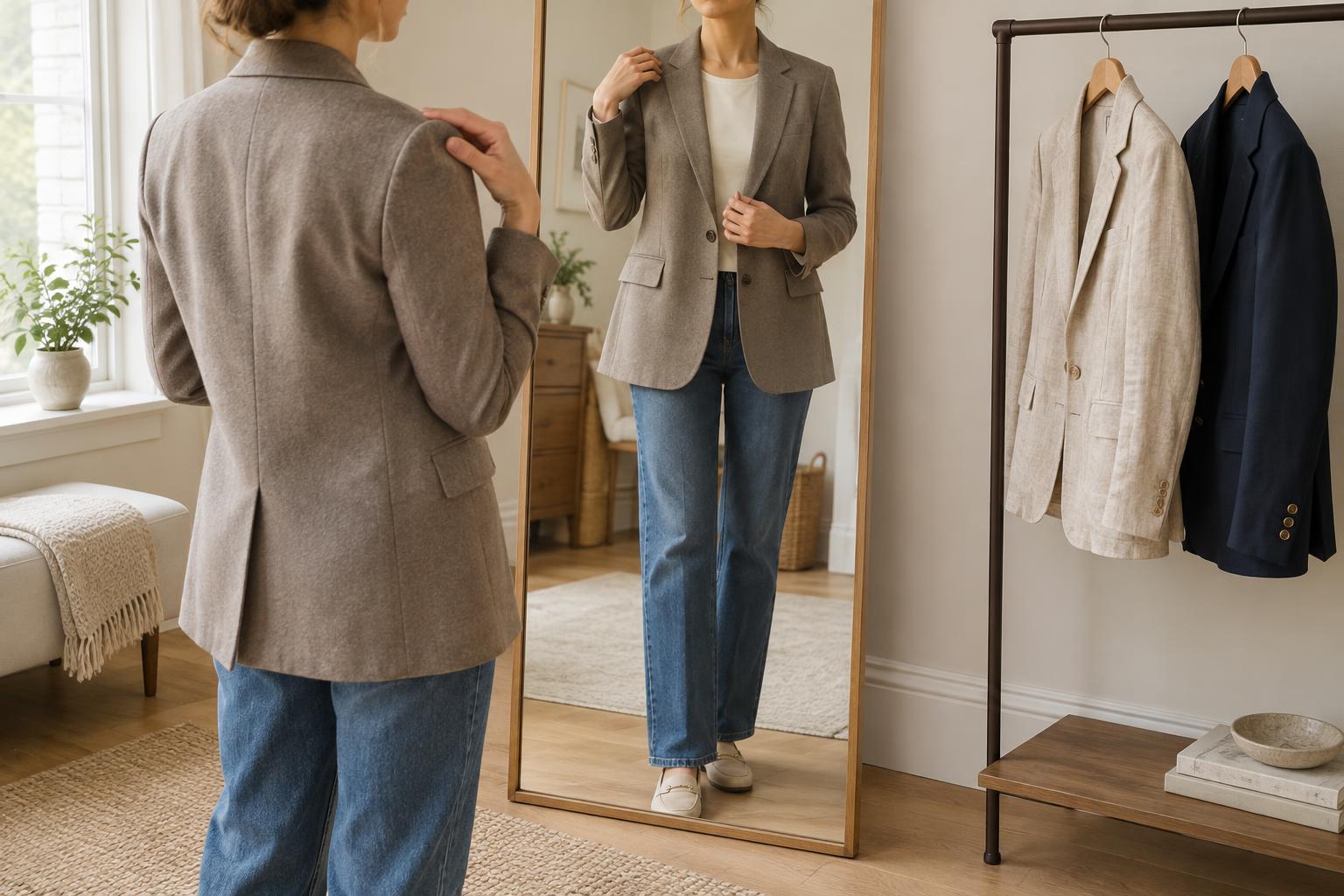
With a blazer or coat, pay attention to where the hem lands in relation to the rest of your outfit. If a jacket ends at the same point as your top, the two pieces may read as one block. Letting one hem sit higher or lower can introduce a clearer rhythm. This need not mean buying another jacket. Rolling sleeves, leaving a layer open or changing the garment underneath may be enough.
Long scarves can also draw the eye vertically when their ends hang loose, whereas a compact scarf at the neck keeps attention near the face. These accessories do not have to define a precise third. They are useful when you want to adjust the emphasis without changing the main pieces.
Check the whole outfit, including shoes
A proportion that looks right from the waist up may change once you add shoes. Trouser length, exposed ankle and the color contrast between trousers and footwear all affect where the eye finds a break. For instance, trousers and shoes in similar tones can make the lower section appear more continuous. A contrasting shoe creates a more distinct endpoint. Neither choice is automatically better; they offer different effects.
Step back far enough to see yourself from head to toe, or take a simple photo for comparison. First, identify the strongest horizontal lines: top hem, waistband, jacket hem, skirt hem and the point where shoes meet trousers. If several lines cluster in the middle, try moving just one. Tuck the shirt, change the outer layer or adjust the trouser cuff, then look again. One considered change is usually easier to judge than several at once.
Keep the rule flexible
An outfit divided close to half can look pleasing, particularly when its color, texture or silhouette provides interest. The rule of thirds is helpful because it gives you a specific option to try when an outfit feels unresolved—not because every look needs an uneven split. Your comfort, the occasion and how the clothes move matter more than a visual formula.
For a quick starting point, pair a shorter knit with high-waisted trousers, tuck a relaxed shirt into a midi skirt, or wear a cropped jacket over a simple dress. Then make the outfit your own: loosen a tuck, swap shoes or add a scarf. The most useful proportion is the one that makes your clothes feel intentional and still lets you move through your day with ease.