Start with the label, not the washbasin
A wool sweater can make a simple outfit feel considered, whether it is worn over a shirt or tucked loosely into a skirt. Keeping that sweater in good condition begins before it reaches the water. Check its care label for the fiber blend and cleaning instructions. Some wool sweaters are marked hand wash, some are suitable for a machine’s wool cycle, and others call for dry cleaning. A sweater labeled dry clean only is best treated according to that instruction rather than tested at home.
Felting happens when wool fibers become entangled and tighten together. Heat, rubbing, and agitation can increase the risk, especially with wool that has not been treated to withstand machine washing. Once a sweater has felted substantially, washing it again will not reliably restore its original size or texture. The safest approach is to handle the garment as little as necessary and follow its particular label.
Decide whether a full wash is needed
Wool does not necessarily need washing after every wear. If a sweater is otherwise clean, let it air out between wears and check whether any odor fades. For a small mark, gentle spot cleaning may be enough. Test your method on an inconspicuous area first, then dab the mark with a damp cloth and a little wool-safe detergent if the label permits wet cleaning. Avoid scrubbing: repeated friction can roughen the surface or encourage the fibers to mat.
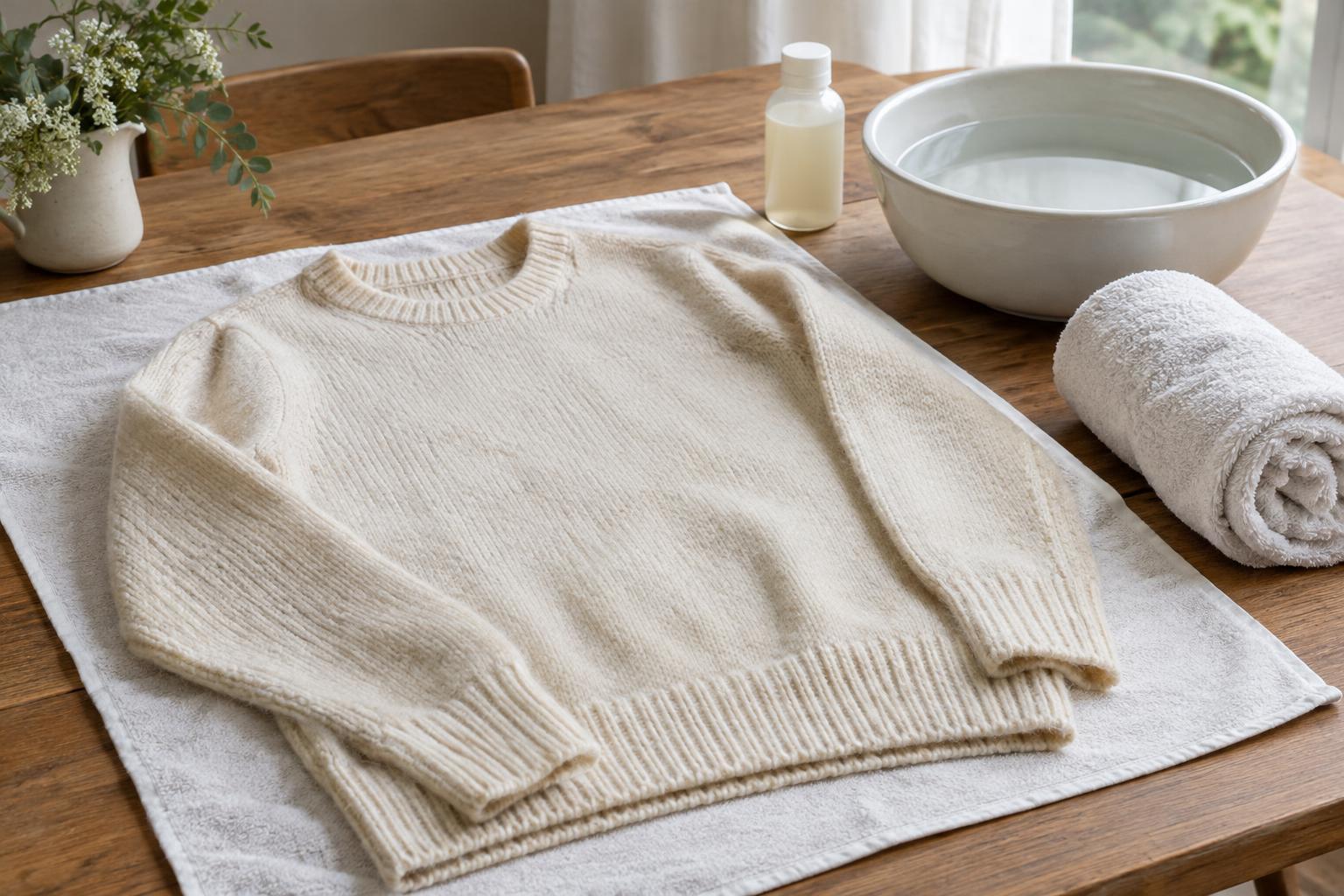
When a full wash is needed, set aside enough time to finish it without rushing. Have a clean towel and a flat drying space ready before you begin. A sweater can become heavy when wet, so planning where to lay it down helps you avoid lifting or hanging it by the shoulders.
Hand-wash with a light touch
If the label allows hand washing, fill a clean basin with cool water or the temperature specified on the label. Add a small amount of detergent intended for wool, following the product’s directions. Too much detergent can be difficult to rinse out. Turn the sweater inside out, lower it into the water, and gently press it beneath the surface. Let the water and detergent do the work rather than rubbing one part of the sweater against another.
After a brief soak, lift the sweater with both hands supporting its weight and drain the basin. Refill it with water at a similar temperature and gently press the sweater to rinse. Repeat if needed until the detergent is gone. Keep movements slow and avoid sudden temperature changes. Do not twist, wring, or scrub the knit, even if it still feels soapy; another gentle rinse is a better option.
If the label permits machine washing, use the specified wool or delicate cycle and follow any stated temperature limit. A mesh laundry bag can reduce contact with other items. Wash the sweater with a small, compatible load rather than heavy garments that may rub against it. Machine washing is not a shortcut for a hand-wash-only label: the correct method depends on the garment.
Remove water without stretching the knit
Once rinsed, support the wet sweater as you lift it from the basin. Press it gently against the side of the basin to release some water, without twisting. Lay it on a clean, dry towel, spread it into an approximate sweater shape, and roll the towel up with the sweater inside. Press along the roll to absorb moisture. If the sweater remains very wet, repeat with another dry towel.
Unroll the sweater carefully and place it flat on a dry towel or a mesh drying rack that supports the whole garment. Smooth the body and sleeves into their familiar proportions without pulling hard on the fabric. Pay attention to cuffs, hem, and shoulder seams, which can dry in an awkward position if left bunched up. Hanging a wet sweater on a clothes hanger can stretch the shoulders and lengthen the body.
Let it dry fully before wearing or storing
Choose an airy spot away from direct heat and strong sunlight. A radiator or hot tumble dryer may seem convenient, but heat can shrink or damage a sweater that is not labeled for that treatment. Drying time varies with the thickness of the knit and the conditions in the room. If the surface underneath becomes damp, replace the towel; when the upper side feels mostly dry, turn the sweater gently so the other side can dry as well.
Check thicker areas, such as the collar and seams, before putting the sweater away. Store it folded once it is completely dry, rather than hanging it for long periods. With gentle washing, careful water removal, and flat drying, a wool sweater has a better chance of keeping the soft texture and easy shape that make it worth reaching for again.