Why the neckline needs extra care
A good cotton T-shirt works with almost anything: tailored trousers, jeans, a skirt or a light layer under a jacket. When its neckline becomes wavy or loose, though, the whole outfit can look less considered. The collar is often made with ribbed fabric that needs to recover its shape after being stretched. Repeated pulling, especially when the shirt is wet and heavy, can make that recovery harder.
Washing is only part of the picture. Tugging a shirt off by its collar, hanging it from the neck while damp, or pulling it sharply out of a crowded machine can all put strain on the same small area. The aim is not to keep a T-shirt untouched. It is to make the body of the garment, rather than the neckline, carry its weight whenever you handle it.
Prepare the shirt before washing
Start with the care label. Cotton T-shirts vary in construction: some are blended with stretch fibers, printed, embellished or finished in ways that call for particular temperatures or drying methods. If the label gives specific instructions, use those as your starting point. For a straightforward washable cotton tee, a cool or lukewarm wash is often a sensible choice; very hot water may contribute to shrinkage or affect certain finishes.
Turn the shirt inside out to reduce friction against its outer surface, then sort it with similar colors and reasonably soft items. Heavy jeans, towels and garments with exposed fasteners can rub against a lighter tee. Close any zippers in the load, and leave enough space for clothes to move. A mesh laundry bag can provide an extra barrier for a favorite shirt, although it does not replace a gentle cycle or a sensibly sized load.
Treat marks before washing rather than scrubbing the collar in the machine afterward. Apply a suitable stain treatment to the affected area according to its directions, and work gently from the fabric surface. Avoid pulling the neckline taut to reach a spot near the seam.
Choose a gentle wash and handle wet cotton carefully
For machine washing, select a gentle or normal cycle appropriate to the care label and the shirt’s condition, with enough water and room for the load to circulate. Measure detergent according to the product directions and the load size. More detergent is not necessarily better: residue can leave a shirt feeling stiff, and an extra rinse means more handling. If the tee is lightly worn rather than visibly dirty, washing it with other similarly soiled items may be enough.
If you prefer to wash by hand, fill a basin with water at a suitable temperature and mix in a small amount of detergent. Submerge the shirt and move it through the water without twisting the collar. Rinse gently, then press out water with your hands. Do not wring the shirt from the neckline or lift the soaking garment by its collar.
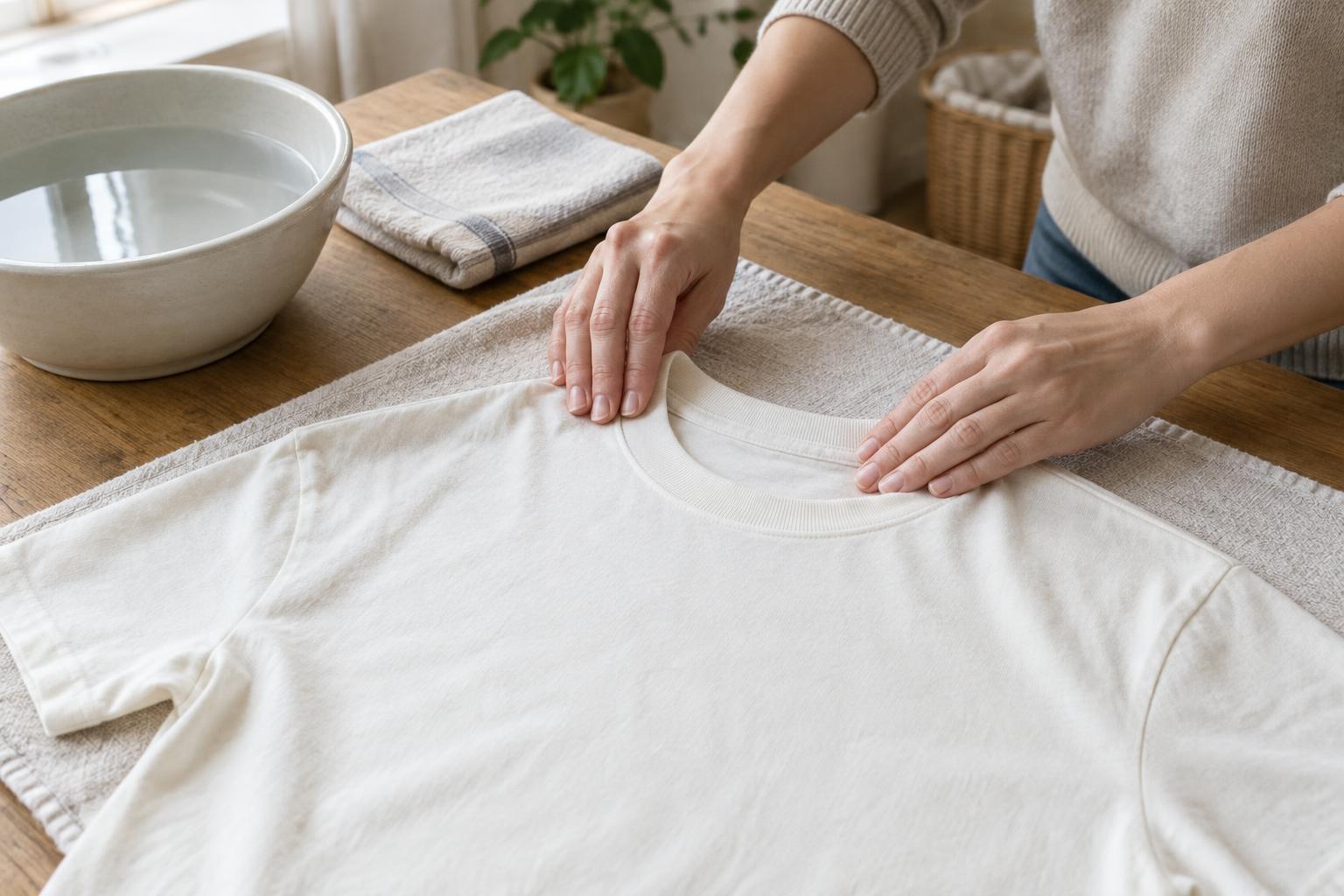
When removing a wet tee from the washer or basin, scoop it up with both hands, supporting the body. If it needs more water removed, lay it on a clean towel, roll the towel with the shirt inside, and press. This takes some weight out of the fabric before you reshape it.
Dry it without asking the collar to hold the weight
Lay the shirt on a clean, dry towel or a suitable drying rack and gently smooth it back into shape. Pay attention to the neckline, but do not stretch it wider in an attempt to flatten every ripple. Allow air to circulate, and move the shirt to a dry surface if the towel becomes damp. Flat drying is especially useful for a heavier tee that could pull downward under its own weight.
If you use a clothesline, avoid suspending a wet shirt from the collar or leaving it on a narrow hanger that concentrates weight at the shoulders and neck. Follow the label if you use a tumble dryer; where permitted, a lower heat setting may be gentler than high heat. Remove the shirt while it is still slightly damp if needed, then lay it flat to finish drying. Do not assume heat will permanently restore a stretched neckline.
Keep the shape between washes
Small habits can reduce repeated strain. When taking a T-shirt off, lift it from the hem and body instead of pulling hard at the collar. Once clean and fully dry, fold it or store it so the neckline is not under tension. If you prefer hangers, choose one that supports the shoulders and put it through the bottom of the shirt rather than forcing it through the neck opening.
A neckline that has already lost much of its elasticity may not return to its original shape through washing alone. Gentle care is most useful for preventing further distortion. For an everyday tee you reach for often, that is a worthwhile routine: wash according to the label, support the fabric while wet, and let the collar keep its shape without making it do the heavy lifting.