Start with the garment, not the scarf
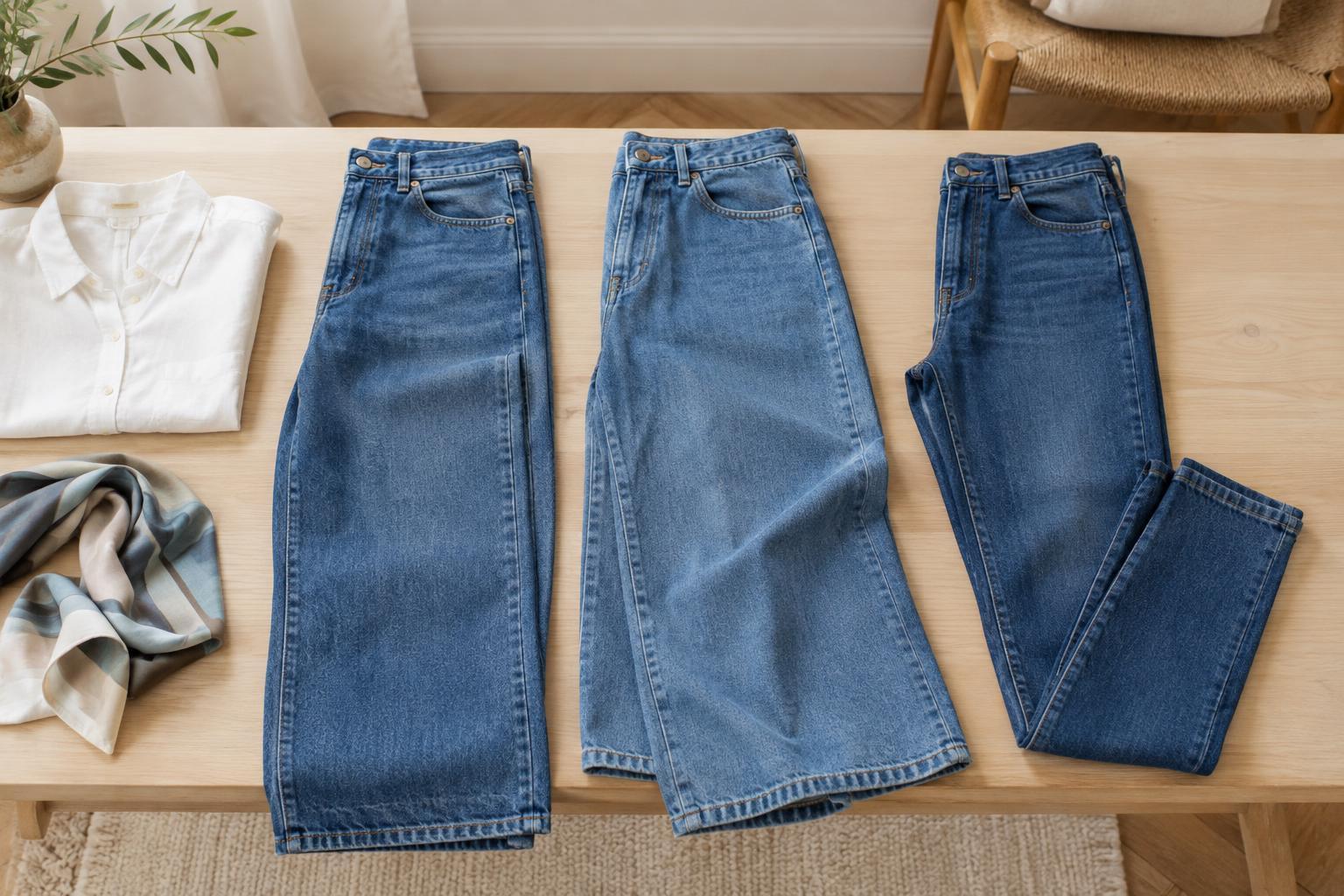
A scarf belt works best when it is there to decorate or lightly define the waist, rather than hold up trousers that need a firm belt. Try it with jeans or trousers that already fit comfortably, or with a dress that needs only a little shape. If you have to pull the scarf tight to make the garment stay in place, a conventional belt is the more reliable choice.
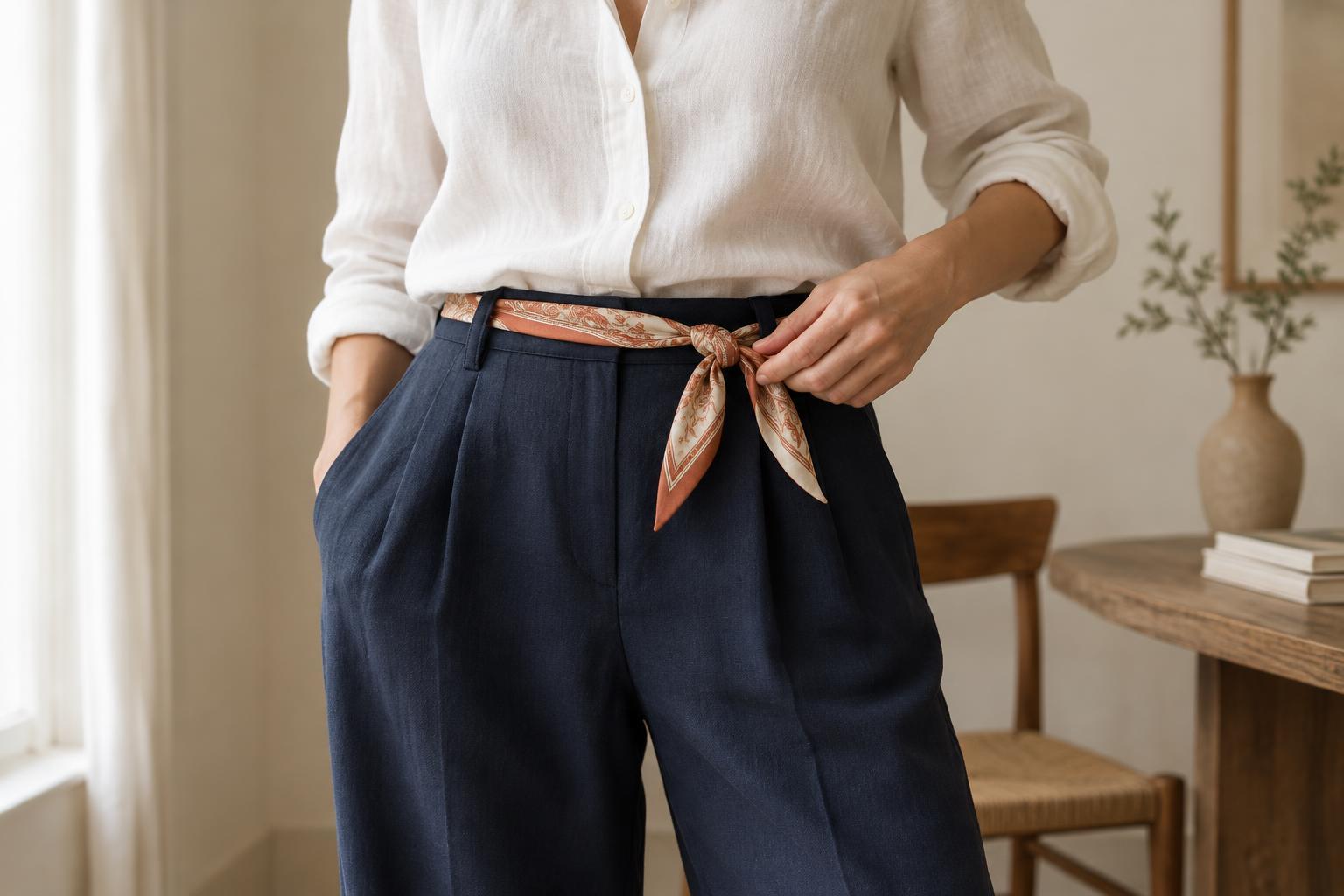
Look at where the fabric will sit. Belt loops give a narrow scarf a clear route and help keep it from drifting upward. A dress without loops can also work, particularly if it has a defined waist seam or a surface that offers some grip. Over a slippery dress, the scarf may move as you walk. Testing the placement at home is more useful than repeatedly tightening the knot.
Choose a scarf that folds flat
For a low-profile belt, start with a narrow scarf or a slim silk twilly. The width should fit through your belt loops without being forced. If you are using a wider square scarf, fold it diagonally into a long band, then fold the broad edges inward until the band is narrow enough. Smooth each fold with your fingers as you go; a tidy band creates less bunching around the waist.
Fabric affects the result. A lightweight silk scarf usually feels softer and less bulky than a thick woven one, though it may also be more inclined to slip. A narrow cotton scarf can be easier to keep in place but may form a firmer knot. Avoid piling several layers of heavy fabric into small belt loops, which can strain the loops and create a lumpy line.
Check the length before dressing. The scarf needs to go around your waist and leave enough fabric for a secure tie, without producing ends so long that they interfere with pockets or catch when you sit down. The ideal length depends on your waist, where you position the knot, and how much of the ends you want to show.
Thread and tie for a smooth finish
Thread the scarf through the loops as you would a belt, keeping the folded edge facing outward. Work from one loop to the next rather than pulling the entire length through at once. This gives you a chance to flatten twists before they disappear behind a loop. When the ends meet, adjust them so they are roughly even, then pull only until the scarf rests comfortably against the garment.
A single knot tied at the side often looks flatter than a bow at the center front. Cross the ends once, pass one end through, and gently spread the knot so it lies against the waistband. If the fabric is especially slippery and the knot loosens during a short wear test, add a second, small knot rather than pulling the first one tighter. Tuck one or both ends under nearby belt loops if you prefer a quieter finish.
You can also place the knot just off center. This keeps it away from the point where a shirt, button, and waistband may already overlap. Before leaving, sit down and stand up once or twice. If the scarf presses into your waist or the knot catches on a jacket, shift it farther to the side or simplify the tie.
Keep the rest of the outfit balanced
A scarf belt is a small accent, so it does not need to match every part of an outfit. A patterned scarf can add interest to a plain shirt and dark trousers; a solid scarf can quietly pick up one color from a printed dress. If the scarf has contrasting ends, leave one visible and tuck the other away for an intentionally uneven look.
Pay attention to layers near the waist. A fully tucked, lightweight shirt lets the scarf show clearly, while a half-tuck may cover part of the knot and soften the effect. Under a long jacket, visible scarf ends can add color without changing the outline of the outfit. If a chunky knit already adds volume at the waist, consider wearing the scarf at the neck or on a bag instead.
Make it comfortable to wear and easy to care for
A scarf threaded through loops will rub against denim, seams, and hardware. For a delicate silk piece, check that the loops are smooth and that no rough fastener can snag it. Take particular care with scarves you would be upset to crease or mark. If the scarf keeps sliding, do not rely on a tighter knot to solve the problem; a different fabric or outfit may work better.
After wearing, untie the scarf rather than pulling a tight knot through a loop. Let it rest flat or hang loosely so creases can relax, and follow its care label before cleaning or pressing it. The most successful scarf belt is one you can forget about during the day: flat at the waist, secure enough for ordinary movement, and easy to remove when you get home.