Start with the scarf and the hairstyle
Silk feels lovely against the hair, but that smoothness is also why a scarf can drift backward or loosen as you move. A secure hairband starts with enough fabric to tie and a hairstyle that gives the scarf somewhere to rest. A small square may work for a narrow band on shorter hair; a larger square offers more room for folding and tying, especially if your hair is thick or you want the ends to show.
Before tying, decide whether your hair will be down, half-up or gathered. With loose hair, leave a little volume at the roots rather than smoothing everything flat. If you wear a bun or ponytail, position it so the scarf can sit in front of it or tuck beneath it. That change in shape can help keep the band from sliding across the back of your head.
Fold a band that holds its shape
Lay a square scarf flat and fold two opposite corners toward the center. Fold it again from each side until you have a long strip about the width you want to wear. Folding the pointed corners inside gives the band more even edges and keeps stray tips from working loose. If you prefer a softer, wider look, stop folding sooner; for a neater band, make one more fold.
A very narrow strip can feel secure at first, then roll as you move. A very wide one may cover more hair than intended and creep backward. Try a medium-width band first, then adjust it to suit your hair and the size of the scarf. Smooth the folded strip with your hands rather than pulling it taut. You want it to lie flat, with enough flexibility to follow the curve of your head.
Place and tie it with gentle tension
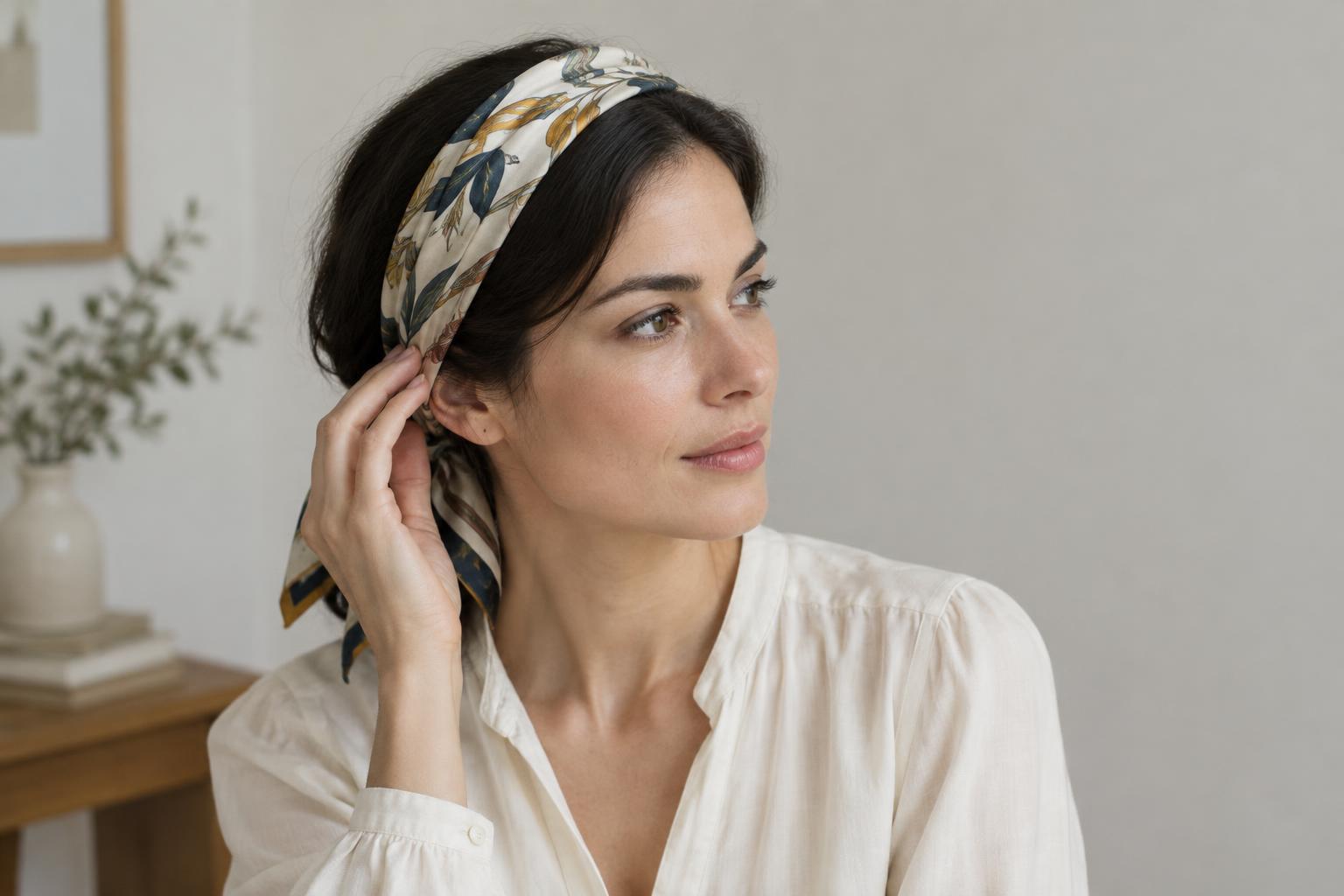
For a classic hairband, set the middle of the folded scarf just behind your hairline and bring the ends beneath your hair to the nape of your neck. Keep the front edge where you want it while you tie a simple knot at the back. If you would rather show the ends, start at the nape and bring them up to tie near the crown. In either version, keep the band flat as it crosses the sides of your head; a twist near the ears often makes it less comfortable.
Tie the scarf firmly enough to stay put, but not so tightly that it presses on your scalp or causes a headache. A second knot may help if there is enough length, though an oversized knot can be bulky, particularly at the nape. Once tied, move your head from side to side and tuck a finger under the band. If it shifts immediately, reposition it or change the fold instead of simply pulling the knot tighter.
Give smooth hair a little grip
Freshly brushed, very smooth hair can give silk little to hold onto. Try placing the band over hair with its natural texture rather than flattening the roots first. For a half-up style, securing a small section of hair behind the crown can create a discreet point that helps stop the scarf moving backward. A bun or ponytail can serve a similar purpose.
If you need extra hold, a few small hairpins can anchor the folded scarf behind the ears, where they are less noticeable. Slide each pin through a fold and into the hair without forcing it through or puncturing the silk. Choose pins that do not snag, and remove them gently. A soft, narrow hairband worn underneath is another option if pins do not suit your hair. Test either method at home before relying on it for a long day.
Adjust for comfort and protect the silk
No single tie works for every hair texture, head shape or activity. If the scarf creeps backward, try setting it slightly farther forward or using a wider fold. If it slips down at the nape, shorten the loose ends with a different knot position. If it feels tight around your ears, loosen it and check that the folded edges are lying flat. Small adjustments usually look more natural than a tightly pulled band.
When you take the scarf off, untie it rather than tugging it over your hair. Smooth out the folds and store it loosely so repeated creases do not become difficult to remove. If you use styling products, let them dry before putting on the scarf and follow the scarf’s care label for cleaning. The best arrangement is one you can wear comfortably, then remove without pulling at your hair or stressing the fabric.