Choose a scarf that suits the handle
Wrapping a scarf around a handbag handle is a small change with a noticeable effect. It can bring a color from your outfit onto the bag, soften a firm handle in your hand or make a familiar bag feel different. The most useful wrap is one you can carry comfortably, so begin with the handle rather than the pattern.
A narrow scarf is easiest to control on a short, curved handle. A larger square can work too: fold it diagonally into a triangle, then fold or roll from the long edge until it becomes a slim band. Aim for a width that sits neatly on the handle without covering its attachment points or crowding the space where your fingers go. Smooth, lightweight fabrics make tidy folds; a thicker scarf may create a fuller look but can be harder to knot securely.
Before wrapping, check the bag’s care guidance if you have it. Be cautious with delicate finishes, raised trim or handles that already show wear. A scarf can rub against the surface as you carry the bag, and some fabrics or dyes may transfer color, particularly if damp. If you are unsure, test a small, inconspicuous area or keep the scarf for a different bag.
Make a simple handle wrap
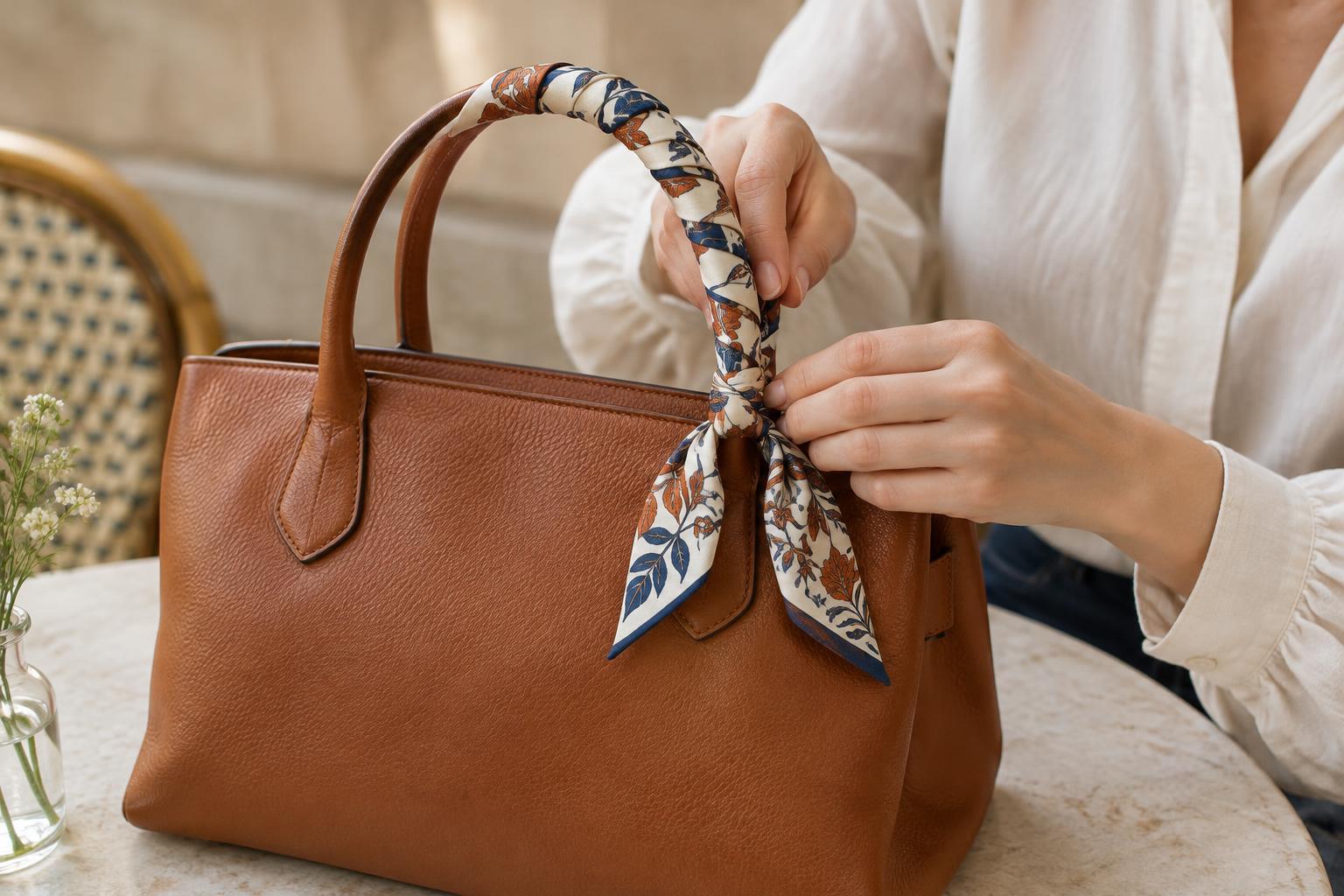
Start with a clean, dry handle and a scarf folded into a long band. Leave a short tail at one end of the handle, then tie a gentle single knot around the base, just inside the point where the handle meets the bag. The knot should hold the scarf in place without pulling hard on stitching or hardware. Keep the tail out of the way while you wrap.
Wind the longer end around the handle, overlapping each turn slightly so the handle does not show through in gaps. Keep the fabric flat as you go and use even, light tension. The turns should stay put when you lift the bag, but they should not squeeze a padded or soft handle out of shape. If the scarf twists, unwind a turn or two and smooth it before continuing.
At the far end, tie the remaining fabric to the handle with a small knot. Tuck a short tail under the final turn for a clean finish, or let both ends hang if they are long enough to look deliberate and short enough to stay clear of zippers and closures. Lift the bag by the wrapped handle and give it a gentle movement to check that the knots and turns do not slide.
Adjust the wrap to your bag
On a bag with two short top handles, wrapping just one creates an understated accent and leaves the other handle unchanged. For a more balanced look, wrap both handles with matching scarves or with two scarves that share a color. If the bag has a single long handle, you do not need to cover it end to end; a short wrapped section near the top can be easier to hold and requires less fabric.
The handle’s shape matters more than achieving perfect symmetry. Closely spaced turns tend to suit a slim, structured handle, while slightly wider turns can show more of a scarf’s print. For a soft or braided handle, a loose wrap may be less likely to settle evenly. In that case, try a simple knot near the handle base instead of forcing fabric along its full length.
Keep the practical parts of the bag accessible. Do not wrap over a buckle you adjust often, block a magnetic closure or tie fabric where it could catch in a zip. A decorative bow is an option at the end of a short handle, but check that its loops will not snag when you set the bag down.
Use color and print with intention
A scarf does not have to match the handbag exactly. Picking up one color from your clothing can make the accessory feel connected to the outfit without making everything identical. Against a plain bag, a printed scarf adds detail; against a patterned bag, a solid scarf may give the eye a place to rest. If you prefer a quieter result, choose a scarf close to the bag’s color and let its texture or narrow edge provide the contrast.
Consider which part of the print will be visible once the scarf is folded. A large motif may disappear into the turns, while a contrasting border can form a clear line along the handle. Try folding the scarf in two directions before tying it to see which side you would like to show.
Remove and care for the scarf
A handle wrap works best as a removable detail, not a permanent covering. Check the knots occasionally, especially after carrying a heavy bag, and retie them if they loosen. Take the scarf off if it becomes wet or dirty, and avoid leaving a damp scarf pressed against the handle. When removing it, undo the knots rather than pulling the fabric off in one motion.
Follow the scarf’s care label when it needs cleaning. After wearing, let it rest flat or hang loosely so creases can relax before you fold it away. Rotating scarves also gives you a chance to inspect the handle beneath them. That simple habit keeps the accessory easy to change and helps you notice rubbing or marks before they become harder to address.