Start with the label and the leather finish
Before cleaning a leather jacket, check its care label and look closely at the surface. Smooth finished leather, suede, nubuck and patent leather do not respond to the same products or techniques. A jacket may also have a delicate lining, decorative hardware or a finish that changes appearance when treated. If the maker gives specific care directions, follow those rather than a general leather-care routine.
The steps below mainly apply to smooth finished leather. Suede and nubuck usually call for tools made for their textured surfaces, while patent leather may need care suited to its glossy coating. Do not assume that a product labeled “for leather” is appropriate for every jacket. When you are unsure of the material or dealing with a valuable or delicate piece, a leather-care specialist is the safer option.
Keep everyday cleaning gentle
For routine upkeep, brush away loose dust with a soft, dry cloth, paying attention to the collar, cuffs and seams. For a small mark on smooth finished leather, try a clean cloth lightly dampened with water, using gentle strokes rather than scrubbing. Test any moisture or product first on a hidden area and let the test spot dry fully before deciding whether to continue. Avoid soaking the leather or allowing water to collect around seams and fastenings.
If a mark needs more than a light wipe, choose a cleaner intended for that type of leather and follow its directions. Use a small amount and work on one area at a time. Household detergents, strong solvents and vigorous rubbing can damage a finish or leave a patch that looks different from the surrounding leather. For spills, blot promptly with a clean cloth instead of spreading the liquid. If a stain persists, particularly an oily stain, stop experimenting and ask a specialist.
Condition only when the jacket needs it
Conditioner can help some smooth leathers feel supple, but more is not necessarily better. Too much product may leave a greasy surface or alter the color and texture. Treat conditioning as an occasional response to dryness, not an automatic step after every wear or wipe-down. Leather type, finish, climate and how often you wear the jacket can all affect whether it needs attention.
Select a conditioner suitable for the jacket’s finish, and test it in an inconspicuous place first. If the result looks and feels right once dry, apply a thin, even layer according to the product directions. Give it time to absorb, then remove any excess with a soft cloth if directed. Keep conditioner off suede or nubuck unless the product specifically says it is suitable for them. If the jacket has an intentionally matte, distressed or waxed appearance, check its care guidance before applying anything that might change that finish.
Let a damp jacket dry at its own pace
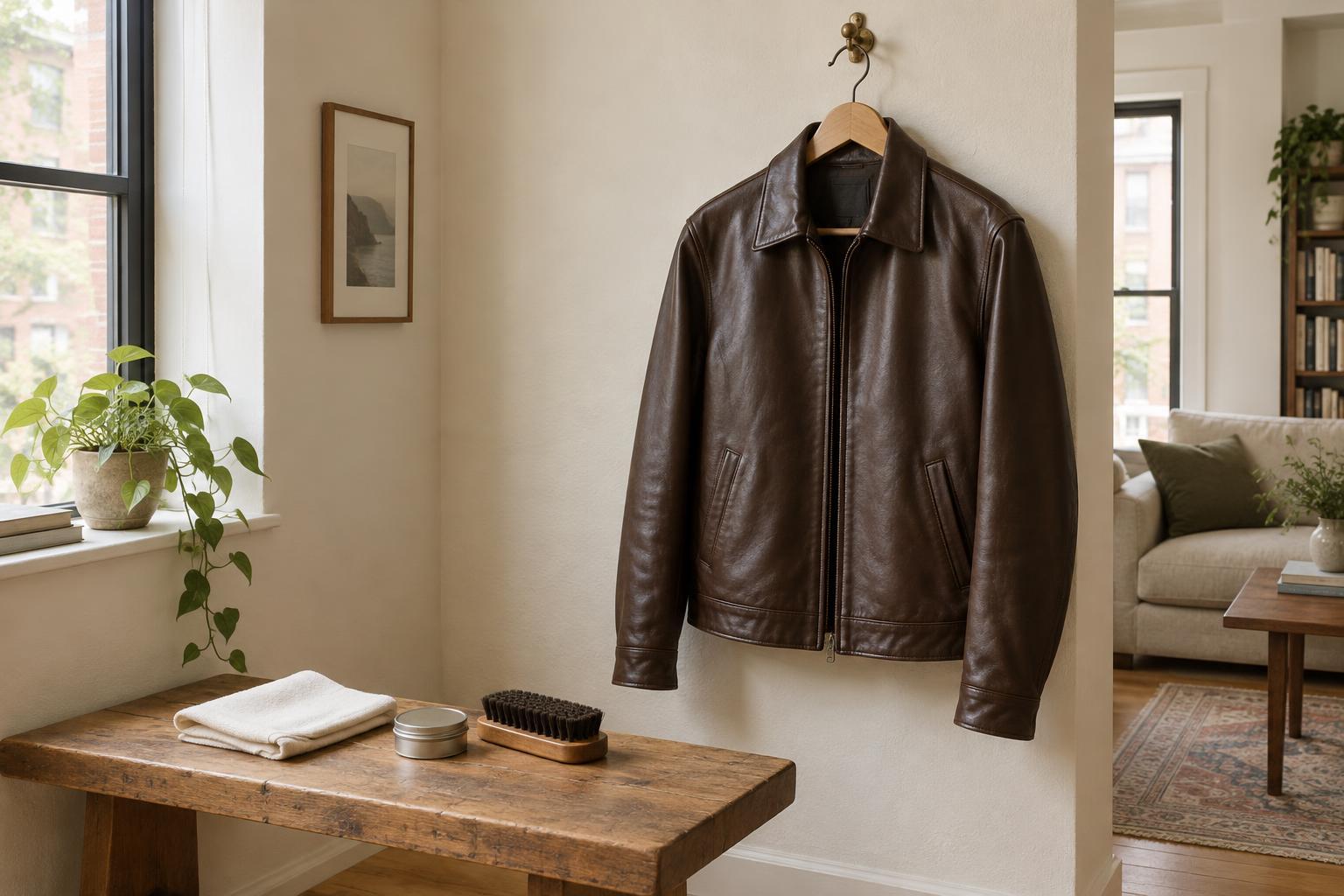
If you get caught in rain, gently blot surface moisture and hang the jacket where air can circulate. Use a broad hanger that supports the shoulders, and allow the leather and lining to dry naturally before putting the jacket away. Keep it away from radiators, hair dryers and direct sunlight: concentrated heat can leave leather feeling stiff and may affect its finish.
Resist the urge to fold or press a damp jacket into shape. Once it is dry, assess how it feels before considering any further care. A small amount of rain does not automatically mean the jacket needs cleaner or conditioner. If it becomes heavily soaked, develops a noticeable change in texture or shows persistent marks after drying, seek advice from someone experienced in leather garment care.
Store it so it is ready for the next wear
Between wears, hang the jacket on a sturdy, wide hanger rather than a thin wire one, which can leave pointed shoulders. Give it room in the wardrobe so the leather is not crushed against other clothes. For longer storage, choose a cool, dry place away from prolonged direct light. A breathable garment bag can shield it from dust while allowing airflow; avoid sealing it in plastic for an extended period.
Check that the jacket is clean and completely dry before storing it. Empty heavy pockets so they do not pull the garment out of shape, and fasten a few buttons or the zip without forcing the front closed. These small habits make a leather jacket easier to reach for when an outfit calls for a relaxed outer layer, whether it is worn over a simple knit or with more tailored pieces.