Start with a stripe you already wear
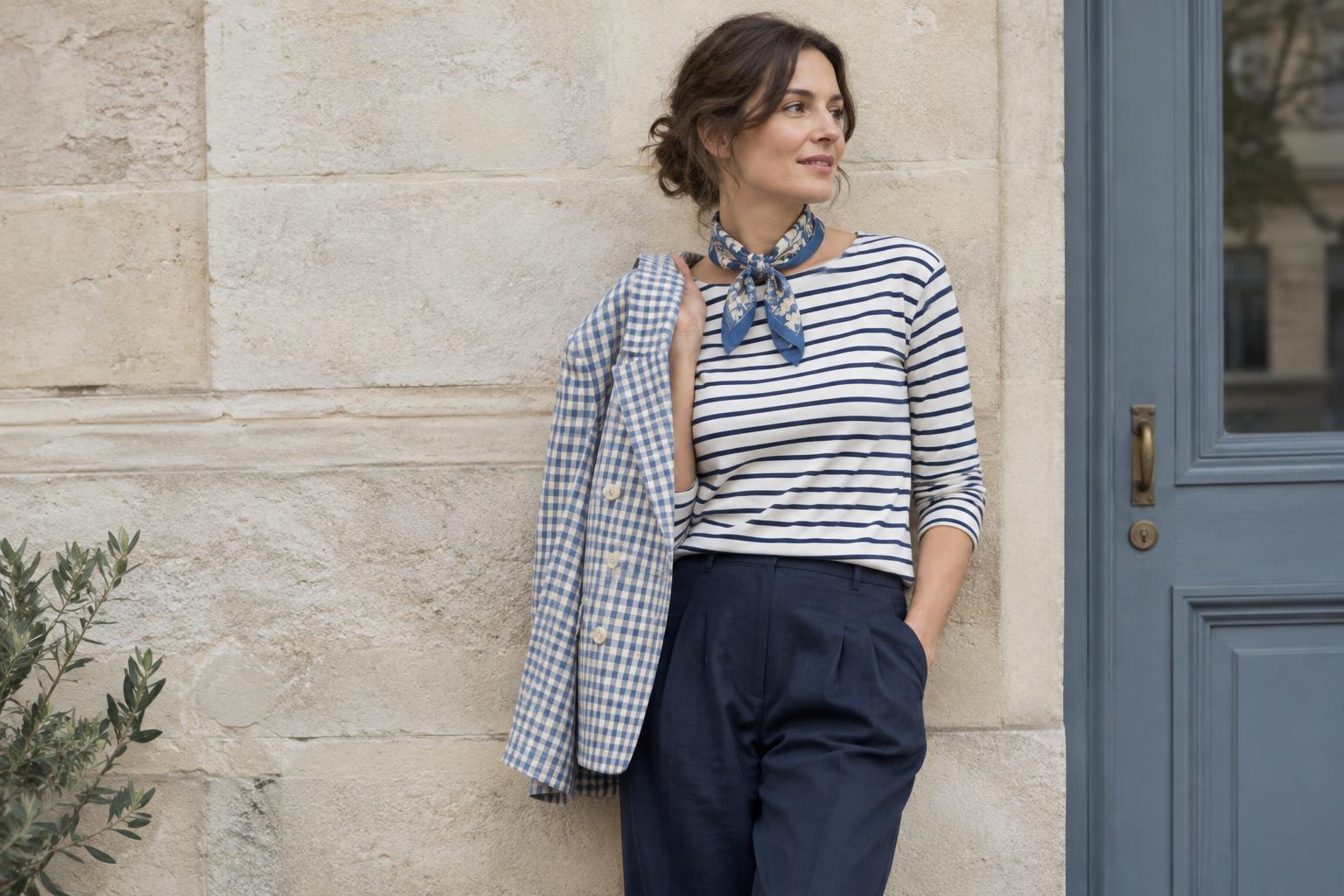
A striped top is a useful entry point to pattern mixing because its lines are easy to read. You do not need a wardrobe full of prints to begin. Choose a striped piece that already feels comfortable, such as a knit top, shirt or skirt, and build one outfit around it. A narrow navy-and-cream stripe, for example, can sit alongside another pattern without making the whole outfit feel busy.
Before adding that second pattern, notice three things about your stripes: their colors, their width and how much of the garment they cover. Fine stripes often read almost like a texture from a distance, while broad stripes make a stronger statement. Neither is inherently easier to style; they simply call for different companions. If the striped piece is the part of the outfit you want people to notice first, let the next pattern play a quieter role.
Give the patterns one color in common
A shared color creates a visual link between two prints, even when their shapes differ. Try a blue-and-white striped shirt with a floral skirt that contains a little blue, or a black-and-cream striped sweater with a checked scarf that repeats the cream. The colors do not need to match perfectly. They only need to look comfortable together when the pieces are held side by side.
For a first attempt, limit the outfit to a small color family. One or two neutrals plus an accent color can give both patterns space to show. A cream striped shirt, a small green floral scarf and olive trousers, for instance, repeat the green without requiring every item to match. If an outfit feels scattered, simplify a solid piece such as the trousers, jacket or shoes before deciding that the prints themselves are the problem.
Change the scale, not just the print
Two patterns are often easier to distinguish when one is noticeably larger than the other. Pair fine stripes with a generous floral motif, or wider stripes with a tiny dotted scarf. This contrast gives the eye a place to settle. The prints can still be close in color, but they will not compete for attention in quite the same way.
Checks offer another straightforward pairing. A fine-striped shirt under a larger checked blazer lets the jacket provide structure while the shirt adds detail. If both patterns are bold and similar in size, try separating them with a solid layer: an open cardigan over the shirt, or plain trousers beneath the blazer. A glimpse of pattern may be all the outfit needs. You can always show more once you know the combination feels right.
Use accessories as a low-commitment test
A printed scarf, belt or bag lets you try a pattern pairing without committing to two large printed garments. Start with a striped top and solid trousers, then add a scarf with dots, leaves or a loose geometric design. Tie the scarf at the neck, around a bag handle or in the hair, depending on where you want the extra detail. Each placement changes how prominent the second pattern feels.
A scarf is also a useful way to test color. Lay it against the striped garment in daylight and look at the combination as a whole rather than inspecting each motif. If the prints seem too close together at the neckline, move the scarf to the bag. If they look disconnected, repeat one of the scarf’s colors elsewhere in the outfit, perhaps with a cardigan or shoes you already own. Small adjustments often work better than starting over.
Build the outfit around a clear focal point
Pattern mixing does not have to mean that every part of an outfit makes an equal statement. Decide which piece should lead, then let the others support it. For an everyday combination, try a striped knit, plain jeans and a softly patterned scarf. For a more dressed-up option, pair a striped shirt with a floral skirt and a simple jacket. In both cases, the solid pieces give the prints room to breathe.
Finally, check the outfit from a few steps back. Look for a pleasing overall balance rather than a perfect rule: Does one piece draw your eye first? Do the colors feel connected? Is there enough quiet space between the prints? If the answer is mostly yes, the combination is worth wearing. The simplest starting guide is to repeat a color, vary the pattern size and adjust how much of each print you show until the outfit feels like yours.