Start with the label, not the fabric’s reputation
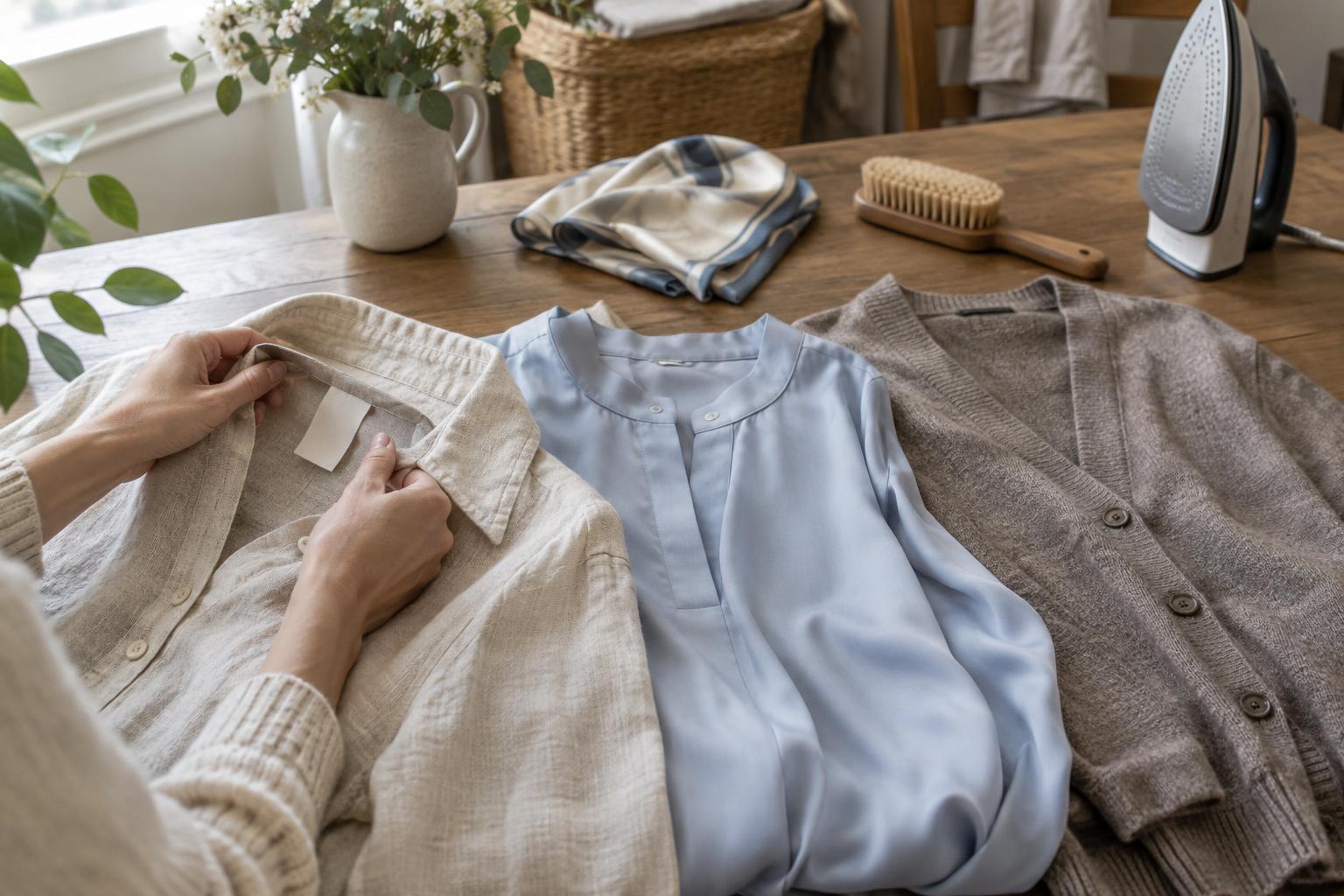
A fiber label tells you what a garment is made from; a care label tells you how its maker recommends looking after the finished piece. Read both before washing. Fiber content is a helpful starting point, but it cannot account for every detail of construction, dye, lining, trim or finish. A cotton shirt and a structured cotton jacket, for example, may need very different treatment.
When a label permits home washing, a gentle approach is often a sensible first choice: sort by color, use an appropriate detergent, avoid overloading the machine and check for stains before applying heat. If the label calls for professional cleaning or you are unsure how a delicate garment will respond, do not assume its fiber content alone makes it safe to wash.
Natural fibers: familiar, but not all cared for alike
Cotton and linen are plant fibers often chosen for everyday shirts, trousers and summer layers. Many pieces made from them can be washed at home, though both may shrink or crease, especially with heat and vigorous drying. Check the care label, consider a lower-temperature wash when suitable and reshape the garment while damp. Air drying can help you avoid setting stubborn creases in the dryer.
Wool and silk are animal fibers that generally call for a lighter touch. Wool can lose shape or felt when exposed to agitation and unsuitable temperatures. Silk may show water marks, lose color or be affected by harsh detergent. Some wool and silk garments are washable; others are not. If home washing is permitted, follow the stated method closely, handle the piece gently and let it dry as directed. For wardrobe pieces such as a silk scarf or a fine-knit cardigan, careful storage also matters: keep them clean, dry and protected from snagging.
Synthetic fibers: durable does not mean heatproof
Polyester and nylon are synthetic fibers used in everything from lightweight linings to tailored-looking separates. They may resist wrinkling and dry relatively quickly, but their behavior depends on the fabric and garment. Heat can damage some synthetic materials or affect finishes, so check the label before tumble drying or ironing. If ironing is allowed, begin with the recommended setting rather than the temperature you would use for cotton.
Elastane, sometimes listed as spandex, is often added in small amounts to provide stretch. Treat a stretchy waistband, fitted trouser or close-fitting top with care even when its main fiber seems robust: excessive heat and harsh handling can affect its recovery. Synthetics can also hold on to body oils and odors, so wash when needed with a suitable detergent, rather than relying on high temperatures to freshen them.
Blends and other fibers: read the whole composition
A blend combines fibers to achieve a particular feel, appearance or performance. A cotton-polyester shirt may crease differently from an all-cotton one; a wool blend may feel and wear differently from pure wool. The percentage of each fiber is useful information, but it is not a care formula. A small amount of elastane, a delicate lining or an applied detail can matter more to your washing decision than the largest percentage on the label.
You may also see viscose, modal or lyocell on a composition label. These are manufactured cellulosic fibers, typically made from plant-derived cellulose; they do not fit neatly into a simple natural-versus-synthetic comparison. Their care needs vary. Some garments can become more delicate when wet or change shape if handled roughly, making the garment-specific instructions especially important. If there is no care label, test any proposed cleaning method cautiously on an inconspicuous area or seek advice from a garment-care professional.
A practical routine for keeping clothes wearable
Before laundry day, group garments by both care needs and color, rather than putting every light item or every blouse into the same load. Fasten closures that might catch, turn embellished or abrasion-prone pieces inside out when appropriate and place small delicate items in a mesh bag if the label allows machine washing. Treat visible marks promptly, but avoid rubbing hard: friction can leave a lasting change in texture.
After washing, follow the drying instructions and check the garment before adding heat. Smooth seams and reshape pieces that need it, then allow them to dry fully before storing. Fold knits that might stretch on a hanger; hang garments that benefit from keeping their shape, using a hanger suited to their weight. The aim is not a complicated set of rules for every fiber. It is a repeatable habit: read the entire label, choose the gentlest suitable method and pay attention to how each piece responds over time.