What a repeated color actually does
Repeating a color gives the eye a path through an outfit. A blue stripe in a shirt might connect with a blue bag; a warm brown belt might pick up the tone of a pair of shoes. Neither pairing is a rule. It is simply one way to make pieces that differ in shape, texture or formality feel as though they belong together.
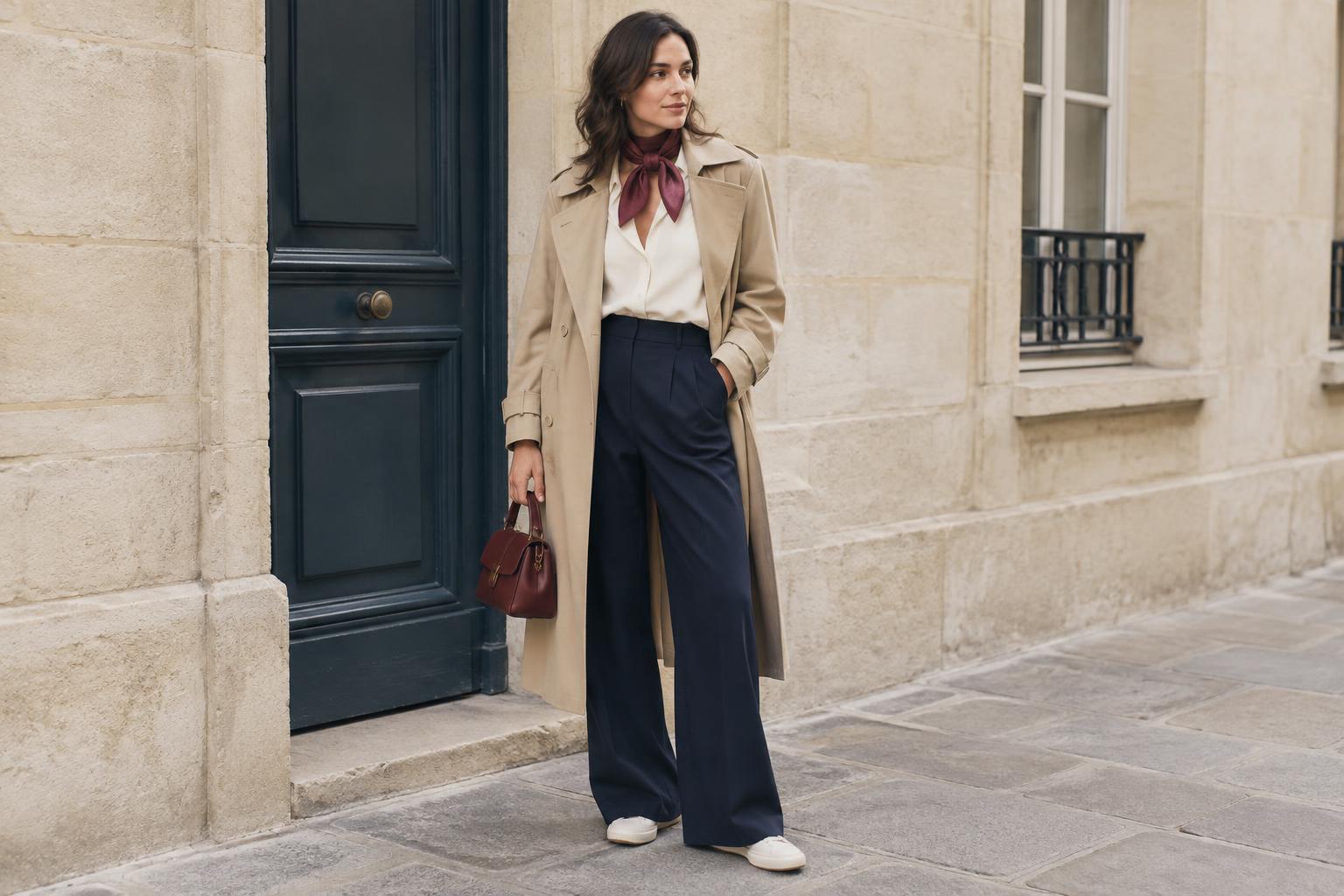
This can be especially useful when an outfit has one vivid piece. If a red scarf is the only strong color against a neutral coat and trousers, it becomes the clear focal point. That may be exactly what you want. Echo a little red elsewhere, however, and the scarf feels less isolated. The second appearance can be tiny—a thread in a patterned bag or a detail on a shoe. Repetition works best when it serves the outfit you already want to wear, rather than becoming a puzzle to solve.
Start with proportion, not an exact match
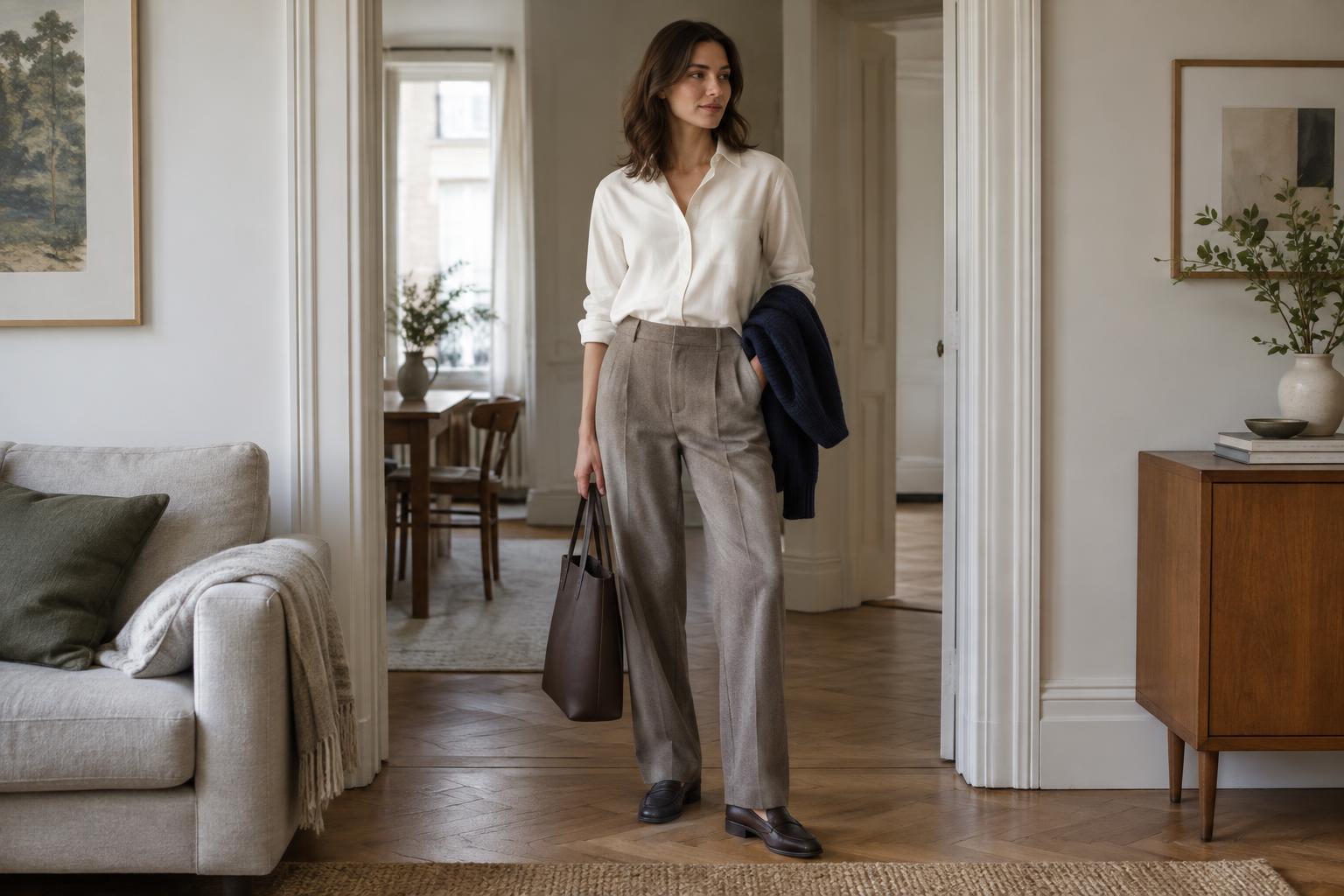
Two appearances of a color do not need equal weight. In fact, a large block of color often looks more relaxed beside a smaller echo. Try a navy knit with a narrow navy stripe in a scarf, or olive trousers with a touch of olive in a printed blouse. The difference in scale lets one piece lead while the other quietly supports it.
Exact shades are optional, too. A deep burgundy bag can sit comfortably with a muted wine-colored motif, particularly when the materials have different finishes. If the colors are close but clash to your eye, give them some distance rather than placing them side by side. A scarf near the face and shoes near the ground are less demanding as a pair than a jacket and shirt in almost-matching shades. Look at the whole outfit before deciding whether the connection feels convincing.
Use accessories to create a light touch
Accessories make color repetition easy to test because they can be changed without rebuilding the outfit. With a cream shirt, dark trousers and a camel jacket, a printed silk scarf can introduce several possible colors to echo. Choose one already present in your wardrobe rather than trying to match every part of the print. A pair of earrings, a belt or a bag in a related tone may be enough.
You can also repeat a color through an understated detail: the border of a scarf, a narrow stripe, a sock glimpsed above a shoe or the hardware tone of an accessory. These choices can give a simple outfit a sense of intention without making the repetition its main feature. If an accessory feels useful and comfortable on its own, the color connection is a bonus; if you would not otherwise wear it, leave it out.
Recognize when coordination feels forced
An outfit can start to feel overly planned when every accent is required to match: scarf, bag, shoes and jewelry all in the same bright shade. None of those combinations is inherently wrong, and deliberate matching can be charming for an occasion. For everyday dressing, though, removing one repeated accent often gives the remaining pieces more room. Let the scarf and shoes connect, for instance, while the bag stays neutral.
Another clue is that the repetition draws attention away from fit, texture or the person wearing the clothes. If you keep a bag solely because its color matches a button, despite its size being inconvenient, the connection is doing too much work. Likewise, you need not buy a second piece to justify a color you love. One confident note of green or pink can look complete against shades of cream, denim, charcoal or brown.
A simple way to decide before you go out
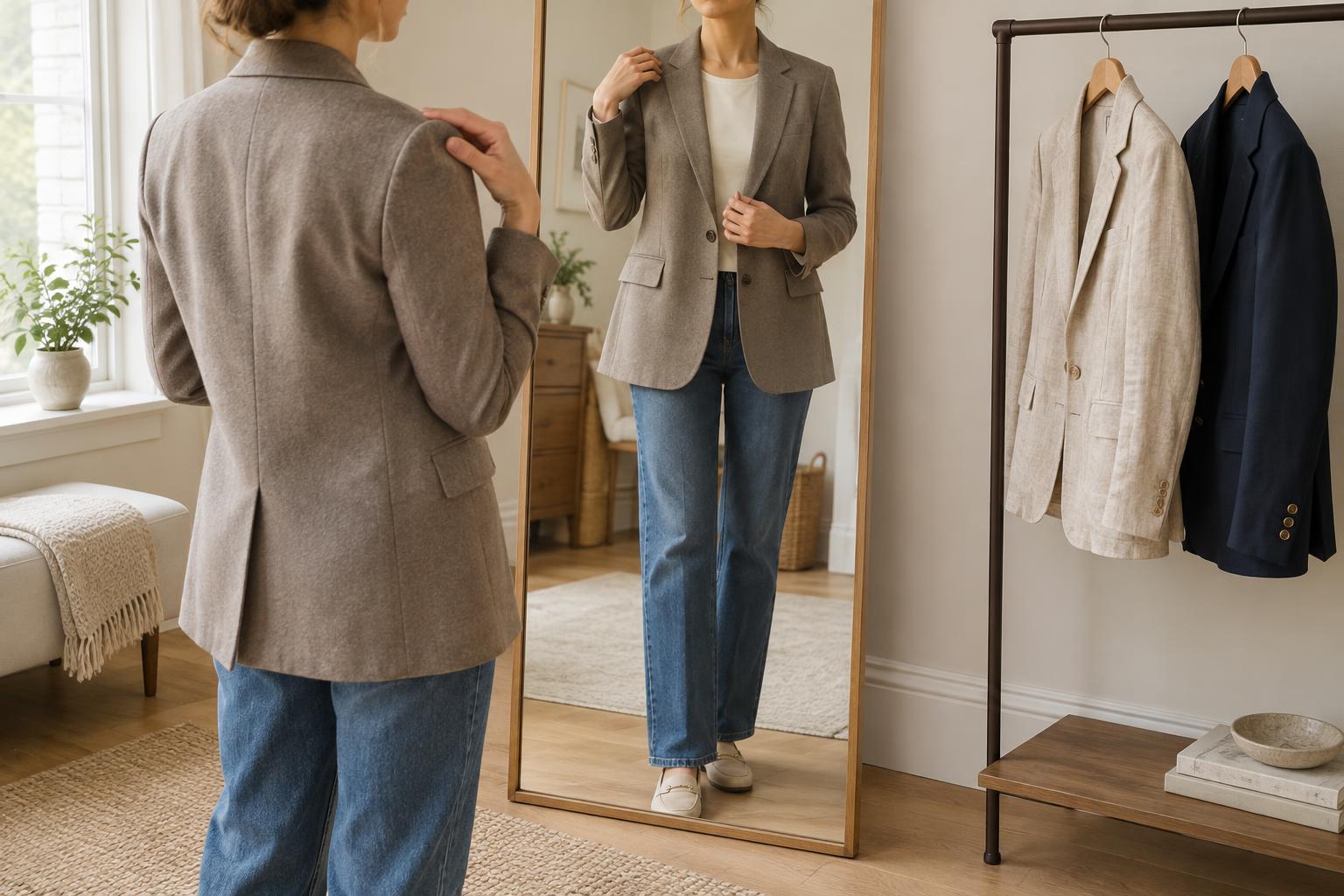
Put on the outfit without trying to match anything. Then ask whether one item looks disconnected or whether the contrast gives the look its energy. If it feels disconnected, add a small echo of its color and look again from a few steps away. Pay attention to the overall balance rather than checking whether two shades are identical. A mirror is more helpful here than a color rule.
Finally, try taking the echo away. If the outfit loses a pleasing sense of balance, keep it. If it suddenly feels easier and more like you, leave the color unrepeated. French-inspired dressing need not mean perfect coordination; it can be as simple as choosing pieces with care and allowing a little ease. Repetition is one useful option among many, not a finishing step every outfit needs.