Start with a ring that suits the scarf
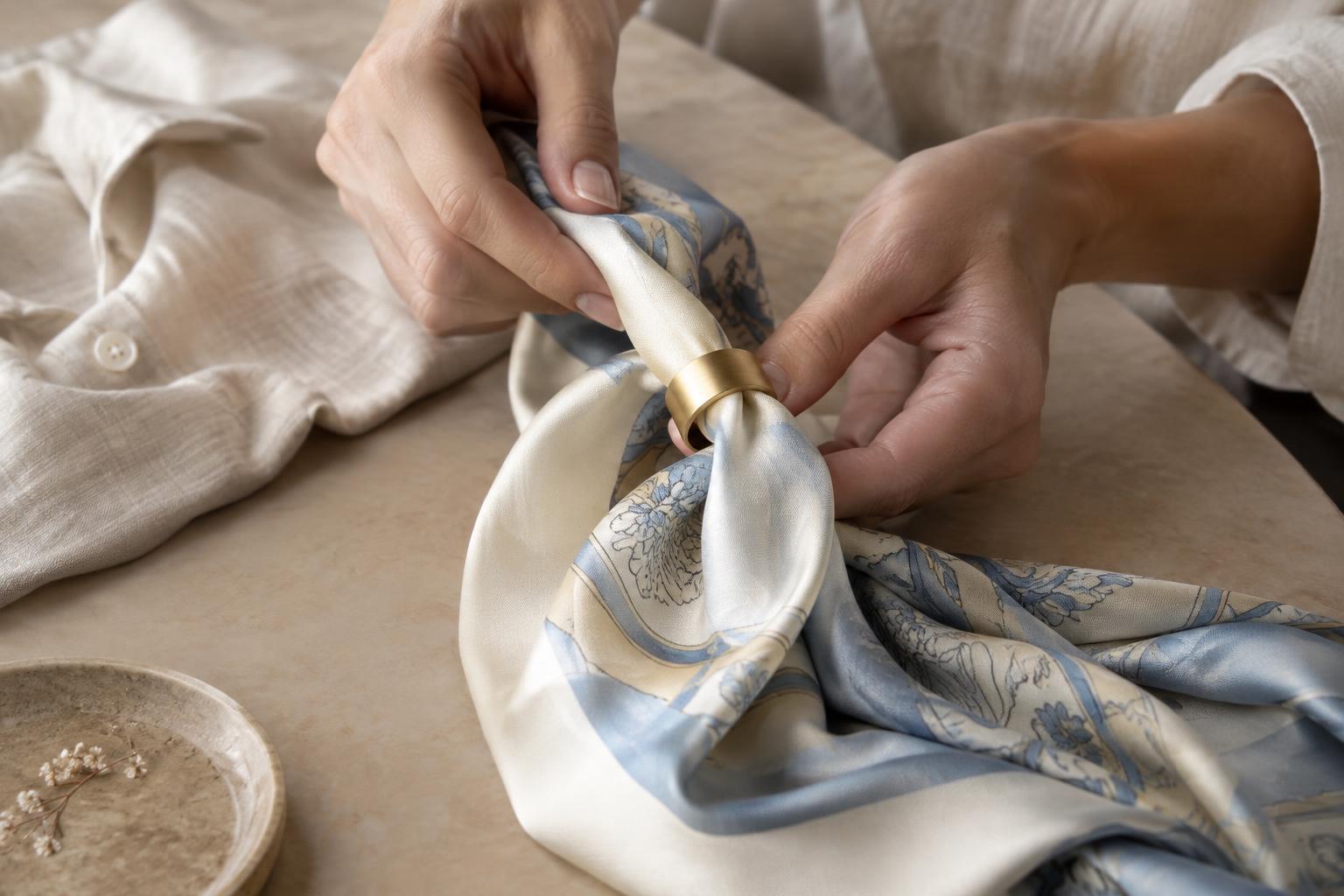
A scarf ring is a small piece of hardware that holds folded fabric in place. A slide serves much the same purpose, though its shape may offer two openings or a flatter path for the cloth. Either can make a scarf feel more relaxed than a tight knot. The key is to treat the ring as a guide, not a clamp: the fabric should move through it with light pressure.
Before using a ring, run a fingertip around every edge, including the inside and any join. Look for rough spots, exposed seams or decorative details that could catch a thread. The opening should accommodate the scarf as you intend to fold it. If you have to compress the fabric firmly to get it through, choose a larger opening or a thinner fold. Test unfamiliar hardware on a less delicate scarf before pairing it with a favorite silk piece.
Prepare the fabric before threading
Lay the scarf flat and decide where you want the ring to sit: near the collarbone, lower on the chest or closer to one shoulder. Make the folds first rather than gathering a handful of fabric at the opening. For a square scarf, a loose diagonal fold creates a long band; for a narrow scarf, a simple lengthwise fold may be enough. Keep the folds soft so they can spread naturally once the scarf is in place.
Pay attention to the edges. A rolled or stitched hem is often thicker than the body of the scarf, and pushing a bunched hem through a small ring can strain it. Feed a narrow section through first, then ease the rest along with your fingers. If the fabric resists, stop and unfold it slightly. Forcing it through is more likely to cause trouble than taking a moment to make a slimmer, more even fold.
Thread and adjust with small movements
For a simple front-facing style, place the scarf around your neck with the two ends hanging down. Gather one end loosely, pass its tip through the ring, and draw through only as much fabric as you need. Repeat with the other end if the ring has room for both. A two-opening slide may let you pass an end through each opening. Keep a hand on the cloth near the hardware so the weight of the scarf does not pull the ring down unexpectedly.
To adjust the look, hold the ring steady and move a little fabric through at a time. Guide the folds with your fingertips instead of tugging on a distant tip. If the ring catches at a hem, reverse it gently until the hem is free, then try a different fold. Once the ends are balanced, let the scarf settle before tightening anything further. A slight drape usually looks more intentional than fabric pulled taut against the neck.
Try placements that need less tension
A scarf ring does not need to carry the full weight of a dramatic knot. Wear it at the center of a loose neck scarf to keep two tails together, or set it off to one side to frame an open neckline. On a longer scarf, position the ring lower on the chest, where the fabric can hang freely. These arrangements rely on the scarf’s drape rather than a tight grip to keep the shape.
For a small square, try folding it into a band and using the ring as a finishing detail near one end, leaving a short, soft tail. If the ring slips, make a slightly fuller fold or choose a better-fitting piece of hardware rather than pulling the fabric tighter. You can also skip the ring when wearing a particularly airy or loosely woven scarf; a gentle knot may be the kinder option for that material.
Remove the ring as carefully as you put it on
Take the scarf off before removing the hardware so you can see where each fold enters the opening. Hold the ring still and ease one end back through in small sections. If a thread appears caught, do not yank or twist the ring. Work the fabric back toward the point where it caught and free it with your fingertips. Check the scarf afterward, especially around the hems, before putting it away.
Store rings separately from scarves so metal edges do not rub against the fabric in a drawer. Keep delicate scarves loosely folded or stored according to their care labels, and avoid leaving a ring on one spot for long periods if it presses a crease into the cloth. With a smooth ring, a comfortable fit and unhurried handling, the accessory can add shape while letting the scarf remain the focus.