Start with the scarf, not the knot
When a scarf looks awkward, the knot is not always the problem. Its size, thickness and shape may be working against the outfit. A large square folded into a narrow band still contains several layers of fabric, so a tight neck knot can feel bulky. A small, fluid square may be too short for a loose drape over a thick coat. Before tying anything, hold the scarf where you want to wear it and check how much fabric remains for the ends.
Match the fold to the effect you want. For a neat line at the neck, fold a square diagonally, then fold it inward in broad, even bands. For a softer look, leave more of the triangle visible and tie it loosely. If the scarf has a firm finish or a slippery surface, expect to make a small adjustment after putting on your coat or moving around. A style that looks good only while you stand still may not be the most useful choice for the day.
Fix knots that look stiff or sit in the wrong place
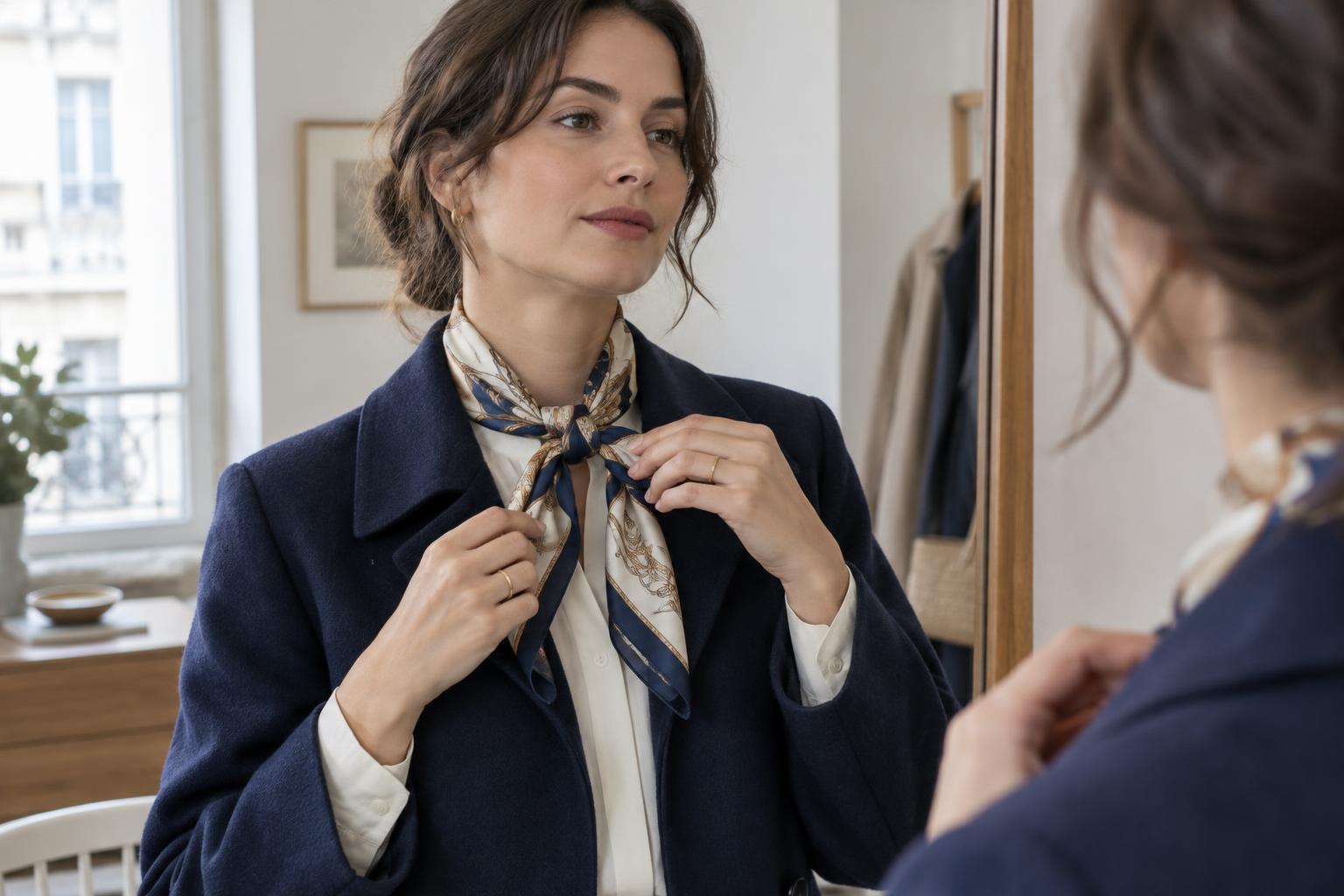
An oversized knot can compete with a shirt collar, necklace or coat lapel. Try tying a single knot rather than doubling it, or move the knot slightly to one side so it has room beside the neckline. If the scarf keeps twisting, flatten the folded fabric before you tie it and guide both ends through the knot without letting one turn over. Loosen the knot a little once it is in place; you can keep it secure without pulling it tight against your throat.
Position matters as much as technique. A knot centered at the neck creates a clear focal point, while a side knot leaves the front of a blouse or sweater more open. With a narrow scarf, an uncomplicated loop and one loose knot often looks more relaxed than a complicated tie. If you have to keep adjusting a knot to make it look balanced, undo it and choose a simpler arrangement.
Reduce bulk around collars and under coats
Bulk builds up when folded layers, a knot and a structured collar meet in the same small area. Make space by choosing just one feature to sit close to your neck. You might tuck a small square inside an open shirt, let a longer scarf fall over a coat, or wear a scarf beneath a collar without tying it. These options preserve the color or pattern while allowing the garment underneath to keep its shape.
If you want warmth as well as decoration, test the scarf with your outerwear before leaving home. Close the coat or jacket, then see whether the fabric presses uncomfortably at the neck or bunches above the fastening. A flatter fold may solve the problem. If not, try a thinner scarf or move a larger one outside the coat, where its volume has room to fall.
Give loose ends a purpose
Uneven ends can look deliberate, but ends that repeatedly fall into your face or catch under a bag strap are a nuisance. Before tying, decide whether you want them visible. For a tidy finish, tie a small knot and tuck both ends under a shirt collar or into the neckline of a sweater. For visible ends, allow one to hang a little lower and smooth both pieces so they point in the same general direction.
If one end is much longer than the other, shift the scarf around your neck before retying rather than pulling at the finished knot. On a bag, keep ends short enough that they do not interfere with the closure or handles. A scarf tied to a strap can add color without requiring a prominent bow; a secure, simple knot with neatly arranged ends is often easier to live with.
Make the final check part of getting dressed
Look at the scarf alongside the whole outfit, not just close up in a mirror. Check whether its pattern draws attention where you want it, whether the knot crowds another detail and whether the ends remain manageable when you move. A scarf does not need perfect symmetry, but it should feel comfortable enough that you can stop thinking about it.
Treat these fixes as options rather than rules. Some outfits benefit from a generous drape; others need a compact accent. If a scarf feels fussy after a few attempts, change where you wear it or set it aside for another neckline. The most successful arrangement is usually the one that adds something to your clothes without making everyday movement harder.