Start with shape, then think about size
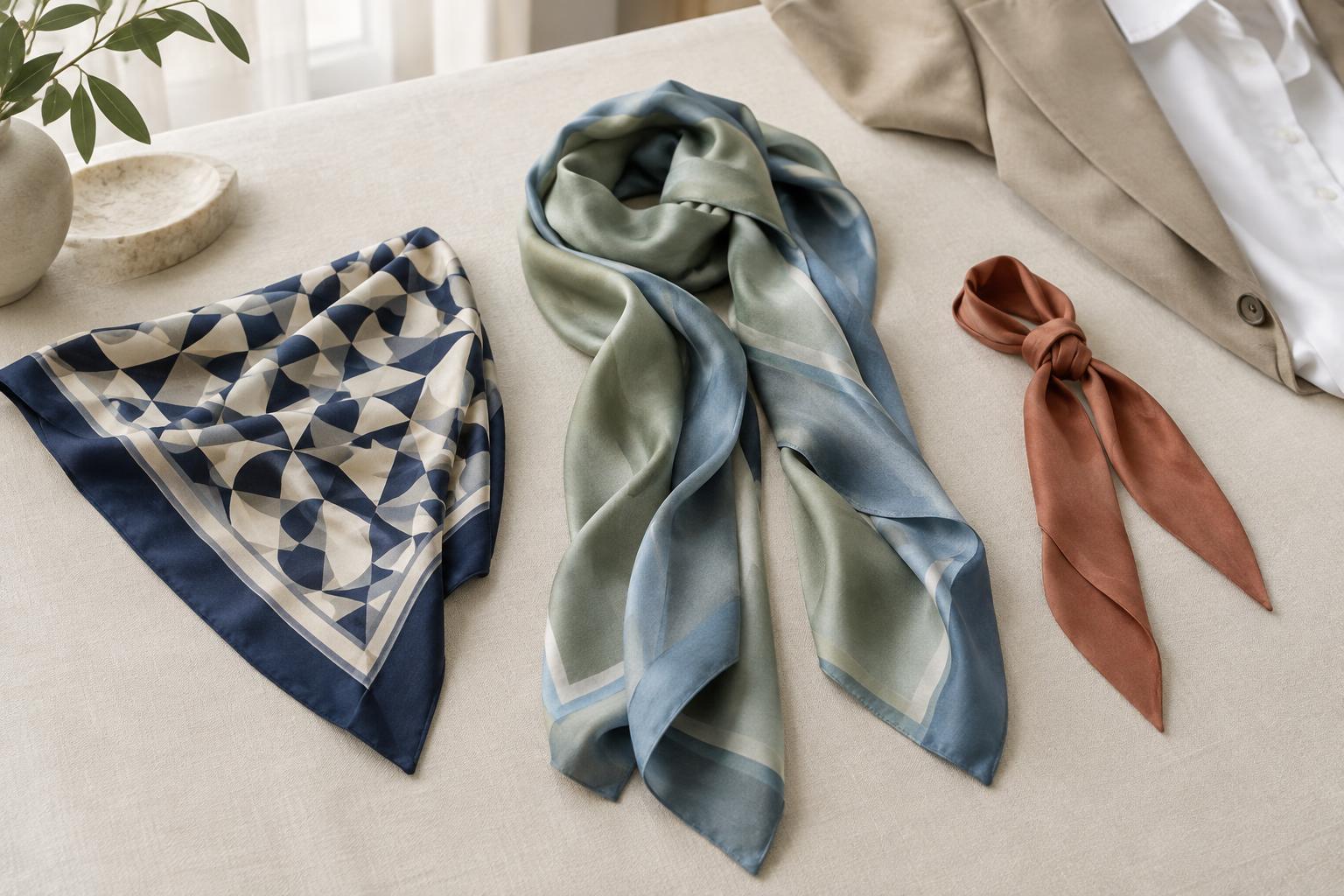
When choosing a silk scarf, color and print tend to catch the eye first. Shape is just as important: it determines how much fabric gathers at your neck, whether the ends can hang freely and how many ways you can fold the scarf. A small square, a long rectangle and a narrow scarf may share the same pattern but feel quite different to wear.
Before buying, picture the scarf with two or three outfits you already own. Do you want a neat detail at the collar, a soft layer over a plain top or a length of color alongside a jacket? There is no universally best size. Your preferred knots, the neckline of your clothes and your comfort with volume matter more than a particular measurement on a label.
Squares: the flexible starting point
A square offers the widest range of folds. Fold it diagonally into a triangle for a point at the front, or keep folding it into a band for a compact neck tie. You can also tie a small square to a bag handle or wear it in your hair, provided it is long enough to knot securely. The same scarf can look graphic when its corners show and understated when most of its print is folded away.
Size changes the effect. A small square usually makes a tidy accent near the face, but may leave little room for elaborate knots. A medium square offers more tying options without necessarily covering much of an outfit. A large square can create a generous drape across the shoulders, though folding it into a neck band may produce more bulk than you want. If possible, try your favorite fold before committing to a size; a flat measurement alone will not tell you how the fabric feels once gathered.
Rectangles: length and an easy drape
A rectangular scarf lends itself to styles with visible ends. Let it fall loosely on either side of an open coat, wrap it once around the neck, or tie a simple low knot over a sweater. Its longer line can add movement to a straightforward outfit without requiring a complicated fold. A shorter rectangle may sit comfortably beneath a jacket, while a longer one gives you more room to wrap or adjust the ends.
Width matters as much as length. A slim rectangle can feel light at the neckline; a broad one can provide more coverage across the chest or shoulders. Check how much fabric collects behind your neck when you wrap it. If you prefer clean lapels and an uncluttered collar, choose a width that lies comfortably beneath your outer layer rather than assuming a longer scarf will always be easier to style.
Narrow scarves: a deliberate accent
A narrow silk scarf, sometimes called a skinny scarf, is suited to outfits that need a small finishing touch rather than a substantial layer. Tie it once at the neck and leave the ends loose, make a modest bow, or thread it through a hair tie. It can also bring color to a bag, though frequent rubbing against hardware may be hard on delicate silk.
Because there is little width to fold, the scarf’s length and edge finish become especially noticeable. A very short narrow scarf may work best as a close neck tie; a longer one offers more options for loose ends. Keep the knot simple if the print is detailed. Against a striped shirt or patterned blouse, a single clear color from the scarf can help the combination feel intentional rather than busy.
Choose for your wardrobe and care for the fabric
If you are choosing one scarf, start with the style you would wear most often, not the one with the most theoretical possibilities. Reach for a square if you enjoy changing folds and placements, a rectangle if you like relaxed draping, or a narrow scarf if you want a light accent that takes little space. Try it with a familiar coat, shirt and knitwear; a scarf that works with pieces you already wear is easier to make part of your routine.
Silk varies in weight and finish, so two scarves of the same dimensions may hang differently. A crisp silk may hold a shaped fold, while a softer one may settle into a looser knot. Check the garment’s care label before cleaning, keep perfume and other sprays off the fabric where possible, and store the scarf loosely folded or rolled to avoid persistent creases. Shape provides the styling possibilities; the particular fabric determines how those ideas look and feel in practice.